Summary
In this week's episode, Brad Onishi navigates a high-stakes intersection of nuclear brinkmanship and theological crisis. The discussion centers on the fallout of Operation Epic against Iran, specifically Pete Hegseth’s assertion that God deserves "all the glory" for the military strike. Brad deconstructs this "Fox News theology," forcing a confrontation with the classic problem of evil: if a victory is divine, how does one account for the collateral damage of a bombed girl’s school? This moral tension coincides with a potential fracture in the MAGA coalition, as even staunch media allies like Joe Rogan and Alex Jones begin to voice public concern over Trump’s threats to Iranian civilization and the looming specter of nuclear winter.
The episode then shifts to an explosive diplomatic confrontation between the Pentagon and the Vatican. Guests Dr. Thomas Lecaque and Rebecca Bratten Weiss join the show to unpack a bombshell report detailing a meeting where Under Secretary Elbridge Colby allegedly pressured Cardinal Christopher Pierre to align with U.S. interests. By invoking the Avignon Papacy—a historical period where the papacy was essentially held captive by the French monarchy—the administration issued what Lecaque describes as a "mafia-style threat" to the Holy See. The panel explores the doomed fantasy of Catholic integralism and the burgeoning rift between those following the teachings of Jesus and those weaponizing faith for geopolitical dominance.
Meet The Guests
Dr. Thomas Lecaque
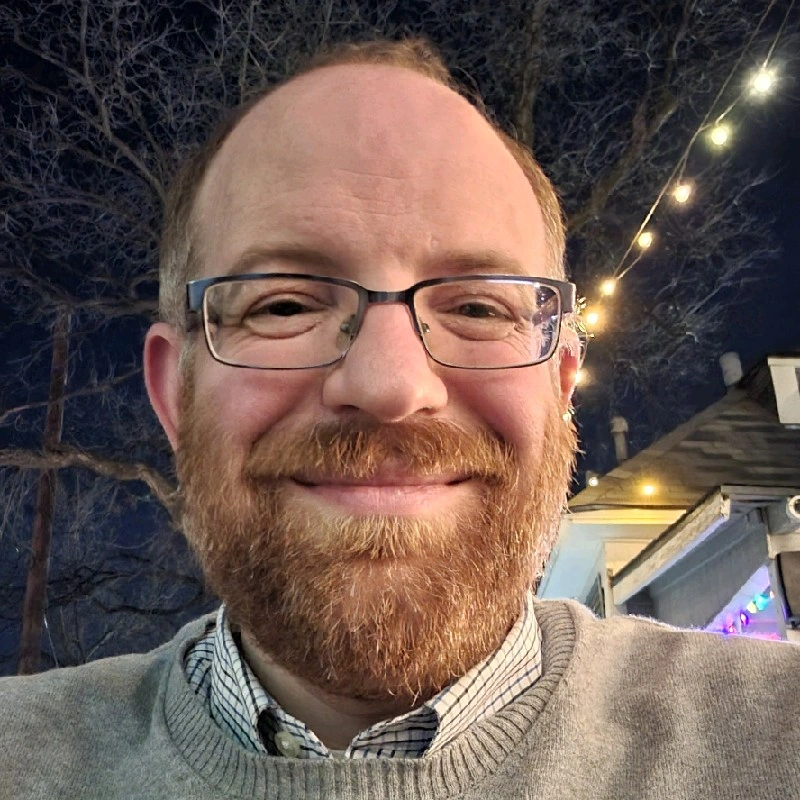
Dr. Lecaque is an Associate Professor of History at Grand View University. He holds a Ph.D. in Pre-Modern European History from the University of Tennessee, an M.A. in English with a focus on Old English and Anglo-Norman literature from Truman State University, and a B.A. (also from Truman) in History with minors in Philosophy & Religion and English. His current work looks at the rhetoric of holy war across languages and denominations in the wars of empire between England and France and numerous Native polities in the northeastern section of the United States. Additionally, he works on expressions of these sentiments in contemporary America, largely via public essays in places like The Washington Post, Foreign Policy, The Bulwark, Religious Dispatches, and the History News Network.



Rebecca Bratten Weiss
Rebecca Bratten Weiss is a writer, editor, and scholar who studies the intersection of religion and culture, with an emphasis on the dynamics of far-right ideology. She is digital editor at U.S. Catholic magazine, co-host of the Glad You Asked podcast, and a regular contributor to the National Catholic Reporter. She is the author of The Books That Made Us: Deconstructing the Modern Christian Classics (Orbis Books). Along with Jessica Mesman, she co-edited Sick Pilgrims: An Anthology of Catholic Spiritual Autobiography.
As well as writing on religion, politics, culture, and gender for multiple venues, she is a poet who has published in various literary journals, and in three chapbooks. Rebecca holds degrees in philosophy and English literature, and taught university courses in both fields for over ten years.



Transcript
Brad Onishi: Welcome to straight white American Jesus. I'm Brad Onishi, author of American Caesar, how theocrats and tech lords are turning America into a monarchy. Also the founder of Axis Mundi media. This week is one of those weeks where you just don't know where to start. We began the week with a sense that Donald Trump might mire the world in nuclear winter, threatening to destroy all of Iranian civilization. We then moved into a place where the rift between the Pentagon and its evangelical leader, Pete Hegseth, and the Vatican and the Catholic Church grew ever wider due to a report about a tense meeting between the Pope's representative to the United States and members of the Department of Defense. We'll talk about every dimension of that and the explosive reports surrounding those meetings. Dan Miller is sick, and so he won't be joining me, but I do have two special guests who we hear from later, who can fill us in about everything related to Hegseth, the Pope, the Catholic Church, Donald Trump and more. Lots to cover. Let's go.
Okay. So I want to start with a clip from Pete Hegseth, who, along with Donald Trump, at the beginning of this week we're declaring victory in Iran and in the Iranian conflict. Here's Hegseth.
Pete Hegseth [Clip]: Our troops, our American warriors, deserve the credit for this day, but God deserves all the glory. Tens of thousands of sorties, refuelings and strikes, carried out under the protection of divine providence, a massive effort with miraculous protection. Dude 44 Bravo spoke for all of us. God is good. The chairman will now provide an even deeper military detail on the historic success of operation, epic theory, Mr. Chairman.
Brad: Now Hegseth does something here that I think is on the nose. And it may not be completely dissimilar from other American leaders who invoke the name of God in terms of national protection, national greatness, national accomplishment, military victory or whatever. But Hegseth does it in a way that I think really opens the door for deep theological questioning in ways that we sometimes don't do. When people like him give speeches, he says, God gets all the credit. God gets all the glory. We had a pilot who was shot down and spent time hiding on Saturday, and then was found and emerged on Sunday, just like Jesus. Okay, great, great illustration there Pete, and then he talks about the ways that God is the one who helped with all of the the details regarding the Iranian conflict that has been going on here for some time. And this just brings up something that Dan Miller says on the show all the time, and I'll say now, is when you are willing to get up and give this full throated defense of God's actions in a war, you open up your reasoning and God themselves off to a question about, well, what about all the bad things that happened? And here's what Dan Miller says all the time on it's in the code and so many other places on this show, is that the problem with this kind of theology is that the people who perpetrate it always give all the glory to God when something good happens, and then all of the blame when something bad happens to humans and their sinfulness. It's this sense of like, if it's good, must have been God. He was with us. He protected us. And if it's bad, human mistake, human folly, human sin, whatever. So like if I was in the press corps, as Hegseth was talking about God is good and God is great, and all that stuff, I would have said, Look, we can debate how Providence works and God's interaction with the world. How does the Creator interact with human beings who have free will? I don't know. Christians have been talking about this for, say, almost 2000 years, right? Like first and second and third century Christians started to kind of wonder about this, and you really like see it come into absolute clarity with someone like St Augustine, right, writing whole books in the confessions and other places about what is time, where is God? How did God become part of me? Was God part of me before I even knew I was a me? Yeah, yeah, yeah. Lots of theology here, right? But, Pete, here's the thing, when you do this in such a bald way, a leveled way, a fox news clip, ready way, you have a theology that says, Well, God did everything. So the next question is this, you bombed a girls' school? Pete, you bombed children girls at a school. Were they part of the war? Were they fighting in the war? Were they part of the Iranian regime? Were they dedicated to the Ayatollah and his supposed hatred of America? The five year olds, the seven year olds? Because I have, I have kids that age, and I can tell you that they're not part of any international conflict, ideological regime or anything else. They're kids. They're at school right now. You bombed them. Was that God? Did God do all of that? Should we thank God for the death of those girls. Should we be praising God for that? Or, no, oh, that was that a human mistake? Well, you You denied it was, it was a problem, or you did it accidentally. But that's the cost of war, right? Okay, where does that fit in?
The problem of evil. Is the problem of evil? How do you defend God? If God is in control of everything, like you just said, against all the bad things that happen in the world, philosophers and theologians have been asking this for 1800 years in the Christian tradition, how do you defend God? When you bombed children, when people lost their lives, when Americans lost their lives. How do you defend that? So that's number one for today. Beginning of the week started with Trump and Hegseth declaring victory. And Hegseth continues to do this in a way that is so made for Fox News, theological clickbait. It is such a bald and one dimensional theology, that you have to realize that when he says, God gets everything, he gets everything, and that's why the kind of god you're describing, Pete, is not the kind of God most people want to revere or believe in. Doesn't mean all Christians. Doesn't mean the entire Christian faith, because you don't represent the entire Christian faith, and you don't represent most people who believe in Jesus. Nonetheless, you've and final point on this, and I'll move on. You also just left out all the people in the military, American citizens, the American public, who do not believe in your God, who do not believe in Jesus as their Savior, 30% or more of the military, nearly half the country. And I know you don't care. I know that for you, the Christian nationalist message is all that matters. But that has that has to be comment on and comment on, commented on as well. Now when Trump threatened to destroy Iran's civilization, I think this is a moment that reached deeper into the political soil than most stories. I am very aware that every week, Dan and I get on the mic and we talk about things that those of you listening are deeply interested in, people who are into politics and current affairs, people who read newsletters and articles, listen to podcasts and read books. But there's other folks out there who are interested in but are interested but they're not doing that. They're not you. They're not the political junkie. But I can tell you, I had several parents who know kind of what I do for a living come up to me. My kids, like school and be like, Hey, dude, are we, like, Is there gonna be like, a nuclear winter tonight? Like, is this, do we need to, like, prepare for the end of the world? And these are people who are not listening to 10 political podcasts a day, or reading, you know, Mother Jones and politico and, and the nation and and the New Republic and liberal currents and all the other things. These are folks who are concerned citizens, but they're not political junkies. This reached deeper into ether, and I think it also reached deeper into the Maga ether. And let me play you a clip of of Megyn Kelly talking about Donald Trump.
Megyn Kelly [Clip]: Iran is more powerful economically. It controls the Strait and now is demanding the lifting of all sanctions against it. And what Trump did with that 10 Point Plan was go from Monday saying no, not good, to Tuesday saying, very workable. We can do it as a means of saving face to bail off of his insane threats about annihilating an entire civilization.
Brad: So making Kelly sort of been on this train for a little while. She's been frustrated with Trump, whatever. And then here's Alex Jones, the the arch conspiracy theorist.
Alex Jones: Existential threat. How do we 25th amendment is ash?
Brad: So I wanted to play those two clips because if you have folks like Megyn Kelly and Alex Jones, who are coming at Trump and saying he's lost it, this is this is insane, this is an existential threat, we can't support this, then I think that that speaks to the fact that the Maga coalition might have some cracks in it. Might. I think Megyn Kelly is always going to go back to this idea that it's just chaos versus Trump as traditional conservative versus whatever. That's always who she's going to be. Alex Jones is a bit of a wild card. I think he still is deeply MAGA, but he thinks Trump is compromised and controlled. But nonetheless, I just wanted to say on this front, that it is, again, important to realize that for the past four days, five days, people have been terrified about nuclear war with Iran, nuclear war with anybody for that matter. The threat was on the table. The whole thing was incredibly dangerous, and has remains dangerous. That's a really big story. And I think even people who are not in the everyday trenches of following politics, were paying attention to this, and it is a negative for Trump. I think all that aside, that's where we started the week. Now, as we move toward the middle of the week, this story about Pete Hegseth, the Department of Defense, the Trump White House versus the Vatican and the Pope grew louder and more and more widespread, where you have reports about a closed door January meeting between Elbridge Colby, other Pentagon officials and the Apostolic Nuncio, Cardinal Christophe Pierre. Now I should say that the Apostolic Nuncio is the diplomatic representative of the Vatican, of the Pope. It's a very important position. They are the voice of the Vatican and the voice of the Pope to the country that is at issue. So in this case, it's the United States. They are also the representative of the American church and American Catholics to the Vatican. So they kind of had this dual role. In one sense, they're a diplomat from the Vatican to the United States government. On another foot, they are the representative of American Catholics to the Vatican and the Pope. So what the report outlines is that in January, Christophe Pierre, Cardinal Christophe Pierre, met with Elbridge Colby and several others from the Department of Defense. Now, couple of things to keep keep straight here. Last May, there was an attempt to get the the Pope to come to the United States for the 250th celebration of the country's founding. This is, of course, in Pope Leo, the first American Pope. And he thought about it for a minute. And as I as you'll hear later, and I'll get into in more depth in a second, he said no. And there's, there's reasons why. Doesn't want to be a pawn in the midterms jockeying come July. Doesn't want to probably be seen with Donald Trump and Maga figures. And now, as we move forward from last July into into December and January, just a couple of months ago, the Pope was outspoken against Trump's immigration mass deportation scheme and the grotesque violence against migrants and others in Chicago and in the Twin Cities and in LA and other places. Finally, the Pope has arrived at a place where he has more and more directly said that war is evil. God does not answer the the prayers of those who perpetrate war, and that everything to have peace should be should be done. Here's a clip from him from from this week on that very topic.
Pope Leo [Clip]: In English, I would simply say, once again, what I said in the Urbi. Urbi message on Sunday asking all people of goodwill to search always for peace and not violence, to reject war, especially a war which many people have said is an unjust war which is continuing to escalate and which is not resolving anything.
Brad: So to go back to our timeline, we are in April of 2026, in January of 2026, three months ago, this meeting takes place. This meeting has been confirmed as having happened on January 22 it's confirmed by the Department of Defense and and by the Vatican. Now, in that meeting, what the report says is that there was a one sided conversation, basically addressing down by Elbridge Colby and his associates, to the Pope's representative, Cardinal Christophe Pierre, telling him to get in line with what the the American government is doing when it comes to immigration and when it comes to the Middle East. And supposedly, there was a mention of the Avignon papacy. You'll hear more about that in a minute when I talk to Dr Thomas Lecaque, who is a medievalist and an expert on religion and politics. So just bear with me for a sec now, I will say that since yesterday, the Department of Defense confirmed this meeting, but then went on to deny deny the kind of rude or belligerent nature of Elbridge Colby and others from the government who were involved. The Vatican has also said that this was a good meeting, and that the the the tone, the belligerence, was, quote, exaggerated. I will say for my part, that this seems like damage control. Neither the Vatican nor the Department of Defense talked about this meeting prior to this report coming out. I will also say that if proof is in the pudding that the Pope has agreed, and I believe is meeting with, as we speak, the French president, so we have an American. Pope who won't even come home for this country's 250th anniversary, and yet he's willing to meet with the French president. He won't get anywhere near Donald Trump. He won't get anywhere near the American government or step on American soil for these celebrations, but yes, he will go meet with with Emmanuel Macron. This all matters, and I promise I'm going to go to my discussion with Dr Lecaque here in a second. I just want to say one more thing to set the stage. This all matters because we chronicled last week that Pete Hegseth at the Pentagon had a Protestants only religious service, so there was no Catholic service last Friday for Good Friday. Catholics don't have mass on Friday, but they do have Stations of the Cross and other rituals. And that was not that was not offered, it was not held, it was not part of what was there. So the Pentagon did, as we talked about at length last week, make sure that there was going to be a church service for Protestants, but not Catholics. That is obviously part of the context, because that's that's part of the context in which the Pope has continually criticized war, continually sent what seemed like direct missives at Pete Hegseth and Donald Trump regarding Iran. The Pope has been unrelenting on this front. So in order to figure all this out, I did speak to my friend and colleague, Dr Thomas Lecaque, who's an associate professor at Grand View University, whose writing has appeared at the bulwark and the Washington Post and many other outlets, and who's trained as a medievalist, but also is an expert on American politics and religion. He, I think, shed some real light on what this meeting and report mean and what we should be paying attention to.
Dr Thomas Lecaque, one of our favorite historians, medievalists, foul mouth academics. Welcome back to the show.
Thomas Lecaque: Thank you so much for having me.
Brad: What is on your mind when it comes to this meeting? What do you think is actually important here?
Thomas: So I think the timing of this is an important part, because this is a report of a closed door January meeting. This is, if I'm remembering my timeline correctly. This is also the same time that invitations were being extended for the Pope to attend the 258 celebrations, and him being very clear that he was not only not going to do that, he was going to spend it with immigrants instead. Yeah. So this is, this is part of a series of attempts by the Trump administration, in various ways, to co opt the genuine popularity of Pope Leo, into this kind of celebration of America that have all gone horribly awry. But I think this is also when this is coming out. It's easy to see this in the context of condemnations of excess behavior at the Department of Defense. To see this in the context of condemnations of Iran, this is the context to that right. We are now going back and getting a better sense of where the conflict is coming from, and the way that an American threat about the papacy needing to back American military power threats and violence has backfired so much that the Pope, far from bending to their will, has taken this as effectively the challenge like I am the I am Christ, vicar on Earth. I will use my megaphone to tell you exactly what I think of your genocidal campaigns. I rarely loved a pope more than I love having this background effect, which is, which is a threat, which is a fundamental threat to the safety of the papacy, the response to this being, you know, You and what army and their response is, the American government's like, I have, God, it's great. This is, this is actually a beautiful moment, other than the madness of the way that you then get little bits and pieces of, not only the threat, the military threat aspect, the side comment by some other anonymous us, official of. Avignon papacy, which is a truly insane thing to bring up in this context, but is why all the medievalists are losing their minds. And then what it means when you have, especially within the context of the Pentagon, and how weird the Department of Defense is under Peter's that reign, how you piece this together with all the other parts?
Brad: So what we have are two reports, one coming from the free press, one coming from Christopher Hale, letters from Leo. These have been picked up. They are now all over the place in terms of mainstream media, legacy media and so on. But in those reports, there's a mention that an American official, it does not seem and I'm happy to defer to you here, Thomas, that it was Elbridge Colby. It was someone else who we don't know yet mentions the avenue and papacy. So we need a decoder ring for that. Why, when you hear that, does that signal a threat to the living pope, Pope Leo?
Thomas: So the avenue of papacy, this fascinating moment where for most of the 14th century, the popes who are considered canonical now. Are no longer in Rome, but in the modern day French city of Avignon. At the time, it's within the kingdom of Havre, which is part of the Holy Roman Empire. But it's a series of seven French popes who are moved into an area much closer to French power. It comes about because the conflict between Pope Boniface, the eighth and Philip the fourth of fourth of France. Bonfits and Philip had fought over papal authority, over money, over really, who's in control of the French Church and the assets of the French church. It's a fairly long form fight. There are some excommunications back and forth, and it ends with the fourth sending his agents into Rome, where they attack on Fifth is the eighth. They beat him, they imprison him for three days, and then they withdraw, but he dies a month later from a fever that is almost assuredly as a result of the kind of beating and abuse and imprisonment. So the threat of an Avignon papacy starts with the idea of a recalcitrant Pope who does not acknowledge the temporal authority of the King of France, that the response to this is the, effectively, the beating to death of the Pope, and afterwards you get the kind of fairly aggressive pressure after the death of the next Pope, Benedict the 11th, you a king of France who pushes the Conclave to elect the Archbishop of Bordeaux, who's a friend of His as Pope Clement the fifth in 1305, Clement refused to move to Rome in 1309 he moves to the papal enclave at Avignon, and for the next 67 years, it stays there. We talk about this as the Babylonian captivity of the papacy, which may be hyperbolic, but there is a degree to which you have a specific place where the king of France has a much more direct hand in the control of the church with armies across the realm that could be brought in if they ever needed to. It's worth mentioning that Clement the fifth is also the guy who bans the Knights Templar. It's like, the end of the Knights Templar, we all get really weird with like, oh, it was heresy, and were they worshiping demons? And are they still around? Like, that's how French Revolution, fan fiction, conspiracy rot and like, people should get offline. But it's also like, this is the pope who, as soon as he becomes Pope and the King of France, like, hey, you know that time I was at war with all of my neighbors, and I asked to, like, tax the church. What if we tax the Knights Templar out of existence too? And the Pope was like, I would like to not die. Sure there is an actual there. This is a language of a metric of state capture of the Catholic Church. Does it make sense in American context? Absolutely not. These are people who are deeply brain rotted, but it is a actual active threat.
Brad: Let me translate and see if you agree with my I'm your student. I'm in an oral exam. I'm spitting this back to you in office hours. You tell me if this holds up in like common parlance, the United States, in January is trying to get the Pope to come home for the 250th anniversary of the country, the birthday, the secret centennial. The Pope is the first American Pope. He's the only Pope who's ever eaten a hot dog at a ball game? I mean, at least as a kid, at least as an eight year old, the only Pope who knows how good corn on the cob tastes on Fourth of July. And he's like, you know, not gonna happen, just we're not doing it. And things get worse and worse. He's actually fairly critical, starting around the new year in January of the Trump presidency foreign policy. And it goes from, hey, Leo, do you want to come home secret centennial? Maybe we'll get you eating a hot dog ball game, I don't know, downtown Chicago. Do you think to All right, bro, if we need to, we'll capture you, put you in a castle and beat you until you're no longer with us, and then we'll pick our own Pope. Is that sound like the weird, you know, bro culture threat that was made? Or what did I exaggerate?
Thomas: I don't think here's thing. I don't think you exaggerate thing. I don't think anyone said the last part out loud. I think we have to go with like it'd be. A real shame if something exactly to you, the mafia implication only, that is the only difference I would make is that it's the mafia implication. It's like it's real dangerous in these parts around Avignon. If you know what I mean, don't you want to come home for the Fourth of July? You bet you've been to the south side of Avignon lately, have you? I mean, it's that, right? Like, that's, that's insane. But these are also, these are both deeply unserious people who also just have killed a lot of people in this year. And that's the problem, right? It's the two parts. It's the stuff that seems like clown fodder, but also, you have the death tolls of what are, what the US military is doing all around the world. All around the world. It's like, yeah, that's the problem. You are going from the actual serious person, because Elbridge Colby is as serious you would be, regardless of the politics. He's a grown up. You know, we have a direct quote from him. The direct quote that we get in these stories is that America has the military power to do whatever it wants in the world. The Catholic Church had better take its side. That's a very particular argument. And then the account is that one US official, and they don't name which one invokes the Avignon papacy. So you have one person who's making the very serious argument that we have the military power to do whatever which is a threat, but it's also a call for the Catholic Church to align itself with a dominant temporal power and and Elbridge Colby is Catholic. This is not necessarily, and I have not done a deep dodge into his life, because I don't need to be sad about everything every day. This could be an argument of like, you know, surely my church will support me. Of this, the other one is then, like, Sure, surely you wouldn't want an accident to happen at two o'clock on a Friday. That's, that's that's the combination. It's the, it's the bad cop and cartoonish villain cop.
Brad: I imagine it, and then we can get off of this. You know this, I don't want to get too carried away and be silly, because this, as you're saying, this is incredibly serious. People's lives have been lost. The World Order is on edge all the time, based on whatever Donald Trump's posting a true social they're doing things like invoking the avenue and papacy to the represent the Vatican representative. I imagine Elbridge Colby, who went to Harvard and Yale, as somebody who is sitting there talking to the representatives from the Vatican and playing the good cop, the serious person wearing the suit and tie. And then in the movie, I imagine someone behind him, the Ben Affleck character from Goodwill Hunting, who's sort of like, well, yeah, Avignon, papacy, am I right? Guys? I read about that on Wikipedia today. I don't know. That's an option, isn't it there Bridge? And Bridge is like, Yeah, we don't want to do that. But, you know, back to the thing at hand, right? So I imagine it in that that way, let's, let's zoom out. What does this actually mean? I mean, you're a historian, you know, in one sense, I think, to me, what is significant is the US government is actually daring to approach the Vatican in this way, which seems like a truly horrendous miscalculation. But I think you're also going to tell me, and I don't want to like ruin the surprise that this is all part of a long history of United States in relationship to Catholics in the Catholic Church. So give us some context.
Thomas: So I think, I think part of it is that, broadly, there is this sense in American history, that once Catholics are fully Americanized, the church has become so Americanized that it's only its worst impulses are actually in play. And so Maga is a natural home for those Catholics in a way that it's not necessarily consistent with the church's teachings, but it's consistent with like a certain slice. And I think what you see under Pope Leo is that he is the rare American Pope who is not fully accepting those norms, right? He's actually taking the teachings on peace, on the poor, on love your neighbor in radical seriousness, in a way that it's like, this is a form of liberation. Let liberation theology in so many ways. And the United States government, which has had the the threat to intervene and various wars and peace of South and Central America and Mexico throughout American history, right? The threat of the power is there, whether exercised or not. That was partly against the Catholic Church, right? Like those are some contexts where the United States government is trying to prop up governments that will actively suppress Catholic social justice movements, whether through violence or otherwise. And what you get right now is a US government that looks at the church as something that can be fully co opted if they just aligned with American power. If they just back the the muscle flexing, we will let them do X, Y and Z in terms of domestic politics and freedom. But they've forgotten that Pope Leo's American, and he actually has a sense of American moral responsibility in a way that like, a lot of us have, actually. And the most radical thing for the actual like this American empire is a pope who believes in the kind of stuff that is like in every papal decree. It is really exciting to see how quickly people forget things like the bedrock influence of anti Catholicism in American history, culture, language, religion. I think that there are many moments where we forget that positive change is possible in this country because of how bad things are in the moment. But the fact that we're noticing how bad things are at the moment actually speaks to a genuine narrative of societal progress, right? The fact that you have to write awful like New York Times articles about, like, did wokeness go too far? But they're still using the R word in there instead of saying it, even saying, like, it's back, baby. No, it's not. Because now you know it's inappropriate. Things have changed. I say this because anti Catholicism and like overt anti Catholicism of public sphere is a bedrock American concept. But post Kennedy, we usually are quieter about it. I think people forget that, like, there's an awful lot of stuff being done around Kennedy, saying that he's going to be a puppet of the Pope if he's elected. And you cannot put Nuke, you know, you cannot put nukes in the hands of the papacy by, you know, electing Kennedy president. That seems crazy to us. Now, that's not that long ago. You know, the Quebec Act that effectively grants the legal use of the Catholic Church and traditional powers in Quebec is the last of the Intolerable Acts that really pushes us into the American War of Independence and its fears of ecclesiastical dominion and rights of Catholics, added to all the other things, these are real things. 1834 the Ursuline convent in Charlestown, Massachusetts, kind of modern day Somerville gets burned down by a mob. There are plenty of bits and pieces of the way that active violence against Catholics happens over and over and over again. And there's a language of that that then we use that same language to apply to every other religious group. This is a bedrock, effectively, Puritan idea that then spreads out. We don't. Do it as often, but it's one of the parts that's always been so weird about the kind of far right Catholic forces trying to make coalition with far right evangelical forces and assuming that, like we're all on the same side. No, you're cannon fodder for the evangelicals who don't believe you're Christians. I grew up in a town where people would refer to the Christian Church and the Catholic Church as separate things, because one is Christian, one is Catholic, which is other.
Brad: And I don't think modern Catholics treat Protestants that way anymore. But that doesn't mean that your kind of hard line evangelical Protestants don't still view the world in that way I want. Can I bring that? Can I bring in the idea that our vice president likes to pal around with people who I consider Catholic integralist. So what is a Catholic integralist Is somebody who thinks that the the US government should be integrated into the Catholic Church. And he takes a lot of cues from people who are post liberal Catholics, Patrick Deneen and Adrian vermeule and SOR bumari. And he quotes Brent bozell Jr. He he's all for this. And my response is like this event shows us that we have Pete hex on one side, a Protestant who's doing no no Catholics at the Good Friday services, and then we have JD Vance, the Catholic convert on the other and I just want to say to those Catholic traditionalists or Integralists at this moment, it's all fun to theorize, until you realize that the US Government, as you say, has this long history of Catholicism and will turn on you at any moment. And the history of this integration is more like the avenue and papacy, where the king is holding the pope captive or and we're not going to have time for this. Napoleon arrests Pope after Pope. It's more like, usually, the monarch and the tyrant controls the papacy and the church, rather than the church controlling the government. I mean, do you see some of that at play here?
Thomas: I think there's, I think this is the two parts of this. So on the one hand, you have competing factions within Christian nationalism. And it's really much more convenient to talk about Christian nationalism as a singular movement, but if you actually start looking into that, breaks down very quickly. Catholic integralism does not work with any of the prostitution notions of Christian nationalism, because these two groups hate each other. Yeah, right. You have the factors of kind of Catholic Integralists in the Christian nationalist right who like look to a Ferdinand Franco and an idea of a strong man who will help butcher the unbeliever and the communist. And I think, I think the Catholic far right is kidding themselves over and over and over again about whether or not they can make common cause of these groups. And I'd like, I'd like, to bring to Pete henseth. I mean, this is, this is the Department of Defense. This is the Secretary of Defense who is holding prostate only Easter services, who has put together weekly, like monthly, sermons in the Pentagon, but it's also his pastor. Brooks Potteiger is being moved to a they're not calling it a church plant yet, a church service of Christ Church from Moscow. I have the crec church. Brooks Potteiger defense. If you haven't done this, the podcast, reformation red pill, don't listen to it. It's horrible. We did it. We've talked about it on the show, yeah, God. Well, did you guys talk about the, the teleriko part? Oh yeah. Oh yeah, yes. Everyone wants to focus on the crucify him with Christ, and that's what Podger wants to defend. I don't care about that part. I get, I get what we're talking about there. It's the, it's Hames, who used to be the intern there. Talking about, this is where you have imprecatory Psalms. This is where you pray so you pray strongly. Yep, it's the, it's part, if it would not be within God's will to do so, talking about the death and new life, stop him by any means necessary. Yep, this is the threats against a liberal Presbyterian. Do you think this is not the world view about Catholics as well? Yep. I think the biggest problem with the kind of Avignon papacy remarks is that it would require, frankly, radical traditionalists to have a spine. Radical traditional the Catholic Church, where the Catholic Church to have a spine, and I would respect them more if they, frankly, had the balls to elect an anti Pope. And I mean, I don't mean to like 47 set of vaticanist ones who every single branch of that tradition has their own conclave. And if you've done what this is, there is a factor within Catholicism that believes, after the death of like Pius the seventh right before second Vatican, that there has not been a legitimate Pope since. So they just elect random traditions, and there are like seven or eight of them going around. And maybe they matter. Maybe they don't. Who cares if the far right radical traditionalists had the courage of their convictions, they would have declared an anti Pope by now, but they're cowards who won't people like, you know Carlo Maria vergano, who was the Apostolic Nuncio to the United States through the beginning of Trump's first term, Goddess communicated, yeah, yeah, the bishop of Tyler, Texas got removed from his role. The kind of biggest names within that movement are gently being pruned from the tree because they are bad Catholics, but also too cowardly to do something about it. Yeah, Catholic integralism doesn't work in the United States because United States would never accept it, because too much of our kind of ideology is bedrock, anti Catholicism, but also doesn't work because all your allies hate you. So having a threat of an avenue papacy is. Maybe the best case scenario for one branch of it, but it would never work. Because one, the papacy as a whole, you can kidnap the man. There are means in place to then replace him. You just have a new conclave. And two, you're never going to build a Catholic cesareopappism in the United States, the dominant faction of Christian nationalism is using Catholic Integralists to push their aims, and there'll be the, you know, the second wave up on the wall.
Brad: Well, don't tell Leonard Leo, don't tell. Don't tell. You know. JD Vance would No. I mean, I you know, don't tell. You know, half the Supreme Court. Don't tell Patrick Dineen and Adrian Vermeil. Don't tell. You know, those folks. But nonetheless, all right, we're gonna have to stop there. I wish I honestly could do this for three hours with you, and I someday, hope we can. But where can people find you?
Thomas: Thomas, right now, I am easiest to find on blue sky, or if you enjoy the subtle suffering of LinkedIn, I am also there. I'm the only Thomas Lecaque on Earth. I'm pretty easy to track down the subtle suffering of LinkedIn. That's like, that's such a that's you're a poet that's amazing.
Brad: All right, y'all Thomas is a medievalist, and he's great. And I hope you enjoyed what we talked about there. But I wanted to get another perspective on this. Rebecca is the digital editor at US Catholic magazine, co host of the glad you asked podcast and a regular contributor to The National Catholic Reporter, she wanted me to make sure to let everyone know she's here speaking as herself. She doesn't represent any of those places in her comments, but I think she has just a unique and important perspective on all this. As somebody who's a journalist, a Catholic and knows a great deal about the politics of American Catholicism, speaking now with Rebecca Bratton Weiss who is someone who's been on the show before, but it's again, been too long, and just so glad to have you back. Rebecca, thank you for being here.
Rebecca Bratton Weiss: Yeah, I'm always excited to talk about church politics.
Brad: So I want to start with something that that I, I'm interested to talk about and I want to hear from you on. Is this unprecedented? I mean, is there a time that we can look back at and say, The United States government was like this, with the Vatican, with the Holy See, with the Catholic Church. I guess I'm interested in your sense of how big a deal is this, and is this a new era for tension between the United States and the Holy See.
Rebecca: Yeah, this is absolutely unprecedented. I think in the past, anti Catholicism in the United States meant Catholics don't get to influence American policy. It did not mean Americans get to a strong arm the Vatican, into not doing what the Vatican is supposed to do. I think that this is unprecedented in the United States, but it's not unprecedented in history when it's not unprecedented globally, when a authoritarian regime becomes very upset at religious leaders for doing their jobs.
Brad: One of the things that that strikes me is the fact that some of the right wing Catholics that you've mentioned, and I think you you are so you know so much about they have these dreams of the integration of the US government into the Catholic Church. They're called Integralists. And this may sound fringe, it may sound far fetched, but there are some really accomplished individuals who are you? Who are United States Integralists these days? Adrian vermeule, for example, is a Harvard law professor who is a giant in the field of constitutional law. I'm not sure if he goes so far as to be an integralist, but he's pretty close these days. Patrick Dineen is a Notre Dame philosopher who's in the news often there are people like Sorb Amari, who's a writer and publisher and magazine editor who is a Catholic integralist. I mean, there are, there are people who are not in the basement, in in, you know, in a far off place, typing on the internet, who really believe that there's this solution to our problems as a country, and that is to wrap the United States government into the into the Catholic Church. I guess for me, this is a reminder that, like, it usually kind of works the other way. Usually, the monarch puts the pope in a jail somewhere, like in France, whether that's like in the 14th century with Avignon, or whether that's Napoleon arresting a couple of popes and being like, Yeah, I'll take you. You'll come with me. I don't know like does that. I'm just wondering about your thoughts on that. And then, do you think this will do any will this ripple in any way to those right wing spaces, or will they somehow deflect it or play it off in a different, different sort of story?
Rebecca: So glad you brought up. The integral is, because that's been on my mind ever since this came out. And I think that when Pope Leo was elected, I think the radical traditionalists and sometimes some of just applying conservatives in the Catholic Church, were really tired of beating this dead horse that they created out of their own heads with this they they really built up this idea of Pope Francis as being a heretic for a variety of reasons, and I think they were tired of it. And then Pope Leo was elected, and they were all so excited. Look, he's wearing the traditional garb. He's one of us. And I'm sitting there thinking He really isn't guys. Well, he was, he was educated at CTU in Chicago. I work with people who are went through that same program who taught in that program, and it's a very social justice oriented approach. But yeah, I think that once the little honeymoon period with Leo was over there, the dream of integralism, in which somehow or other the church is going to take leadership integrate with temporal rule in the United States, I don't think they would want that, because what Leo is teaching is, well, you know, Catholic social thought, Catholic tradition, and I will always reiterate the Catholic traditionalists reject Catholic tradition. Tradition. They reject the Christian tradition. What they are referring to is some and this is not to say that Catholics haven't done horrible things. The Catholic Church has done horrible things. The Christian Church has done horrible things. But what the traditionalists are referencing they really want this authoritarian, patriarchal, top down vision of the Church, which will be accommodating of bigotry, accommodating of a neglect for the poor. Leno's not going to give up that. So in a sense, pivoting to, well, I guess we'll have to the church. Can't take control of the government. I guess the government will have to take control of the church. Was kind of inevitable, especially from people who are very comfortable throwing their weight around that that's what they perceive to be strength. That's what they perceive to be power. So I think that this is in a sense, and you mentioned the Integralists as being, you know, this might seem like a fringe ideology. These are, these guys got JD, Vance into power. Exactly. Vance, exactly, yeah, yeah. And you've, I know you've written on the tech side of that, you know, they, they were part of it, but so were the Catholic Integralists. So, you know, the oddball fringe is currently running the show, and those of us who warned about it 10 years ago have a very rueful told you so. So, yeah, I think that's some of what's going on.
Brad: Okay, so the pope going back to May of last year. So about a year ago, let's call it 11 months ago, there was an attempt to woo Pope Leo, when Pope Leo became Pope, to spend the sequence centennial, July 4 in the United States. And there was a moment, it seems, according to the reporting, where he was considering it and then realized a couple of things, if he's part of these celebrations, I think at least. And I'm not, I'm not, you know, I'm going off the reporting. It seems like he would be kind of up upon in the midterm election race. Oh, he's appearing at these, these celebrations. That means Trump is at the podium, and then he's at the podium. Or, you know, who knows what the scenario would be, but it just kind of looks like, not great, probably, in terms of, there's a midterm election coming. Donald Trump is the president. Do I want to do that if I'm Pope? Leo doesn't make sense. Nonetheless, it's hard to imagine the only American Pope ever, the only guy who has been to a fourth of July barbecue, right saying I'm good, and actually, I'm going to go spend the Fourth of July in the Mediterranean, on an island that is where refugees and migrants land when they're coming from North Africa To the European continent, will that have any effect on American Catholics? And I know that that's a stupid question, because you're like, well, which ones? And I hear you, and you answer however you want, I just wonder if there's any sense across the nation and pick whatever segment of us Catholics you want to talk about here who see this as a moment where their allegiance to the church and to the Pope and to their faith is is going to really start to weigh heavily in distinction from any allegiance they might have had to Maga or to Trump or Whatever he's up to from day to day?
Rebecca: Yeah, I actually think that's a great question, not a stupid one.
Brad: So Well, I think stupid in the sense that, like us Catholics could be like a Latina church in San Antonio, right? It could be a super wealthy church in Palo Alto. It could be any I mean, us Catholics are as diverse as the nation in some sense. So I just mean, there's no way to say, well, all us Catholics will do this. But nonetheless, that's, that's, yeah, yeah.
Rebecca: We are definitely not a monolith. And of course, that's one of the issues that the Integralists have, is they'd like us to be a monolith. They want to cram everyone into these little narrow boxes of white. Heteronormativity and patriarchy and all of that. But I do think so there are many different flavors of Catholic, and some of them are going to be a ride or die for Maga, I think. And I think I think about this in theological terms. I think about this in the sense that at a certain point, once you have committed yourself fully to a rejection of the good and a rejection of truth, you have cut yourself off from the light of the good, to use a platonic expression that could also be a Thomistic idea that we are once, once you have committed yourself to that. It's very hard to withdraw yourself. It's almost like a spiritual addiction to evil. But I think that there's there are others who have gone along with the Maga thing because they are accustomed to voting Republican, because they do what the people around them do. There's a group of Catholics I consider Maga adjacent. They voted for Trump, but they're not going to talk about it, because a lot of times they still want to be accepted by their progressive friends, or because it it's kind of cringe to put your political views out there. And I think a lot of them are waiting to see because this is a timid crowd. I think a lot of them are waiting to see what their influencers say. And I There are several influence influencers in that group I keep an eye on, and some of them have come out and been like, hey, gosh, kind of wish they hadn't said that. Pope Leo, kind of this war. Not so great. And I think we're going to see a little more of that. I think that these timid people, once they see their timid little leaders, poking their little heads out of the ground, they'll start to poke their little heads out as well. And you know, I would love to believe that what we're going to see is a massive rejection of Maga from Catholics. I don't think that we will. I think that white supremacy in the Catholic Church and in the United States is too strong, and anti LGBTQ attitudes are also a huge component there. But I do think that what we're going to see is a kind of withdrawal of support.
Brad: This, this kind of echoes, to me, of of you're seeing Joe Rogan now sort of say, well, this doesn't seem or Israel's taken over Lebanon. I don't know this. I didn't vote for this. And you're seeing some of folks in those the manosphere spaces do a little bit of this. And I wonder if, when you talk about those Maga adjacent folks waiting for their influencer Demi gods to tell them what to think, what to think about this, then they'll have permission. Well, if so, like, I think there's probably young men out there who are like, in their little friend group, and it's like, I'm 26 and I'm hanging out with my bros, and Joe Rogan said he's not sure the Iran war is a good idea. So now I'm allowed to kind of say it, and I it that strikes me as what you're talking about with some of the Maga adjacent Catholics in the United States. Is that a fair comparison?
Rebecca: Yeah, yeah. I think this is a very that authoritarianism translates over into most people being very compliant and wanting to have someone tell them what to think.
Brad: Yeah. Okay, so I think that the final thing for me is we've got this really kind of incredible set of figures who are now embroiled in a kind of United States politics slash religious, cold Civil War. So Pete hegseth did not like, I don't think Pope Leo saying that God doesn't listen to the prayers of those who perpetrate war. And we now know all of this context going back to January. So on Good Friday, there was a Protestants only email sent from the Pentagon saying, hey, no, no, no Catholic service, no Catholic ritual. Today, Protestants, Protestants only, which kind of most of American history been that way. There's Pete hegseth, Doug, Wilson, primed, Christian Reconstructionist dude. There is this attack on the church and on Pope Leo's representatives to the United States. That's another node. So there's two. We have Donald Trump, who's kind of just a religious opportunist or a total opportunist. He takes whatever is good for Donald Trump. But then there's this awkward JD Vance thing that I just want to talk about before we go. JD, has been in Hungary all week, stumping for Viktor Orban. He got on the tarmac Wednesday, April 8, and tried to sort of talk about this in a way that made sense. Somebody asked him about Cardinal Christophe Pierre, and he sort of said, Never heard of him. Wait. Oh yeah. Oh yeah, that guy. Oh, I think I've spoken to him. Okay, sure. And I think some people took that as like, JD is not the Catholic convert. He says he is. He didn't even know who Cardinal Pierre is. I read that as like, JD is trying to navigate a very difficult religious political terrain right now, and he has totally criticized the Pope and the church in the past. But nonetheless, it feels to me like he's he's in a he's in a weird place. Maybe I'm wrong. Maybe you just think, no, JD is Maga. He's gonna Maga up, he's gonna double down. That's how it's gonna go. But from the Catholic perspective and the Catholic identity of JD Vance, does this feel as awkward as I'm making it out to be, or do I just think JD Vance is awkward all the time, and that's just who this guy is.
Rebecca: I mean, that's a large part of it. He's a very awkward man, and everything he does is weird. I think it's significant that as a Catholic, he was formed by the kind of Catholics that I knew when I was working at Franciscan University of Steubenville. And this is a very stilted perspective on the church. He doesn't really know Catholicism. He's also an opportunist. He is a liar. And right now, what he most wants to do is make himself and Trump look good. But that's, I don't think that's going to be served by, you know, dissing the Pope. Oh, I do want to say that. I think the this idea that the evangelicals are going to take control of Maga and that Catholics are going to be oppressed, I don't think that's accurate. I think American Catholics need to get over the their persecution complex, because that was some time ago. We have a lot of power. We control the Supreme Court with their huge think tanks control Catholic conservative think tanks manipulating our present administration. So I think it's less about Catholics versus evangelicals, and it's more about people of faith who follow Jesus and people of faith who would crucify Jesus. And if you're going to crucify Jesus, it helps to have the power of empire behind you. And the United States is an empire, but the church is also an empire, and I think Vance would like to have both of those. It's not going to pan out for him.
Brad: Last question I know, I need to let you go. We started with this, this dressing down of the Apostolic Nuncio, Cardinal Christophe Pierre, by the SEC, the Under Secretary of Defense or war. Oh, Bridge Colby. His name is Bridge Colby. His grandfather was the director of the CIA. He's it's kind of runs in the family. If your name is bridge, I think you have to be in intelligence. I just sort of seems like, there's, what are you going to do? You know, sell insurance, coach baseball. Your name is bridge. You're going to be in one of the alphabet soup agencies. It's going to happen. He's Catholic. He is Catholic. I mean, there are, there are pieces about his Catholic faith. There are folks out there that are going to be like, how does a Catholic sit with the Apostolic Nuncio and tell him to go tell the pope what to do? Does that? I mean, I know, I know this can happen. It seemingly did happen. Can you make us understand how it did happen? Because a lot of folks are going to be at a loss for that.
Rebecca: I mean, in a way, it's a long and glorious tradition for all Catholic politicians to completely reject everything that, everything good that the Church teaches, and to attack the Pope. I mean, that's before the Avignon Papacy began. Philip the fair had that huge tussle with Pope Boniface the eighth. And I do want to contextualize this and remind people that at that time the pope had Papal States. Owned a large chunk of Italy, had an army. The pope, Pope Boniface the eighth was not Pope Leo. Pope Boniface the eighth was out of line. And I totally get wanting to, you know, tell him off. Pope Leo is doing the Pope's job. He is teaching on faith and moral so I think what's unprecedented there is the idea that a Catholic political leader would chastise and attack the pope while the Pope is very much staying in his lane. The Pope is not trying to interfere with people's marriages. The Pope is not saying, you must elect this person. The Pope is not saying, Here's my illegitimate son. Make him a cardinal like I think I was Alexander the sixth he did that, yeah. Oh, so I think that's the issue here, is that it's a real assault on core teachings of the Catholic Church, versus an understandable reaction to the Catholic church being too big for its britches.
Brad: Yeah, so Pope Leo won't go along with the Trump's Monroe Doctrine, Don row doctrine and whatever he calls it. And. And the Pope is often speaking about the sinfulness of war, the wickedness of violence. This is not the pope getting on the television, getting anywhere, and saying the US president should do this, or if the US president doesn't do this, I'm going to do that, right? I mean, there's no sense of like a threat, an ultimatum, an overstep. It's simply his theology doesn't align with Maga. He cares for the poor. He cares for migrants. He doesn't want there to be war. And so apparently Bridge Colby needed to go talk to him. So anyway, yeah, all right, we should. I need to let you go. Rebecca Bratton Weiss, thank you for your time. Thank you for everything. Tell us where people can find you and the best way to connect with you, and what's going on with the books that made us your book. And I'm sure there are many, many people listening who will be in the very position that you outline in the book, which is having read Christian classics and had wonderful authors that they that they adored as as young people, and they're like now, what do we do with that? How do I how do I react to that? How do I reckon with my love for CS Lewis or anyone else? So what's the best way to connect with you and everything you're doing?
Rebecca: Well, it used to be Twitter, back when Twitter was Twitter, but now I'm back to boyhill Facebook have a Facebook page. R Bratton Weiss, I have a writer page, but that's too much trouble to maintain. I work at US Catholic. We've got I'll put out a plug for us Catholic. We got some really great material there on immigration justice, LGBTQ rights and things like that. So and then you can find my book. Go ahead. Sorry. You can find my book at Orbis. And if you're, if you're a literature nerd like me, you know, read it. Tell me what you think.
Brad: I was just laughing because I'm you're just so honest about the author website, which is just like the God's truth. The second part is, like my favorite pub in the world. Is the eagle and child. My Oxford college that I went to shares a wall with the eagle and child. That is the pub in England where the tote, you know, the Inklings used to go, and it's now owned by Larry Ellison. So, you know, I'm asking a question, not only, which beloved Christian authors can I still love, but shit, can I go to the eagle and child? Do I want to go to go to the eagle and child? Is it allowed still? Am I going to buy a beer there? That seems weird. I don't know if I want to give Larry Ellison my six, $6 for a beer. We are going to call it a day. Thanks for being here. I want to ask you to do a couple things. Please, like and subscribe this podcast. Also sign up for our newsletter. You can see that in the show notes, we send it out every Sunday with links to what we're up to, events, ways to connect with us, special episodes and so on. If you're a subscriber, there is a bonus episode coming to you tomorrow. It is the recording of our discussion about into the manosphere, the Louis Theroux documentary. We have a couple events coming up. You can find that all at straight white American Jesus calm. One of them is a live recording with Sarah Posner, Matthew Taylor, Julie Ingersoll, about hegseth, Iran, the god of war, and every religious and theological dimension of what's happening. That's April 23 at 7:15pm Eastern, you can find that on our website as well. Thanks for being here. We appreciate you so much. We'll catch you next time you