
Summary
In this compelling installment of the Sunday Interview, host Brad Onishi engages in a deep-dive conversation with Dr. Tiffany Townsend, a distinguished psychologist and former Chief Diversity Officer, to discuss her timely new book, Weathering the Storm: Navigating the Anti-Social Justice Wave. The episode traces the trajectory of American DEI efforts from the "radical hope" sparked by Barack Obama’s election to the current systemic dismantling of equity initiatives across the country. Dr. Townsend offers a masterclass in historical context, drawing striking parallels between modern anti-DEI legislation and the "Redemption Playbook" used to roll back civil rights gains following Reconstruction. By reframing DEI as an effort to expand the table rather than limit it, she provides a necessary correction to the weaponized narratives currently dominating the cultural landscape.
Beyond the political analysis, the discussion delves into the psychological toll of navigating spaces where tokenism and stereotypes—which Dr. Townsend famously likens to inescapable "cigarette smoke in a bar"—persist. The conversation moves from the macro-level of institutional violence and intimidation to the micro-level of personal healing, emphasizing that collective solidarity is the only true antidote to depletion. Dr. Townsend concludes with a powerful definition of "Radical Hope": a grounded, strategic persistence that acknowledges the severity of the current storm while drawing strength from the community and history. This episode is an essential toolkit for anyone looking to move past "checking boxes" toward building genuinely inclusive spaces that can withstand the current political climate.
Meet The Guest
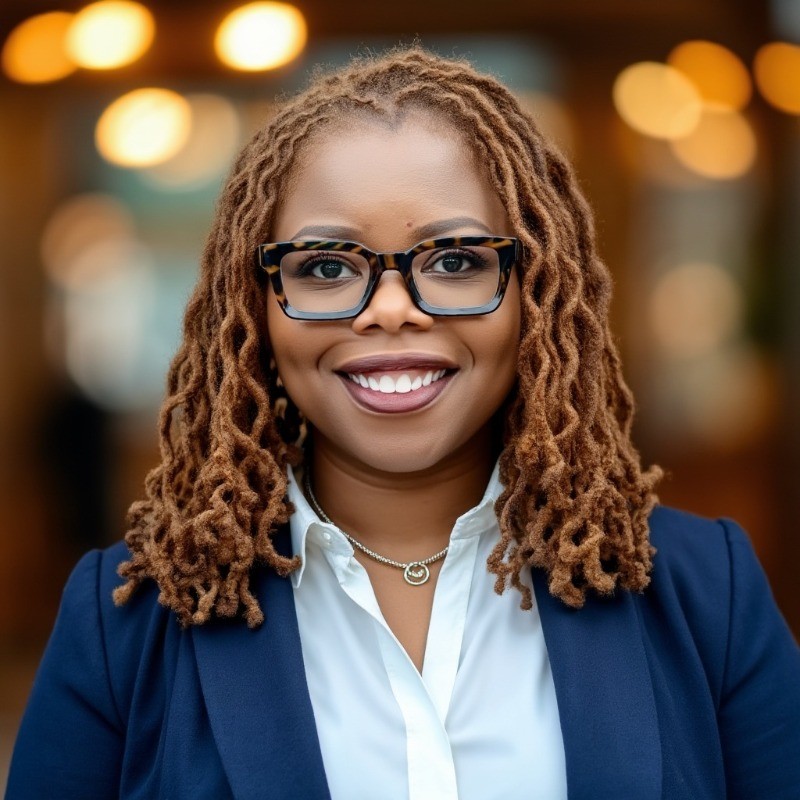
Dr. Tiffany Townsend
Dr. Townsend is a clinical psychologist and seasoned DEI executive with a proven track record of successfully delivering equity and inclusion programs, research and advocacy initiatives. Her career spans over two decades and includes leadership positions in various educational and non-profit settings. Her work has been featured in several journals, books and media outlets and she has secured close to $5 MM in external funding. She currently serves as the Vice President of Organizational Culture and Chief Diversity Officer for Purdue University Global, and as the President of the Georgia Association of Diversity Officers in Higher Education (GADOHE).


Transcript
Brad Onishi: Welcome to Straight White American Jesus. This is the Sunday Interview. I'm Brad Onishi, founder of Axis Mundi Media, author of American Caesar: How Theocrats and Tech Lords Are Turning America into a Monarchy, joined today by a first-time guest, and that is Dr. Tiffany Townsend, president of CORE Perspectives, former chief diversity officer at Purdue University Global and Augusta University, somebody with decades of experience as a psychologist and educator and here today to talk about her new book, Weathering the Storm: Navigating the Anti-Social Justice Wave. Dr. Townsend, thanks for being here.
Dr. Tiffany Townsend: Thank you for the invitation, and I'm looking forward to the conversation, Dr. Onishi. This is exciting for me. I know that you have a really broad audience, and some of these topics are really aligned with that audience, so I'm looking forward to the conversation.
Brad: Well, grateful you're here, and grateful to get to do this with you. This is a book about the ways that we are seeing a systemic, strategic, a very planned takedown of the ideas of diversity, equity, inclusion, the ideas of equality and representation in the United States. You're somebody who is just uniquely positioned to talk about that. I want to start here though — your book starts with the election of Barack Obama. And I just gave a talk to an Indivisible group where I led them through the idea that when Barack Obama was elected, there was always going to be celebration and difference in this country, but there was waiting for us a backlash, and you experienced that in terms of your own personal excitement about Obama's election, but then everything that came after that. Why is that election the place to start with this conversation?
Dr. Townsend: Because I think for many people, particularly people that are focused on social justice, folks who are minoritized or marginalized, who saw that moment as a great moment in our fight for social justice, I think that really does highlight the hope I wanted people to go back to — what that feeling was. Because for me, that really personified radical hope for me, because I thought that kind of showed what was possible, to know that it is possible to move forward and that progress has happened and will continue to happen. So really, for me, it was a point of trying to get people to embrace that feeling, not because I think a lot of what I talk about is intellectual, and I wanted people to have the feeling, the emotion that came along with that moment, because it is so powerful. And what I experienced in that moment was powerful for me because I had never experienced it to that level before, and so I think that that speaks to where we can be and what we can be as a country. And I wanted people to feel that again.
Brad: Yeah, I remember that night so clearly, and I remember that feeling and that sense of something being different all of a sudden. This leads us to 17, 18 years later, somehow, and we are at a point where there is an onslaught of attacks on diversity, equity, inclusion. We have this week the indictment of the Southern Poverty Law Center, which is sort of a perfect example of everything we're talking about today. DEI has now become a word that the American right, that many in MAGA world, Christian nationalists would use as a negative term, almost as a slur. And I just want to remind people what DEI is, just so we can even have a good conversation about it. Is there a way you could give us a short reminder definition of what DEI is supposed to be.
Dr. Townsend: You know, I don't even want to go into the specifics of each term, right? Because I think in many ways it's kind of like you said, it's become this all-encompassing kind of term for other folks. But I think that it's important to remember what the goal of DEI was, and so if I'd like, if we're doing a short kind of thumbnail sketch, I'd like to just kind of talk about what the goal is. It's interesting to me that it's been flipped and co-opted and used as a term to mean divisiveness and hate when in actuality it was all about how do you embrace the many ways that humanity can show up, and to not have a right or wrong, but in essence say that everyone deserves access to resources. Everyone deserves the right to kind of show up authentically, and to have the ability to perform at their best. And so what these programs and what DEI was intended to do was just to create a space where that diversity was possible for everyone in this country. So it was the exact opposite of divisiveness. It was the exact opposite of discrimination. It was creating the environment in which everyone could be successful. It was equity. It was about all having access to opportunity, not just a select group.
Brad: Yeah, it's now been turned into the idea that DEI was meant to push out white candidates or white people and give folks who are not qualified jobs simply on the basis of their racial identity, their ethnic identity, their gender and so on. And as you say, that's been completely flipped, right?
Dr. Townsend: Right. And so I think what people are pointing to is the fact that these were — and I will acknowledge, not always the best ways — but these were attempts to reduce discrimination. Discrimination had been used. There had been opportunities that were taken away from certain groups just because of the color of their skin or their socioeconomic background. And so what these were, were attempts, imperfect as they were, to kind of strip away some of those advantages and make sure that everyone would have access. Sometimes that meant actually focusing on groups that had been marginalized in the past, just to make sure that they would have access to those opportunities, but in no way was it meant to replace. And I think that's really important to talk about. When I would talk about this in school settings or in organizational settings, it was about creating more space and more seats at the table, not taking seats away.
Brad: There's a great quote here that you have early on in the book, and it's from the classic book Why Are All the Black Kids Sitting Together in the Cafeteria? by Beverly Daniel Tatum. The quote reads: "A shifting paradigm can generate anxiety, even psychological threat for those who feel the basic assumptions of society changing in ways they can no longer predict." And I guess for me, if I take your book — you start with Barack Obama being elected, and then we get to 2019, but especially 2020, and the ripple effects, the wake of the calls for change after George Floyd's murder — there seems to me an anxiety among people in certain sectors of American society who are thinking, I can no longer predict how things are going to work, and therefore I'm anxious, and my response is going to be backlash, lashing out, and basically saying, you know, certain people only have certain jobs, and the only way they could get a certain job is because of an unfair process where there's different standards for everyone. I remember hearing folks in the American right saying Ketanji Brown Jackson can only be a Supreme Court justice because of DEI. And it's like, are you serious? Do you know the track record of this woman? Do you know the expertise? Do you know the brilliance? Do you know the degrees? And it's turned into, well, someone like her could only be there because of DEI. So that's what we're facing. That's the backlash. And what you argue is that this is not accidental, but it's systematic and it's strategic. Would you help us understand that a little bit?
Dr. Townsend: Well, I think the biggest point here is sometimes, when we're looking at racism, and we've done this in this country, we think of it as individual, one-off things that happen. But this was a system that was put in place from the inception of this country, and there were certain things that have been put in place since that time to keep that system afloat. And so when we talk about ways in which there is an attack on some of the progress to try to break down or dismantle that infrastructure, that hierarchy, it's through systemic ways. It's institutionalized. They're not one-off things that individual folks who just may not like certain groups are doing. This is something that's baked into the institution. It's baked into our laws. It's baked into our policies and practices. And so what we're seeing are concerted efforts to change the laws or take away laws that were put in place to try to equalize things. They're actively trying to pull those protections back. And so we're seeing a systematic attack, and it's not by happenstance. It's really designed, and it's been coordinated — and very well done, with great precision. And so what we're seeing are the outcomes of that. You see it with some of the legislation.
Brad: Keep going. You have all the runway you want.
Dr. Townsend: Yeah, some of the legislation. I mean, we're seeing that when you're talking about affirmative action and removing that from admissions, when you're seeing that with some of the Voting Rights Acts and how there are certain populations that are experiencing more challenges in voting instead of less challenges in voting. And so again, systematically we're seeing these things being toppled, almost like a domino effect.
Brad: Is this what you mean by the redemptionist playbook as you talk about it in your work?
Dr. Townsend: Yeah, so it's funny, people have kind of grabbed on to that term, and I just used it because for me it was very similar to what we saw after Reconstruction. So after African Americans were given their freedom from slavery, and they were then given some rights as citizens in this country, we saw a very swift kind of backlash that's very similar, where there was a concerted effort to take away those freedoms and those rights. And, you know, a scholar — and I won't even say it was my term — but Dr. Peniel Joseph wrote a book called The Third Reconstruction, and he talks about the fact that there are these dual identities of America that we've been founded on, these two identities: this identity where you're really focused on freedom and democracy and equality, and at the same time it was built on a hierarchical structure where certain people did not have rights. And so you have a push and pull between these two identities. One he termed the Reconstructionist kind of push, and the other one he termed the redemptionist push. And so I grabbed on to that term, redemptionist, because I wanted it to be clear that some of the strategies that we are seeing now — they're not new, they're strategies we see throughout history — but also they're not by accident, they're not by happenstance. These are concerted efforts, and they're very clear. And so if we can identify what they look like, then we can figure out ways to counter them in a very concerted, strategic way.
Brad: Well, let's identify some of those. And if I take the book and I understand the argument correctly, you're saying that these are systematic, they are corporate, they're strategic, but they show up in individual, interpersonal relationships. So you're not saying that racism or prejudice is simply about individuals. No — as you just outlined so wonderfully, there is a tragic, disgusting history in the United States and many other places of racism, of prejudice, of xenophobia and so on. But that systemic corporate nature doesn't mean it doesn't show up in the interpersonal, individual relationships. That is where it is enacted, it's practiced, it is executed. So you point out a number of these in the book. One of them is through stereotyping. I'm wondering if you can help us understand how stereotyping is a kind of enactment of the kind of backlash — the white backlash, the racist backlash — that we're talking about today.
Dr. Townsend: Yeah, well, stereotypes come from this kind of overgeneralization of certain groups, and they're often based on societal ideas about those groups, right? And so we have this hierarchical structure, and particularly for race, to kind of sustain that structure, we have these ideas about certain groups based on, you know, not a whole lot of information really. And so they get perpetuated. And the stereotypes often kind of speak to these ideas that certain groups are inferior, or they have certain characteristics. And so you learn them — they're like in society. So often you see them in the media. You see them in depictions of certain groups, and then people start to just kind of take them on. They believe them, whether they realize where it's coming from or not. And so because of those stereotypes, people then engage with members of that group based on their understanding of the group, often from stereotypes, because they don't have enough interaction with those groups to know whether those generalizations are actually true. And so I kind of use this analogy in the book about going into a bar, because a lot of people will say, "Well, I don't believe in stereotypes." And I'm like, well, it's difficult to live in this country, watch the media, absorb social media — all the things that we hear and see — and not confront and absorb some stereotypes. It's just very difficult. So I talk about how it is when you go into a bar. Now you can't do it now — this doesn't happen because they don't allow smoking in bars. But back in the day when they allowed smoking in bars, you would go into a bar, and even if you didn't smoke, even if you hated smoking, when you came out you smelled like smoke, because it was all around. Stereotypes are the same way. There are these overgeneralizations, there are these ideas, these notions about certain groups that just permeate our society because the society was built on a racial hierarchy. And so it's impossible to kind of enter this society and not walk away smelling like the stereotypes that permeate the environment. And so they then color the way people interact with each other on interpersonal levels, right? And a lot of times they'll make comments to you that are based on stereotypes and not even realize that that's what they're reacting to. And so it impacts the interaction. It also impacts the target, because we hear — if you're from a minoritized or marginalized group, you hear those stereotypes all the time. You know that it doesn't speak to your humanity. It doesn't speak to who you are as an individual, and so it kind of takes away from your sense of dignity every time you hear it. Like, you're not seeing me, you're seeing what I represent, and that's not an accurate depiction of me. And so that's how those stereotypes impact us interpersonally.
Brad: And it becomes such an issue when it comes to leadership roles, public institutions, elected officials, folks that we look to as those that represent us in our government, in business, in education — when those stereotypes then get applied to someone like Kamala Harris. You have a situation where somebody's casting doubt on the ability of a human being to serve in a role because of a stereotype about that person's group, and that stereotype usually being something that is negative. And even when someone is stereotyped, quote unquote, positively, you're not seeing their humanity. I'm Japanese American. People often say, "Well, you know, East Asian Americans — the model minority." And it's like, well, that's also harmful, because unless we act like you want us to act, then we're not going to be your little pet, we're going to be a threat. And you're also dividing and conquering people of color from each other so that white supremacy is bolstered. And so those are things I think about there. All right, stereotyping is one you mentioned in the book. Another that I really wanted to sort of get your thoughts about quickly — and people will just have to read the book to get the full analysis here — but the idea of tokenism. How does tokenism play into these efforts to squash or quell equality and diversity in our public life and our institutions?
Dr. Townsend: Because in many ways, when you find a token to represent a full group, you one, are alienating them. They don't have a whole lot of support or have others who understand what their experience is — being one of a few, or maybe being the only one — in an environment that's very alienating and isolating. And so you have a person kind of coming in, feeling kind of alienated and isolated, but then expected to function as the representative for a whole group, which puts an incredible amount of pressure on them. So in addition to feeling like they're by themselves in this fight, you've then put a whole group of people on their back to have to try to champion. That's a lot of stress, that's a lot of burden. And so that's problem number one. And so often you have these folks who then have this amount of pressure, this alienation, and then they're coming into a system, and they really want to do what they have been tasked to do, but they're feeling like they may not have the support or the resources in order to do that. And so the change that you're hoping for, that you are pointing to, is actually not happening because often those resources aren't provided. Often the supports aren't provided. Often the access to some of the power to actually make true change in the way you're hoping is not given to that person. And so there are many ways in which this person is kind of held up as a representative, but not given a lot of the resources and supports to actively make the change that they really are being tasked to do. And so it's almost like they're being set up to fail. And again, because it's just one, and you don't have the critical mass, you're not seeing the change to the environment. You're not seeing the benefits of including a whole different perspective, or a whole different culture, or a whole different way of viewing the situation. You're not seeing the benefit of that, because you only have one, and so that becomes a problem.
Brad: So the way tokenism works is to say, we're hiring or we're admitting students to a college or university or something along these lines, and to say, "Oh well, we are going to make sure that we check the box by hiring this person from this group, that person from that group, and this person from that group. So now we have one from each group — we've done a really good job. We have a Black person, we have a Latine person, we have an Asian person, we have a gay person," whatever tokenist sort of framework is being applied. And then, if the goal is simply to check a box and admit one from whatever group or categories you've devised — when folks get into those institutions, when they get into those colleges, when they get into those environments, they're basically told, "Well, aren't you glad you're here? And we were really great to allow folks from your group in. You're the one to represent that group to your best. But also just realize that none of the perspective you have on culture, on how institutions might work, the diversity of perspective you might bring, the richness of experience — none of that is going to be taken into account in terms of how this place works. We're just — you need to be glad you're here. We'll take pictures, we'll put it on the website, and everyone will be happy." What do you say? Is that a good summation of how tokenism works?
Dr. Townsend: Actually, how it works. And then the other piece to that is now we've checked the box, so we don't have to do it again. And so the idea that others might come in behind — sometimes that happens, but certainly not in mass, in a way that represents their representation in society. It's just maybe one at a time, just so we can check the box. And so not only does that cause harm to that individual who has to represent the group, but then all the others who might have been considered are no longer being looked at because we've already done what we needed to do as far as diversity. We don't have to worry about that now. And so others aren't being considered, right?
Brad: Yeah, so much to say here. Let me ask you this, because this is a big part of the book, and I'm sure people at home are going to be thinking, "Yeah, I've seen that. I understand how that works. It's not good." You know, I've seen the attitude of, "Well, one is here, but if we allow too many here, that's a problem." Like, you know, I grew up in Southern California, and I have all these people I know who are moving to Idaho. And I'm always sort of wondering why they're moving to Idaho, and I know why they're moving to Idaho — it's because the place where we grew up is way more racially diverse than it used to be, and the folks moving are all white, okay? And if I call up my friend Ryan from high school, like, "Ryan, how about Idaho?" You know, he's gonna tell me about traffic, and it's cheaper and all this. But I'll always throw out other places, like, "How about Albuquerque? Or I used to live in Memphis. Memphis is great. I love Memphis. Pretty cheap to live in Memphis. No state income tax in Tennessee. What about that?" And Ryan's gonna be like, "Oh, no, I don't think so." And my thing with him is always like, "Well, you know, how about if me and my dad move up there — my dad's a Japanese guy — is that okay?" And the attitude is always like, "Sure." But my next thought is always like, well, what if 14 Korean families moved on your block up there in Idaho? Or what if eight Black families moved up, or nine families from El Salvador with their music and their culture and their life and just being humans in your space — would it still be okay? Because you're okay with the one, "we don't see color," but when folks are actually represented and bring the richness of their perspective on culture and experience, then it becomes a thing. What do we do about that? What are there strategies or tactics we can use when we see this manifested?
Dr. Townsend: So when you say "we," are you meaning the members of the marginalized group, or are you meaning leaders in that space? Because those are very different, right?
Brad: I'm acknowledging my question was ambiguous, and you're rightly asking me to clarify. I mean, what can folks in the marginalized groups do? I saw students at colleges all the time who asked me, "Professor Onishi, what do I do here? I'm the only person, or there's like three of us, and we're just far from home and we feel far from our culture and our people, and we thought this was going to be great, and in fact it feels terrible." But what also can leaders do, or people who are working or existing in those spaces? What are some tactics there as well?
Dr. Townsend: So I think this is the work of DEI professionals in those settings. I mean, this is exactly why those positions were created. And so part of it is creating the environment where they still feel like they have that belonging. Are there ways that you can connect them to communities? And so when you have a large campus and it's only a few, creating spaces where they can come together so they can feel like they're not alone — that's hugely important. So finding that community, if you're a member of that marginalized group, finding that community, finding like-minded folks who understand your experience, and maybe that's not in your department. Maybe you have to step outside a little bit. That is a little bit more effort, but it is so rewarding to be able to see your experience reflected back to you — that is powerful, and it's really huge. The other side of that — so this is the folks who are experiencing the marginalization — the other side of that are the leaders in those spaces. Appreciating that "one and done" does not work. We can't just check a box. We really have to think about when we're talking about creating inclusive spaces, what do we really mean? Does it mean that you're just allowing them in, but you're not allowing them to make changes? That is not creating inclusive spaces. Are we creating spaces where everyone feels like they can contribute to the way the environment is structured, the way people engage in that environment? And that there's no right or wrong, that all of those contributions are valued — and that people feel like when they show up as their authentic self, they don't have to leave parts of themselves at the door. They can show up how they are and still feel like they will be viewed in a positive way. And I think that we have to be intentional about that, and to avoid what you described — where it's like, "Hey, you're here, you should be happy that you're here, don't make any changes, sit down and be quiet, and we'll take pictures of you at the appropriate times, but we don't expect much from you other than that." And so we have to create spaces where people can contribute all the time and in all the ways that they feel like it's appropriate.
Brad: Are there ways — just going back to the first thing we discussed, which was stereotyping — are there tactics there when stereotypes are leveled at people in their workplace, in their educational spaces? But also when folks recognize that colleagues or students are being stereotyped, are there things that folks can do as they witness that?
Dr. Townsend: Yeah, I think that's a really good one, and I think that's one that is so difficult, because often when you see it you don't know how to respond to it. We're not taught — I mean, we are actually taught not to talk about it, to not see color — that's kind of how we're taught. So when we are exposed to it, or when confronted by it, it's difficult to know how to respond. I think there are different ways that you can, and I kind of talk about the different ways that you can respond in the book, and you have to figure out what works for you and your personality. There are some people who are very upfront and straightforward — like, "Hey, did you know that you just leveled this stereotype at me," like holding up a mirror. There are others who can make a joke. There are others who can't respond in the moment; they have to come back and find other ways to kind of address it. So I don't want to say that there's any one way. I think the best way is a way that feels authentic. But what the research shows is that not responding actually can be harmful. So when you see a stereotype being leveled, especially at you, and you feel like you're powerless to address it — that's what increases depression. That's what increases anxiety, the imposter syndrome, all of the things that you see in those spaces that can be really harmful. So we do know that you need to respond. Now, how you respond is definitely up to you and your personality and what feels genuine to you. I had to learn it. I didn't respond at first. In the book I kind of talk about my first experience being a token. I was a professor at a large university in the United States, and I was the only Black faculty member in the department. It was a huge department, and I was the only one. It happened all the time, and I didn't know how to respond at first, and it just made me feel more alienated and alone and isolated. I started to question whether I needed to be there. And so as I got more confident in myself, I started to develop my own strategies and ways to respond. It would have been nice if I had someone who could say, "Hey, it's okay to respond." Even just giving me license to say it's okay to respond, and actually you should, and let's figure out a way that works for you. And so that's what I would encourage your audience — is just to know that it's okay to respond. You actually should, to protect your inner spirit. Figuring out what works for you is the best way. And there's no one way. I mean, there are several different ways that you can respond. You can use humor. Sometimes that works.
Brad: It is difficult. And I know folks feel so vulnerable, they feel so often frightened, and also just hurt when this happens in their work settings. The last place that I worked as a full-time faculty member, there were very few Asian American faculty members, and oftentimes a few of my friends who were also colleagues would come by my office and knock on the door and say, "Hey, let's go get coffee." And I had three friends that would do this, and they were all Asian American women. One of them was a Chinese American person who worked in the English department and film department. Another was a Vietnamese American person who worked in the psych department, and another was a Korean American. And it was sort of once a week, twice a week — knock on the door, "Hey, Onishi, come on, let's quit writing papers, let's go get coffee," right? And every time that happened, almost every time, next door was my chair, the chair of my department. And they would sort of see the person in the hallway and misname them — say, "Oh, you must be so-and-so." They would call one of the women the wrong name, and the assumption was that all three of these Asian women were the same person.
Dr. Townsend: Interchangeable.
Brad: And you know, this happened almost every time, to the point that my colleagues said, "Hey, look, I'll meet you — I'm going to text you, but I'll meet you at coffee, because I don't want to see your chair and I don't want to get called the wrong name and I don't want all that to happen to me." And as an untenured faculty member, you know, it was this moment of like, what do I do here? Do I need to — how do I speak up? How do I say this? How do I do — and anyway, all that to say, I eventually did. And it led to tears and repentance and crying and all kinds of stuff. But it took so much for me to even say, "Hey, there's three different people here, and I know we think all Asians look the same, but we're going to need to cut that out, because that's not a good look on a small campus with very few faculty and just a few folks who are Asian American." Anyway.
Dr. Townsend: Did you name that? Did you name that, Brad?
Brad: I did. I did.
Dr. Townsend: Brave to actually name it and say, "This is what you're doing here."
Brad: The person doing it was the person who taught Asian religions in the department. So that made it even better. As an Asian American I'd go home and think, "Well, they love to teach about us, but when they see us in the hallway, we're just all the same person." You know, one of the things you mentioned — one of the other aspects of this systematic, strategic onslaught against equality, inclusion, against justice — is violence and intimidation. And I think that's probably in a lot of people's minds as we exist in 2026: ICE raids, DHS, hate crimes. What are some aspects of that that you want us to understand, and are there things that people might take away in terms of strategy or tactic?
Dr. Townsend: I mean, I think the reason why I raised it is one, we see it throughout our history, right? That is one of the main kinds of ways, and the goal of it is to silence us — is to scare us into silence, into not wanting to push back. And so what I hope in sharing the stories is to talk about ways that we — and when I say "we," I mean members of groups that are fighting for social justice — what have we done in the face of violence and intimidation before? What has worked? Because it can be scary. And so appreciating that what has worked is collective action, is kind of solidarity, is refusing to be divided. That's been the antidote to intimidation and violence. And so when we see it, saying, "Whoa, I'm glad that's not me" — that's the wrong response, right? The response should be, "That could be me, and so we have to now band together." Because the reality is, if there are too many of us, you cannot intimidate us. Now we are a powerful force, and intimidation won't work. And so when we see it, that should be a sign for us to rise up, to band together, to actually be stronger together. I think that's the point of that chapter — is really to kind of talk about, yes, this happens, it happens throughout history, but here is what has worked. And I pointed to an experience that I had at that university, because the students there — it was a small group of students who were starting to get admitted into the university, and they started to experience intimidation and violence. There were some really scary moments when I was there, and their response was not to then be quiet. Their response was, "Oh, now we have to stand. Now we have to kind of really band together." And it was people from all backgrounds, even groups that were not being targeted, who decided, "This is not okay." And so I think that's what we have to do in these moments — appreciate that an injustice to anyone is an injustice to everyone. And that means now we have to stand up and bear that together, because they can't intimidate us all.
Brad: Something I've said on this show a lot is there's going to come a time when they're going to decide you're the wrong kind of person. It might be because of your race, it might be because you're a woman, it might be because you're queer, it might be because you simply stood on a street corner in Minneapolis and wanted to make sure that DHS and ICE couldn't kidnap people. It could be because you stood up to police brutality. You will be the wrong kind of person at some point. And so you can have the reaction of, "Well, it's not me, so I'm glad," and go home and tee up Netflix and eat your dinner. Or you can realize that when anybody is targeted for who they are, that's a target on all of us. And that's the only response we can have, it seems, if we want to have a better place, a better society to live in. You ground all of this in radical hope. And of course Obama's 2008 campaign was the famous campaign of the Hope poster. You have an idea of radical hope here in this book. What does that mean to you?
Dr. Townsend: So, I mean, I take this from scholars — I want to give a lot of credit to my colleagues who do a lot of this work, and part of this book was kind of highlighting the great work in psychology that speaks to many of these issues. And I have colleagues who wrote an article talking about what radical hope is, a framework for what that is and how it leads to healing. And what they talk about is the importance of holding two things in your mind at once — understanding what you're up against, appreciating the challenges. So it's not hope like, "I don't see it, but it's going to be okay." It's really appreciating what we're facing, but having the knowledge to know that we'll get through this too. So part of my book, in trying to instill that radical hope, is providing the information and the knowledge that perspective — that only knowledge can give you — for understanding that we've been here before, and we've gotten through this before, and there are specific strategies for doing that. And so I wanted us to appreciate that yes, this is tough, we're in a battle right now, but we've been in a similar battle before. There have been strategies that have been successful. If we can identify the tactics that are being used in this battle and the strategies that have worked before to counter those tactics, we can use them when we see them. So we just have to identify them. So my idea was actually being as strategic as I think the redemptionist playbook is, and finding ways to ensure that people are prepared and know that we can get through this. So it's not pretending that everything is okay or going to be okay. It's knowing that it's tough, but still knowing that we can get through it. That's the radical hope — like, we've been here, we can do this. And so that's what I was hoping. And in many ways the title of the book holds those two things. It's kind of a way of holding those two ideas in mind. It's "weathering" — this notion from Dr. Arline Geronimus that people who are minoritized and marginalized are weathered by the institutional inequities in this society. It weighs on you, physically. It can be harmful. But at the same time, weathering can mean that you can resist it and you can come out on the other end. And so I wanted to have that in the title — this notion of holding those two realities in mind and appreciating that justice is still possible.
Brad: Yeah, can I — if you have time, I'd love to ask you one more question about how that weathering happens. You know, the idea of staying rooted in community, the idea that you need to have others around you in order to do that weathering, what that looks like in 2026. I also want to talk about energy. How do we protect our energy in a time that feels exhausting every second? So friends, I'm going to ask Dr. Townsend one more question. If you are part of our community, a subscriber, stick around — we'll get to that here in a second. If you're not, today's a great day to think about doing that. You can find all the info in our show notes and help support us and keep this show going. After 1,000 episodes, we have big plans coming here in the next quarter of 2026 — some new additions, some expansions and some innovations. So we look forward to just the next chapter of Straight White American Jesus, and we'll be sharing a lot of that with you soon. Dr. Townsend, where is the best place people can connect with you and the book, in terms of your presence online or anywhere else.
Dr. Townsend: So the book is available for pre-order — Barnes & Noble, Broadleaf Books, which is the publisher, Amazon. You can access the book there. I am the president of a consulting firm, thecoreperspectives.com, so you can reach me or see me there and get more information about the work that we do as a group, as a team, and trying to advocate and advance organizational equity, because that's pretty much what our organization does. And I'm also a therapist, and so you can find me — I know I have like 20 hats that I wear — I am a therapist, and you can find me and my therapeutic work at thecoreperspectives.com.