Summary
In this episode of the Straight White American Jesus Sunday Interview, host Leah Payne speaks with Jonathan Calvillo, sociologist of religion at Candler School of Theology at Emory University and author of The Saints of Santa Ana, about growing tensions within Latino evangelical and Pentecostal communities over immigration, political representation, and the public platforming of prominent evangelical leader Samuel Rodriguez.
The conversation centers on the recent “We Are Not a Monolith” statement issued by Latino pastors, scholars, and ministry leaders calling for greater nuance and accountability in how Latino Christians are represented in national media. Calvillo explains why many faith leaders believe Rodriguez has come to function less as an advocate for vulnerable immigrant communities and more as a defender of Trump-era immigration policies and conservative political networks.
Together, Payne and Calvillo explore how ICE raids and immigration enforcement are reshaping Latino churches across the United States, including the emergence of new theological language around persecution, sanctuary, solidarity, and resistance. They discuss the complex political diversity within Latino evangelicalism, the influence of white evangelical megachurch networks on Latino Pentecostal leaders, and the growing tensions between immigrant-majority congregations and prominent conservative evangelical institutions.
The episode also examines how Latino evangelical and Pentecostal churches are responding to fear, surveillance, and political polarization in this moment, including new collaborations between immigrant churches, ecumenical groups, and unexpected community allies. Throughout the conversation, Calvillo situates current debates within a longer history of migration, marginalization, religious activism, and public theology in the United States.
- The “We Are Not a Monolith” statement and the debate over Latino evangelical representation
- Samuel Rodriguez, the NHCLC, and conservative evangelical political influence
- ICE raids, sanctuary politics, and immigrant church communities
- Why some Latino pastors are increasingly using the language of persecution
- Latino Pentecostalism, MAGA politics, and white evangelical influence
- The role of megachurch culture, class mobility, and political power
- Christian nationalism and competing visions of American Christianity
- New ecumenical and interfaith collaborations emerging in immigrant communities
- Theologies of protest, resistance, and accompaniment among Latino evangelicals
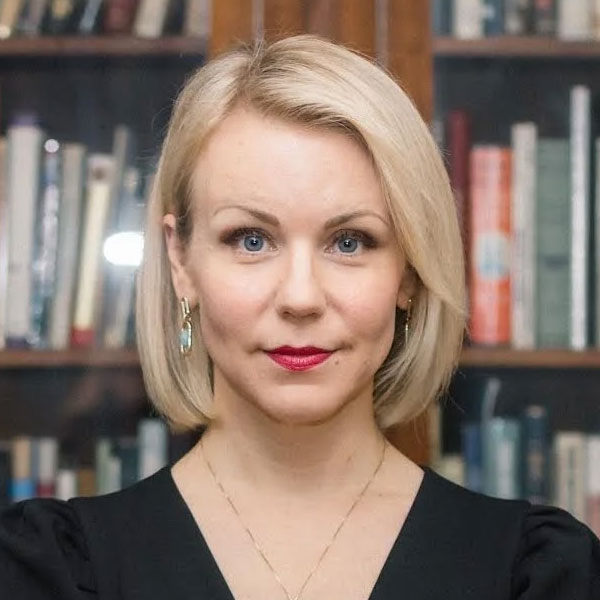
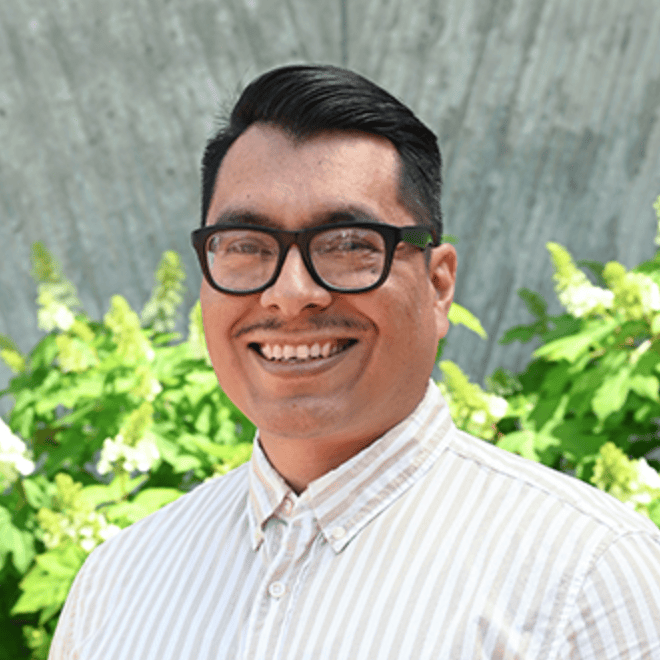
Meet The Guests






Transcript
Leah Payne: Welcome to the Straight White American Jesus Sunday Interview. I'm Leah Payne, author of God Gave Rock and Roll to You: A History of Contemporary Christian Music, and host of Spirit and Power: Charismatics and Politics in American Life. Today, I'm joined by Dr. Jonathan Calvillo, sociologist of religion at Candler School of Theology, and author of The Saints of Santa Ana: Faith and Ethnicity in a Mexican Majority City. In the book, Calvillo draws on years of ethnographic research in Southern California to explore how Catholic and evangelical Mexican immigrants differently understand ethnicity, community, memory, and belonging in a Mexican majority city. Today, we're talking about a major and potentially historic rupture within the segments of the Latine evangelical world. Over the past several months, public tensions have intensified around prominent evangelical leader Samuel Rodriguez, immigrant politics, media representation, and the relationship between Latino or Latina Christians and Trump-era conservatism. Dr. Calvillo will help us unpack a recent open letter, which states "we are not a monolith," from Protestant leaders challenging the public platforming of Rodriguez and broader debates over immigration enforcement and ICE raids that are shaping Latino churches and the complicated reality that these religious communities are far from politically monolithic. So, welcome Dr. Jonathan Calvillo to the Straight White American Jesus Sunday Interview.
Dr. Jonathan Calvillo: Hello, hello, Dr. Payne. It's great to be here with you.
Leah: In March of 2026, Latino Christian pastors, scholars, and ministry leaders from across the country came together to release a public statement calling for greater integrity, nuance, and accountability in how Latine Christians are represented in national media with a simple message: We are not a monolith. In other words, leaders from across the country signed a statement saying that, quote, "no individual or organization speaks for the entirety of the Latino Christian community," end quote. Could you tell Straight White American Jesus listeners a bit more? What is the "We Are Not a Monolith" statement, and why are some Latine faith leaders concerned about how the media platforms certain individuals as representatives of all Latino evangelical and Pentecostal communities?
Dr. Calvillo: So the "We Are Not a Monolith" statement emerged from an informal collective of Latina faith leaders, pastors, and scholars who are concerned about how the representation of our communities by the media can bring harm to our communities. The statement centers on how Reverend Samuel Rodriguez has been platformed as a representative of the Latino community. The statement emphasizes several points. To begin, one voice does not represent the entire community — even specifically Latino, evangelical, and Pentecostal communities. We're talking about a population that reflects an array of denominations, distinct racial, ethnic, and national origin groups, distinct experiences of citizenship, so any voice claiming to represent such a diverse population invites scrutiny. That's just going to happen. Now, Reverend Samuel Rodriguez has historically made claims about representing tens of thousands of Latino congregations, and this has been questioned for years now. For example, a journalist by the name of Frederick Clarkson was already raising suspicion about these claims back in 2012. The media does a disservice to the community by over-representing one particular voice. Now there are the claims made by Reverend Rodriguez and the NHCLC, and then there is the role of the media in elevating these claims and his voice. He is an important voice, and his views surely reflect a segment of the Latino population — I can say that with confidence, and I can say more about that later. But for now, let me speak to why there is concern for his voice being amplified in moments of crisis in our communities, moments that have put our communities in danger, moments where our communities have been targeted. Reverend Rodriguez has come across more so as a representative of the administration and less as a representative of those who are most vulnerable. He offers support to the policies of the administration, and some would say he serves as an apologist for the administration to the community, more so than as an advocate of the community to the administration.
Leah: I think one question that hovers over the statement is: does Reverend Rodriguez represent a significant percentage of Latino evangelicals in the US?
Dr. Calvillo: Recent surveys have suggested that a majority of Latino evangelicals, and certainly Latino Catholics, do not currently approve of the president's immigration policies, so to support the president's enforcement policies does not align with where most of the Latino faith community currently stands. Again, this does not represent the community. It might seem easy enough to argue that one voice doesn't represent such a diverse community. In fact, the saying "Latinos are not a monolith" has been around for decades. We can't even agree on what to label ourselves as a pan-ethnic group — there isn't a consensus around that. Terms like Latina and Latinx have more recently come into the conversation as gender-inclusive options, but many prefer more traditional terms like Latino or even Hispanic, and many stick to their national origin group labels as well.
Leah: Can you tell us how Reverend Rodriguez has sought to present himself as the leading voice in this arena, and how has he used his position politically? And have his political positions changed at all over the years? I'm thinking specifically here about immigration, but really that could cover a broad spectrum of political issues and positions.
Dr. Calvillo: Rodriguez has gained notoriety as a pastor and a preacher, first and foremost. That's really where his beginning is. In fact, I first learned about him in the mid-1990s when I was a teenager. Reverend Rodriguez would preach at some of the youth conventions that I attended in my teen years, and I really looked up to him as a speaker who knew how to get the attention of young people, and he knew how to get a response from young people. He was a really inspiring preacher in the '90s. He also formed the National Hispanic Christian Leadership Conference, or the NHCLC, as an organization that engages in public policy advocacy and networking and leadership efforts on seven core directives: life, family, great commission, stewardship, education, youth, and justice. Rodriguez has worked steadily for decades to influence policy on issues that impact Latina communities. Across these decades, he's gained the attention of various US presidents and has met with them personally. Often he's functioned as a type of spiritual advisor to various presidents, and it's important to note the evolution of his approach on immigration. In his earlier advocacy, he spoke about the importance of creating a pathway to citizenship. In other words, he really saw this as a key component to how immigrants should be incorporated into society, that there needed to be this pathway to citizenship, and he even said that denying immigrant citizenship would create a two-tier society. In the current moment, however, he's more inclined to policies that would establish strict penalties for undocumented immigrants and would not offer a pathway to citizenship. Now, there are other components of advocacy that he's been engaged in, so I don't mean to only focus on this one, but this is an important shift.
Leah: That is a big departure from supporting the DREAM Act, which I believe Rodriguez did during the Obama administration in 2009. I wonder if you could talk us through what kind of public statements he's made recently about ICE. I'm thinking specifically about ICE in Minneapolis, but really in any of the areas wherein the Trump administration has concentrated its enforcement.
Dr. Calvillo: Especially within certain cities that were targeted — like Minneapolis, like Los Angeles, like Chicago — rather than speaking out about that in a clear and direct way and naming some of the leaders who are behind that, there's been more of this generic statement about, yes, something needs to change, but part of what needs to happen is to actually name the administration and name some of the leaders that are there, including the president. And so there's been a hesitation around that, that a number of leaders have noted. He's emphasized that ICE is targeting dangerous criminals, which is the language that the administration has used. In fact, he used the phrase "mucho malo hombres" — that violent criminals and gang members are the ones that are being targeted. But for folks on the ground, that's not the pattern that people are experiencing in the community. And so for him to affirm the language and the policy of the administration seems to send a mixed message.
Leah: Can you talk a bit more about that mixed message, and how what Rodriguez is saying might be out of step with the experiences of Latino evangelicals and their experiences with ICE?
Dr. Calvillo: So on the one hand, saying something needs to change — churches are suffering, churches are experiencing less participation, congregations are seeing their numbers dwindle, congregants are afraid to go out in public and to go to church — and yet at the same time not being able to name who's behind this, and what policies need to change more specifically. And so there's been concern that if one is claiming to have a prophetic voice, that we need to be direct. We need to name who's doing the damage and what kind of damage is being done. Another area of concern: Reverend Rodriguez has blamed sanctuary cities, sanctuary policies that have been instituted within some cities. He's blamed the ICE raids on the cities that have instituted some form of sanctuary within the communities to protect vulnerable immigrants. According to Reverend Rodriguez, that is one of the reasons why we've had ICE raids — because the cities and the administrations in those cities are not compliant, and so we need the ICE raids because of those things — instead of actually naming the harm of the raids themselves. What's interesting there for me is that there's a whole history around sanctuary cities, around the very concept of sanctuary. It's actually a deep theological concept that comes from much of the scriptures — the Hebrew scriptures, the Christian scriptures — and so there's a disregard of that. I would encourage folks to read about that, to learn about where this concept of sanctuary comes from. Going even farther back, there was concern around detention centers and the well-being of migrants being held in those detention centers. Some years back, Reverend Rodriguez tried to minimize some of the harmful conditions within those detention centers — so again, that was another point of concern. And even in terms of aligning with different figures, it's interesting that he has felt very comfortable working with folks that are very much against immigration — not just against undocumented immigrants, but working with folks who have been very clear that immigration needs to decrease overall, including legal migration. So the fact that he positions himself as a champion of immigrants, but is very much in collaboration with folks who are opposed to immigration — for example, Turning Point USA, an organization that he's worked with for some time. The late Charlie Kirk — he had a close association, or in the very least was aligned with his talking points when they conversed, and was on his show, and appeared at some of his events. And so to me, that's a contradiction. It's a contradiction to be a champion for immigrants, but to be very much at home among the very people that are advocating against immigrants, against a more just and compassionate immigration policy.
I think an important observation here is that we're living in a really unique moment right now in terms of how many of these Latino churches are responding to what's happening politically. We have many churches, many congregations, who are in extremely vulnerable situations. These are folks who are being threatened, who feel threatened — and it's not just a perceived threat, but people are seeing their neighbors, their family members, their co-congregants being taken. And so many of these churches, many of these congregations that are on the edge, they are not being represented by a voice or an organization that is very much at home with other organizations and other leaders who are actually saying, "You don't belong here, you don't even deserve a pathway to citizenship, you shouldn't be here at all." And so there's a deep history within our communities that we've been on the margins for generations. Something that's unique within the Latina community is that we go through these cycles where our peoples are targeted — where we've experienced, for example, Mexican repatriation, where masses of Mexican and Mexican American residents were deported, some were citizens, and they were deported with their families, or some voluntarily repatriated out of fear. But a fear-based policy — is that really where we want to go with this? And so there's been this double message: "We need you to do the work, we need you to do the jobs that no one else wants to do, but then we're going to blame you for economic problems and economic downturns." And so churches have experienced those cycles — and I'm going to use a word that many of these congregations and congregants are using — churches have experienced these cycles of persecution. And it's really interesting that in this moment I'm actually hearing many of these immigrant pastors use that term with more frequency than I have heard in the past. I've studied Latina churches for many years. I've been a pastor of a Latino church myself in the past, for a decade, and have ministered even beyond that in immigrant majority churches, and was born and raised in one. I'll say I was born and raised in a Latino Pentecostal church — that's the tradition that I know quite well.
Leah: So what you're describing here is not just political fear, but a theological reinterpretation of the current moment.
Dr. Calvillo: We didn't often hear the term being used around immigration policy, but I hear it being used now. And so I want to name how unique this moment is — there's a consciousness, an awareness, a political consciousness that's emerging within some of these churches, not all. And so that's why it's important to name this divergence that's happening. Reverend Rodriguez does represent a particular constituency — I do want to name that. He does represent a certain constituency. There are folks that identify with the type of message that he is communicating, a type of message that would elevate, for example, certain conservative policies over and above protecting immigrants, over and above the well-being of immigrants in this moment. In fact, even immigrants would identify with that message, because that's the theology that they have been socialized into, that's the theology that has shaped them. And then we see, again in this moment, a theology that has been present in our communities but hasn't always been articulated as such, and we see that emerging in a much more direct way in this moment.
Now, I don't want to romanticize the suffering, I don't want to romanticize the persecution that's going on, but I think that a lot of folks have been pushed to the edge and are now losing some of that fear in speaking out. Our communities have had these traditions within us for many generations. We're talking specifically — we started talking about evangelical, Protestant, and even Pentecostals — if we look at the Catholic tradition, of course the Roman Catholic Church has had Catholic social teaching and has had liberation theology as something that has shaped a lot of the parishioners within Catholic churches for several generations now. Pentecostals and evangelicals have, to varying degrees, had key leaders that have been involved in social movements and in resistance against unjust policy. And then we have, for example, the theology of Misión Integral from Latin America, which in some ways was an evangelical parallel to liberation theology — not identical, but shared some commonalities with it, and was in conversation with it in some ways. So it's not that evangelicals and Pentecostals in Latin America and in the Latino community have been devoid of this social consciousness. It's been there. But we've also been very much influenced by the broader evangelical movement, and I would even say by white evangelicalism, and many of our resources, and our key theologies, and many of the speakers that we sometimes platform have come from broader white American evangelicalism. So we have these socially conscious voices that have been present, we have movements and leaders that have been engaged in the community — some of them quietly, some of them not making a big show about it, but just working in their communities, working for the good of their communities, working for the common good, whether it's through creating programs, whether it's through welcoming new immigrants generation after generation. We see these patterns.
Leah: Can you weigh in on the role that social mobility might be playing in the shifts that we're seeing in these communities? I'm thinking right now that Rodriguez is a pastor of a megachurch in Sacramento. Megachurches are typically well-resourced, also typically pastored by white men, which makes Rodriguez an outlier, statistically speaking.
Dr. Calvillo: Something I like to point out is that Latino Pentecostals and Latino evangelicals — and there's a blurriness between those terms and concepts, right? Latino Pentecostals are often identified as evangelicals and often self-identify as evangelicals themselves. So many of us — and I'll include myself, because I come from these traditions myself — many of us have come from the margins, meaning we've come from either under-resourced communities or under-resourced congregations. And so we've seen folks from our communities, generation after generation, some making it, some experiencing upward mobility. Well, churches also experience upward mobility, and we see leaders who maybe some years back didn't have access to some of these influential networks, now gaining access to those networks. Reverend Rodriguez is definitely a leader who has access to influential networks.
Leah: Could you situate Rodriguez in terms of his status in these increasingly influential networks, those right-wing circles he's running in? How is he creating a space for Latino evangelicals within the MAGA movement or MAGA republicanism?
Dr. Calvillo: One of the arguments that Rodriguez put forth in his early advocacy for immigration reform was that the US needs Latino immigrants because Latino immigrants are conservatives, and he was essentially saying that Latino immigrants would help to turn the tide against liberalism in the US. Even though Rodriguez had billed himself as nonpartisan, his political positions have largely been conservative, except for on issues of immigration, where he was often criticized by conservatives, especially as he became a key figure on immigration reform. It's interesting, because his argument was the opposite of what many conservatives say even today — this argument that Democrats want more immigrants because they'll vote Democrat. Rodriguez, on the other hand, was saying that Latino immigrants will make the US more conservative.
Leah: And it's possible that he's been right about that.
Dr. Calvillo: During the Trump 1.0 presidential campaign — so Trump's first campaign — Rodriguez was not in the Trump camp. In fact, he issued some public statements challenging Trump's projected policies, including around immigration, especially around immigration. However, through the years he's become more of a Trump supporter. He's also now one of Trump's spiritual advisors, and in fact you can spot him in a number of the photos that Trump has taken with religious leaders praying over him. There have been multiple occasions where Reverend Rodriguez has been present for those moments where Trump is being prayed for.
Leah: It's interesting, because on his website Rodriguez presents himself as being pretty politically nonpartisan, or to use the theological category, ecumenical. He touts the fact that he has advised Presidents George W. Bush, Barack Obama, and Donald Trump, and that he became the first Latino to participate in multiple presidential inauguration ceremonies. But it really seems like he's gone above and beyond when it comes to his relationship with Donald Trump. I wonder if he's testing the boundaries around his status as, quote, "America's most influential Hispanic Christian leader" — which is a direct quote from his website about himself.
Dr. Calvillo: Currently, with many of the critiques of the Trump administration's immigration policy, Rodriguez has been there to offer pushback — but in many cases against the critiques. In other words, in defense of what the current administration is doing. I do wonder about how the argument that Latino immigrants can make the US more conservative has played out. On the one hand, we did see an uptick in the last election in support of Trump from within the Latine community. So does that confirm that original argument? It's important to note that that's not just an immigrant response — so I do want to clarify that. It's not necessarily that immigrants are voting that way; some do, but in fact in some regions it's likely an anti-immigrant response, because most Latinos in the US are not immigrants. And so you have many Latinos who actually vote against more generous immigration policies — they want more restrictive policies, especially in some of the border regions. On the other hand, we're now seeing many Latinos, many from within faith communities, taking a stronger stance against Trump's immigration policies. So there is a resistance. We're seeing a split in the community.
One of the most vivid ways that this is playing out is that many of the personnel in migration enforcement agencies — namely ICE and the Border Patrol — are Latinos. So we're seeing Latinos going after Latinos. We have to further explore how the work of organizations like the NHCLC have contributed to cultivating this segment of the Latine population that is on board with the current enforcement maneuvers.
Part of that comes through when listening to Rodriguez in his recent statements about Trump. So let me share a quote. This is a quote from a recent interview that Rodriguez did with Dr. Tim Clinton. Rodriguez states the following: "We permitted universities and colleges funded by taxpayer money to indoctrinate with ideas of socialism and communism and wokeism, again everything antithetical to our Judeo-Christian value system. I would even argue antithetical to human biology, physiology, and science. We tolerated that for 40 years. We permitted this, and now we are reaping the consequences. However, Tim, let not your heart be troubled. We can turn this around, and I believe the past few years have been the pushback. I believe the entire Trump presidency has been the quintessential pushback, politically. Now we need cultural, spiritual pushback that will actually exceed the political pushback for the sake of our children and our children's children." End quote. So let's think about that quote for Rodriguez. The Trump presidency is really what he has been hoping for in regards to getting the nation back on track, or back on track within the vision that he would like to see. So if Trump is the vehicle, the figure that is bringing to fruition the vision that Rodriguez has been preaching about, then why would he question Trump? Why would he rise up in opposition to Trump?
Leah: All of this has me wondering again about the "We Are Not a Monolith" statement. Can you tell us a little bit about how this statement is related to Rodriguez and Latina and Latino representation in the media?
Dr. Calvillo: So, Christianity Today published an article authored by Reverend Samuel Rodriguez titled "ICE Is Devastating Some Latino Churches." On the surface that seems like important advocacy, but if Rodriguez has largely been on board with the Trump administration, then what does this article actually communicate? In fact, the article never names anyone as being guilty of instituting the current harmful policies. It's a generic call-out — it's calling the nation to do better, but it's unclear who's supposed to do better. In an interview for PBS NewsHour on June 17, 2025, with Geoff Bennett, for example, Rodriguez states the following: "I'm not here to justify President Trump's policy. I'm here to tell you firsthand in conversations — that's not President Trump's directive. It isn't. It may be others, but it's not his." So in these types of statements we see that Rodriguez has deflected the blame from the Trump administration, essentially saying that the forms of enforcement being enacted are not Trump's directives. Rodriguez's associate vice president of the NHCLC, Tony Suarez, elsewhere places the blame on Stephen Miller, not on Trump. But again, it feeds into a narrative that the Trump administration — if it stays true to the president's directives — is not guilty of what is currently happening. Even if that were true, that those aren't the president's directives, we have to pay attention to what's actually happening now. This is the type of messaging that is being amplified within some church communities. It's a message that keeps people from advocating, from fighting for justice, and it demonizes those who are resisting.
In response to these messaging patterns in the public discourse, a number of leaders started to connect and discuss how to present a counter vision of what's happening. Most of these are Latino evangelical leaders who are on the ground working with populations who are among the most vulnerable in the current moment. This was an informal network, not a centralized, institutionalized group. These are people who have shared concerns for Latina and immigrant communities and were open to voicing dissent against what has been happening. And it's not just about protest, because by and large these are leaders who have been ministering to the populations most vulnerable. They want to see these communities flourish. Informal conversations led to the drafting of the statement that we've been talking about — the "We Are Not a Monolith" statement — and it was a collaborative document that many people had a hand in drafting and editing. There isn't a singular author here, and the folks that helped to draft, as well as those who signed on later on, are all involved in the lives of others. These are all folks that are serving in various communities, that are leading and helping to shape networks. While the signatures may include a couple hundred names, those are names of people who are closely linked to scores of other people — thus we have the designation of a multitude. There is no central figure. No one is calling the shots. Those who sign represent a spectrum of political positions. In fact, there are progressives and there are conservatives who have signed on. Yet there was a shared concern and a shared motivation to present an alternative vision of what our faith communities are experiencing, how our leaders are engaging the moment, and how faith communities are engaging in resistance.
Leah: This approach is quite different from that approach, and it's quite grassroots. Statistically speaking, megachurches thrive in middle-to-upper-middle-class white communities, and they're pastored by white men, which means that the odds of them being pastored by right-leaning or Republican-ish pastors is pretty high.
Dr. Calvillo: When we look across the board at who are the leaders of these megachurches and who are the folks that have influence within these larger networks, many of them are white men. Now, that alone doesn't mean they're good or bad — looking at that demographic alone doesn't necessarily tell us where they're at politically per se, although the theology might. Where they're at theologically, that might correlate with where they're at politically.
Leah: Well, this reminds me of the Hartford Institute for Religion Research megachurch 2020 study, which explains how, while megachurches are increasingly diverse, the overwhelming majority of pastors of megachurches are white men.
Dr. Calvillo: That's right. And so part of what we see happening then is that we see Latino Pentecostal leaders becoming more and more connected to a lot of these networks of influence. And so we have to ask ourselves: what happens when folks from communities that were serving marginalized populations are increasingly embedded within these more affluent communities, these communities of influence that lean, let's say, right, politically? How do they position themselves now? Some of them might say, "Well, I'm here to advocate, I'm here to be a voice, maybe a prophetic voice for my people." And that might work for some time. But it's also a challenge to belong and to be fully welcomed into that community, particularly when a movement begins to veer in a certain direction. And I think that we saw that with the advent of the Trump administration — we saw a shift — and I think that the influence of MAGA over evangelicalism is something that began to pull in also Latino evangelicals, especially those that were in positions of influence and power. Not everyone, because let me be clear. And so this is what's unique about the moment we're seeing — yes, there was this pull, this influence from those who leaned MAGA, who really saw themselves in that movement and wanted to rise with that movement. At the same time, what we're seeing right now is sort of this counter movement, even among evangelical and Pentecostal Latinos. That's something that I think is unique now.
Latino evangelicals and Pentecostals have historically been a swing vote — that's something that has been written about previously, that they haven't been fully captured by one political party or the other. So folks might say, "Well, what you're saying isn't necessarily unique because they've gone back and forth." But what is unique is the forms of resistance that we're seeing in this moment. Earlier I gave you the example of hearing some of these pastors talk about persecution. I was surprised when I heard — and I've talked about this before — the case that happened here, not far from where I'm at, in the Atlanta area. One of the first churches that had a direct contact with ICE agents — that happened outside of the church, not inside, but it was still direct contact by some of the congregants that were in the church — and a congregant was detained. And so there was a lot of concern within these communities, and this was a Latino Pentecostal church, an independent Latino Pentecostal church. There was a lot of concern among many of these smaller churches that really felt vulnerable. They didn't have the resources and the institutional covering, they felt the enforcement and the surveillance, the fear. And so hearing the pastor of that church speak about what had just happened, he connected it to the end times and to the persecution that the church would experience in the end times.
This is not the type of language that I've always heard from these pastors and from these leaders and from these congregants. And so part of what's happening is that folks are mobilizing, they're organizing, they're networking — some of them are even networking in places that they wouldn't have networked before. Right now, in some cities, there have been these collaborative networks, these ecumenical networks, and in some cases even interfaith networks. They've been around — they're not new — but we're seeing some leaders who previously might have shied away from some of these networks starting to say, "I see the value in this. We need to work together, we need to collaborate." And so part of what's unique in terms of what's happening in this moment is the way that folks are collaborating. There's something really special going on in the way folks are working together. One of the churches that I've been following in Minneapolis, for example, that really experienced the brunt of enforcement recently — listening to the pastor of that church talk about how he's collaborating with folks across ethnic and racial lines, talking about how he's been blessed by support from the LGBTQ community. You don't often hear Latino Pentecostal pastors say that they have received support from the LGBTQ community and express gratitude for that.
Leah: Well, I think what's interesting about that — and I'd love to hear your thoughts — is that a lot of Latin American Protestants, at least according to recent polling data but probably historic polling data too, have been historically more conservative. I'm thinking of even George W. Bush-era forms of conservatism, which are a lot different from MAGA politics in a lot of ways. But a lot of that conservatism was grounded in conservative sexual ethics, conservative ideas about — I'm thinking of traditional holiness things about drinking alcohol and seeing rated-R movies — a kind of social conservatism that in some ways MAGA republicanism offers, although it undermines it as well in many key ways. I just want to highlight, and get your thoughts on, how surprising a public acknowledgement like that is. For me, as someone raised in Pentecostalism, that's a pretty surprising turn of events, and I think it testifies to the power of this grassroots form of resistance.
Dr. Calvillo: That's right. Folks are seeing that there's something powerful about being a good neighbor. This question of "who is my neighbor" is taking on a much more embodied, on-the-ground type of experience, where sometimes you don't even know who's the one making the effort to be the neighbor. I'm hearing about some of these churches who are investing in welcoming their neighbor to come and receive food or other resources that they're not able to get because of what's happening, but they'll also say, "The reason we can do this is because of the support of other folks in the community who wouldn't traditionally support that church." And so that question of who is my neighbor — in some ways folks are fighting over how to be a better neighbor. It's something beautiful to see in the midst of the brutality, in the midst of the suffering. And so again, there's something deeply theological that's going on here — not to romanticize the harm that's going on, but to recognize that people are responding in beautiful ways, in spiritual and deeply human ways as well.
Something else I want to name that came to mind as you were talking about some of these values that have been upheld within what was traditionally called the religious right: freedom of religion is another theme that emerges, and I would say sometimes gets weaponized for the purpose of furthering Christian supremacy. And I know that can be controversial in some circles, in some Christian circles, because there's this idea of, well, if we're Christians, shouldn't we want everyone to be Christians, or in the very least, shouldn't we welcome everyone to hopefully want to join the Christian community? So there's this understanding that Christians, especially within evangelicalism — it's in the name, right, to evangelize, to share the good news — and yet so often these discussions of religious freedom end up being about whose religion gets the upper hand. It's a way of favoring certain traditions over others. And one thing that's interesting to me, even around these discussions about Christian nationalism: if Christian nationalism were to really be codified as law somehow — let's just imagine it, because we do see folks really fighting for it — if it were to really take root and be codified as law in some way, shape, or form, whose Christianity becomes the standard? What version of Christianity? So even within these conversations of religious freedom and protecting Christianity, there are questions about what version of Christianity would become the reigning version. It wouldn't be a done deal — not everyone is agreeing on it. So it wouldn't be a solution, and here I'm speaking to folks that are that want to see that happen. If that may not be the audience — that may not be the audience for this podcast — but if someone is listening, I want folks to think about that. What version of Christianity should be the reigning version in the United States, if you believe that Christian nationalism should be the law of the land?
Leah: Yeah. Well, I think everyone who listens to this podcast is thinking about those types of questions — so regardless of whether or not they're on board with the project, I think we all need to consider them. Well, thank you so much, Dr. Calvillo. I always appreciate your insights. Before we finish up, can you tell us where listeners can connect with you and find your work?
Dr. Calvillo: Yes, you can find some of my work on my faculty website at Candler School of Theology, which is part of Emory University. And on social media, my handle is @YoCalvillo — that's @Y-O-C-A-L-V-I-L-L-O.
Leah Payne: Well, thank you so much. I'm going to ask Dr. Calvillo one more question about "We Are Not a Monolith" — which Dr. Calvillo actually signed — and I'm going to ask Dr. Calvillo about what he thinks the media should be paying attention to in terms of tracking the Latino, Latina, evangelical population. So subscribers, stick around. If you're not a subscriber, today is the best time to sign up. See the show notes to get access.