Summary
In this episode of the Straight White American Jesus Sunday Interview, host Leah Payne speaks with journalist Sam Kestenbaum about his reporting on celebrity pastor culture and the rise of the “hype priest.” The conversation centers on Kestenbaum’s widely discussed profile of Judah Smith, a “pastor-to-the-stars” connected to figures like Justin Bieber, and expands into a broader analysis of how millennial pastors have fused evangelical preaching with aesthetics, branding, and media performance.
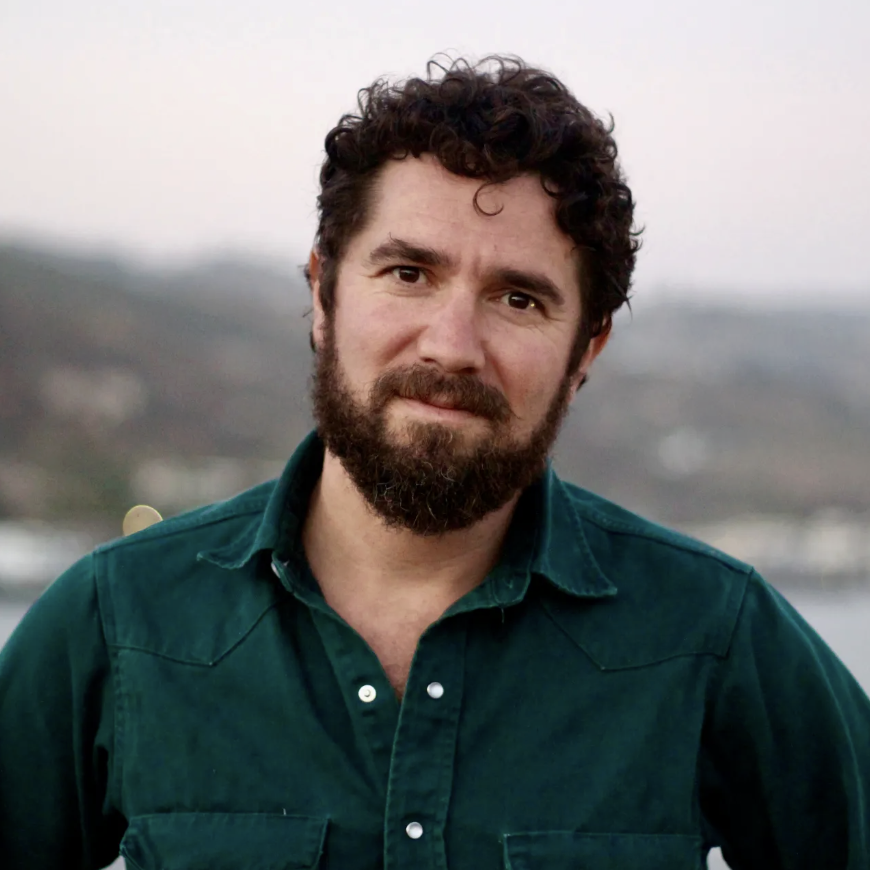
Sam Kestenbaum is a journalist who covers religion in America, known for his deeply reported and stylistically distinctive profiles of contemporary spiritual figures. Based in Los Angeles, his work has appeared in The New York Times, Harper’s Magazine, Rolling Stone, and beyond, where he examines the intersections of faith, politics, and culture.
Together, Payne and Kestenbaum explore the Churchome experience in Los Angeles, pop-up worship in rented theaters, a creative-class audience, and a ministry shaped as much by production value and performance as by theology. They discuss how presentation - from clothing to sermon delivery - functions as a form of religious communication, as well as how figures like Judah Smith navigate political polarization by shifting toward a more therapeutic, individualized message. The conversation also maps a wider ecosystem of charismatic influencers, including those who lean more explicitly into conservative politics, and situates today’s media-savvy pastors within a longer lineage of charismatic power brokers shaping American public life.
In This Episode
- Sam Kestenbaum’s profile of Judah Smith and the rise of the “hype priest”
- The Churchome model: pop-up churches, celebrity culture, and Los Angeles creatives
- Aesthetics, authenticity, and performance in contemporary evangelical preaching
- The influence of Black Pentecostal styles on white charismatic leaders
- Why some celebrity pastors avoid overt political alignment
- The next generation: influencers, revival tours, and conservative media ecosystems
- Figures like Greg Laurie and Bryce Crawford in the broader charismatic landscape
- The enduring influence of leaders like Che Ahn and the question of political power
Links:
- Sam Kestenbaum’s Website
- “The Hype Priest Who Rode the Bieber Wave: Judah Smith’s message of grace earned him many famous followers. Is he out of step with other Evangelicals?” (Vulture / New York Magazine)
- “The Demon Slayers: the New Age of American Exorcisms” (on Greg Locke, Harper’s Magazine)
- “‘I Think All the Christians Get Slaughtered’: Inside the MAGA Road Show Barnstorming America” (on Clay Clark, Rolling Stone)
Meet The Guests





Transcript
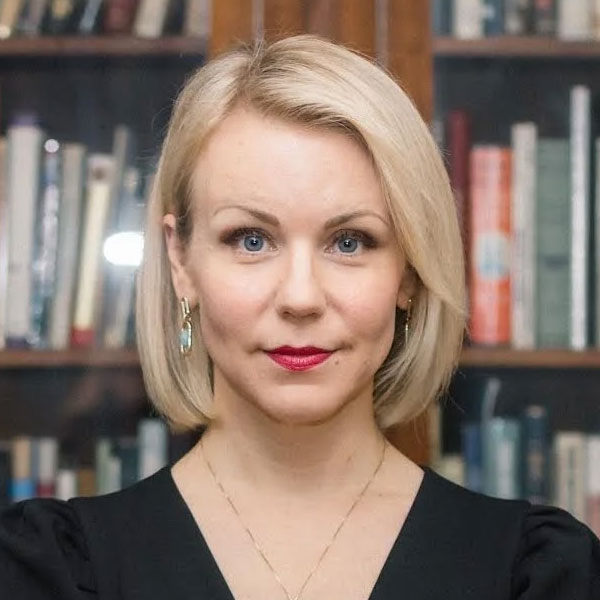
Leah Payne: Welcome to the Straight White American Jesus Sunday Interview. I'm Leah Payne, author of God Gave Rock and Roll to You: A History of Contemporary Christian Music and host of Spirit and Power: Charismatics and Politics in American Life. Today, I am speaking with Sam Kestenbaum, a journalist who profiled Judah Smith, the prominent pastor to the stars, for New York Magazine. Sam is an award-winning reporter based in Los Angeles, and his work has been published by The New York Times, Harper's Magazine, Rolling Stone, and many other outlets. I'm delighted that he's going to be speaking with us today. Welcome, Sam Kestenbaum, to the Straight White American Jesus Sunday Interview series. So happy to have you — one of my favorite journalists writing about religion and American culture.
Sam Kestenbaum: Oh, thank you. Happy to be here.
Leah: Thanks for coming. Right before we started recording, you and I were doing our little things where we get ready to be on a podcast, and you made a funny comment about how it's not as easy as it looks being a person in public. You're here talking with me about an article that you wrote for Vulture — "The Hype Priest Who Rode the Bieber Wave." I want to high-five you on your writing here and read the first couple of sentences of this article, and then ask you a question about it. So the first sentence is: "Judah Smith, the pastor of Church Home, is backstage at Trinity Broadcast Network regarding himself in the mirror. We don't wear clothes. We wear outfits." He tells me. I love that opening. Those couple of opening sentences — tell me a little bit about how you decided to open this article.
Sam: Well, thank you for that, for the reading and for highlighting that dramatic opening. I think I knew when Judah gave me that quote that it would need a place in the piece, just because I like when someone makes a distinction — and distinctions are always interesting. He's articulating something about himself, something he prides himself on. Also, if I'm being honest, I knew that something certain readers might find — not distasteful, but he's saying something about his interest in looking good and aesthetics. And so I like quotes or moments that can be read a couple different ways, that are honest to what I've seen, but might also create a reaction in the reader depending on their feeling about whatever I'm witnessing.
Leah: I want to ask you about that. What kind of reaction — what's the range of reactions that you might be expecting from that intro?
Sam: Well, I think if you don't think that a man of the cloth should regard himself in the mirror and care about his outfit — if you find that distasteful — then you're going to say, oh, here's evidence right away that there's something insincere about Judah's self-presentation. But Judah comments often on his clothes and takes great pride in his clothes, and there's nothing dishonest about that. That would be a more critical reaction to that opening scene. I'm aware that that might be in the room when I'm writing it, but I don't want that to be heavy-handed. And I don't think there's something inherently distasteful about a public-facing person who cares about what he puts on. Before we recorded this, I had to message you and say, is this going to be on video or not? If it was going to be on video, I would have made sure to put a different shirt on. I would have cleaned up the bookshelf behind me. I would have done certain things. None of us are immune to wanting to dress up for the camera. And Judah has big cameras he's dressing up for and he has lots of eyeballs on him.
Leah: Yeah, that's one thing both you and I have studied and written about — charismatics and Pentecostals. And one of the things that they are very willing to do, to use a commonly used phrase in the social media sphere, they're willing to say the quiet part out loud when it comes to presentation. Because everyone is concerned about that, but very few people are willing to admit it. Right after that, he credits his sister and his mother for doing that, which establishes a kind of matriarchy in his mind.
Sam: Yeah, it does that. And it also maybe suggests that his interest in aesthetics — like, it's actually still the sort of women who care about that more. He cares about it, but he learned it from the women.
Leah: Yeah, and then — I gotta move off this in a second — but then you refer to him changing tops.
Sam: The reason he's doing that has to do with the show that I was watching there. They're at TBN, filming content that will be streamed out over the course of a month as part of their monthly ministrations to Church Home app viewers. So everything was filmed within three hours, but he needed to make it look like he was coming to you weekly. So yeah, he'd have four fits. That's why he's changing tops. Which I do think is relevant, but it's also interesting that they cared enough — you could just film all four in the same shirt, right?
Leah: But why would you do that? I have brought different shirts because I do weekly videos for my class — not as high production value as that — but I have been known to bring two or three shirts because I'm like, well, I'm doing two or three weeks, right?
Sam: So yeah. And I spoke to them about it, and they're like, yeah, it also has to do with the thumbnails — if you're looking at the thumbnail. So they've thought it through quite a bit, and I think they're correct. That's why he was changing tops, out of a sweater into a vintage plaid shirt. I think Judah's attention to his clothing, which I do reference throughout the piece, also has to do with the kind of millennial nature of who the hype priests were and when they came onto the scene. I might be sort of jumping ahead of your transition here.
Leah: I would love for you to talk about this, because one of the major themes, as I read it in this piece, is his location in time as a millennial mass media figure in charismatic Christianity — that is distinctly millennial. I wonder if you could talk a little bit about how you came to Judah Smith and how you came to identify him in this way.
Sam: Like many others, I had consumed other media. I'd read about this category of good-looking, at the time younger, youth pastors — Chad Veach, Carl Lentz, who sort of really got the spotlight on him for reasons we can get into in a moment — and they all had an association with Justin Bieber. I'd read these pieces when they came out, and I lived in New York at the time, and I'd visited Hillsong to see Carl Lentz at the height of his plunging V-neck motorcycle jacket era. I wasn't in a position at that time to get at him and write about him in that story. And also, at the height of their powers, it was maybe even a little less interesting to me in a certain way, or harder to name without hyping it up — to borrow a phrase. So they were called lots of things, right? Cool pastors, preachers in sneakers, hype priests. I can't take credit for that — I think it was GQ that coined that phrase. I was already interested in this category. And Judah is a West Coast person. I live in Los Angeles now. He's from Seattle, and there's a monthly ministry at Church Home, which is in Beverly Hills. And I have a habit of basically just visiting churches all the time, or visiting different places of worship, things that are happening in Los Angeles — it's my kind of weekly pastime. And so I visited Church Home a couple of times before I wrote about this, and saw Hailey Bieber in the front row. And I approached the piece that way, I guess, by going a couple of times. Also, this was post-pandemic, and I'd written a lot about churches that had defied COVID lockdowns and stayed open.
Leah: I remember your Washington Post story on Godspeak Calvary Chapel, which was led by a pastor and former mayor Rob McCoy, and how it became this flashpoint in culture wars over COVID-19 restrictions. You wrote about how, while initially complying with shutdowns, McCoy reopened his church in defiance of state health orders and framed those restrictions as an attack on religious liberty. And a lot of other churches like Godspeak that defied COVID-19 restrictions began to be very publicly aligned with conservative organizations that wed defying COVID-19 restrictions with religious liberty, and really honed the political identities of conservative, predominantly white charismatic churches.
Sam: Church Home seemed like it was doing something a little different. They'd shut down, but I wanted to write about it because I visited, and it seemed like something interesting was still happening there. And Judah seemed maybe more approachable now than he would have been at another time in his life. It still took a lot of back and forth with his media team — meeting with them, them vetting me, deciding whether I was the person they would let in to hang out with them at the golf course and backstage, and getting the kind of access that I require if I'm going to write about somebody.
Leah: And listeners, you should also check out Sam's reporting on figures like Kathryn Krick and Greg Locke and Clay Clark. We'll put links to his articles in the show notes. But you really like to have a lot of hang time with people, and that's part of how you develop these nuanced portraits of these figures.
Sam: That's really important to me, to be able to have hang time that's off mic. I mean, these guys are never really off mic, but as close to a backstage as I can get. And so once that was established, we were good to go.
Leah: I'm hoping that listeners will read your article after they listen to this interview, but for those who haven't read it, can you explain to listeners what it's like to attend one of these worship services?
Sam: Yeah, Church Home, like a number of LA ministries, doesn't have a brick-and-mortar place. They worship by renting out a theater. Hillsong did this for a time — they actually have a brick-and-mortar now, but Hillsong did this, including in Times Square. Kathryn Krick, a person of shared interest, also does this. A number of other ministries as well. They'll rent out these old, beautiful theaters that dot Los Angeles for a night or a morning and hold their service there. At the Saban Theatre in Beverly Hills, which is where Church Home holds their monthly church experiences — as they call it — you'll arrive and generally there'll be a line outside. The doors will be closed and there'll be a pretty long line that might go around the block, and you'll line up, and people will be taking selfies and pictures under the awning. There's a back entrance — to call it the VIP entrance makes it sound more velvet rope than it really is, but there's a staff entrance where people will come up in their cars. That's where the Biebers will often enter if they come, or other more high-profile people, so they can go right to the back to be with Judah and his team. But the general parishioners will be lined around the block.
You enter into this beautiful theater, take your seat. What follows is pretty familiar to anyone who's been to a Pentecostal-flavored evangelical service. There's lots of worship music to begin. People standing or sitting — kind of low energy, in a way. People are not necessarily standing up. They might even be singing along. The idea is that you can come and not really be familiar with church and not know the words, and they talk a lot about that. Then after some time and some announcements, Judah will come on stage and give his sermon. And he's a really, really compelling performer. He has this meandering style, and I tried to spend quite a bit of time in the piece giving space to what it's like to see him perform. I give him credit for having this kind of vocal range where he can do a lot with sounding very quiet, sounding very loud, acting out personas. He's rarely on stage when the worship music is happening — he just comes out and gives the message. It's quite funny, often at his own expense. It can veer into kind of vulgar territory, a little transgressive — he might talk about weed strains or feet pics. He's demonstrating his knowledge of the world that he imagines everyone in the audience to be part of.
After he's given his message, he'll go back, and there'll be some worship, and then people will be off on their way. What he'll do is go back to the backstage, where often there's a smaller audience. I had a chance to be back there with a woman from Fifth Harmony, Ally Brooke, and her husband, who was a part of Justin Bieber's inner circle. That's where the Biebers might hang out. So he'll go back and do his sort of chaplaincy work — which is often how I came to think about what Judah really does — ministering one-on-one with more high-profile people who might not want to be out on the floor with everyone else. The Church Home parishioners will go off, and they might go to a bar. I went to a bar afterwards with some of the Church Home people, and they'll have beers and talk about going to church, or they might meet up at a taco place. There are extracurricular things that Church Home folks do, which listeners will probably recognize a lot of from ministries they've been to — not all of this is unique to Church Home, but that's the Church Home experience.
Leah: One thing I want to ask you about is his regional location. You mentioned he's from Seattle, and now he has a sort of up-and-down-the-West-Coast type of ministry. But you also talked about his performance style, and you mentioned a Black accent where he has a kind of Southern Black Pentecostal type preaching style, which is weirdly common in this hype priest network of preachers. I'm thinking of somebody who is Southern himself, somebody like Steven Furtick at Elevation Church, which is another powerhouse kind of charismatic ministry. It's an odd thing to have — I understand how a Southern white preacher who's been mentored by Black preachers might have a certain cadence that you would easily attach to Black church style preaching. But Judah Smith is a little surprising — if you know anything about Seattle. Did you have a chance to ask him about that? You observe it in the piece, but there's a weird kind of Southern cadence that these folks have. Where does that come from?
Sam: I can't put words in Judah's mouth about this, but I do know that he told me about who he studied as a public speaker. T.D. Jakes is someone who he adores and sees as a mentor figure.
Leah: Mentor — Paula White. Lots of people have, yeah.
Sam: Yeah. Just a lot of people with maybe divergent paths now, who picked up various things from him stylistically or otherwise. T.D. Jakes was one of the greats that he mentioned studying. I mean, I think they're right — there's a T.D. Jakes quality to it, or a Southern preacher quality. There's also just a kind of generic white bro Black accent that is also going on. I don't mean to disparage it, but it's functioning a couple of different ways, I think. It's both the kind of revivalist Southern preacher, but then it's also acting out a kind of masculine persona, a street-smart guy persona he might be offering — someone who's like, down. It's the youth pastor wanting to appear —
Leah: That was a quality — bring a chair out on the stage and he's going to turn that chair backwards.
Sam: Yeah, he'll be Michelle Pfeiffer in Dangerous Minds. I'm really just trying to analyze how it's working, not to take shots at it. That's how I observed it functioning, and I knew I had to get that in the piece somehow. I had to figure out what phrases I could represent without it being egregious — like how I could represent him doing a kind of Black accent, which he does among others.
Leah: And you also had to do it for Vulture readers, which is a whole other audience. That's a complex task. High five for that. One of the questions I wanted to ask you is about his audience. You told us a little bit about the people who were waiting in line, but that's just a fraction of the audience that Church Home has. I'd like to ask who you think Judah Smith is talking to, and then who Judah Smith thinks he's talking to. Maybe it's the same audience, maybe it's not. Who are the people who are engaged in this?
Sam: I can really only speak to Los Angeles, and that's where I can speak with the most specificity. Seattle has been their home, still is in many ways — historically they had multiple campuses there, which have now shut down as part of a restructuring. But when they were called City Church — which is what his father's church, founded by Wendell Smith, was called — they had historic City Church, Pacific Northwest, Seattle people who I think have been there since the reins were passed to Judah. I imagine that's a slightly different audience. But the mandate of Judah, among all of these hype priests, is that they imagine themselves speaking to a wider audience than their parents' generation. We can view that with some suspicion, because all of these big Christian media companies that supported them along the way — TBN, CBN, whatever places they came up in — they are reaching more Christian viewers than I think the hype priests would like to think they're reaching.
The Church Home audience itself here in Los Angeles, from the people I spoke to, is largely people who are involved in the culture industry writ large. These are makers and creators and creatives and would-be artists, many if not most of whom have some experience with Christianity — they were raised in it, or they've maybe drifted away, but it's not a wholly new enterprise to them. I think that Judah and Church Home would rather they be reaching the unchurched, the world, and I think they imagine themselves doing that. But my impression from conversations with people there is that largely these are people who have some experience with it, and here is a way they can do Christianity in Los Angeles that feels cooler than it did somewhere else. They can show up in their designer wear, hang out with people who look like that, and be among like-minded people.
Leah: That's interesting to me, because LA has such a long tradition of doing that type of legacy revivalism. You and I have talked about this in a number of contexts. Aimee Semple McPherson comes to Los Angeles and does a form of revivalism that a lot of people who've migrated from the American South to Los Angeles recognize and appreciate — and that's in the 1920s. And here we are in the 2020s, and there's a whole new generation of people doing that. One thing I want to ask you is related to how Judah Smith's articulation of Christianity resists the kind of political polarization that I would say is pretty dominant right now in the major social media forms of revivalist engagement. Judah Smith seems to resist political engagement. Did you ask him about his political orientations? For white charismatics and Pentecostals right now, the trend is to go far right. Why do you think he doesn't do that?
Sam: I thought about the hype priests and when and how they entered into wider culture. This would have been in the 2010s, the kind of tail end of the Obama era. And around Black Lives Matter, in some of the early interviews with Carl Lentz, with Judah, with Chad Veach and others, the line of questioning from journalists like myself was around racial equity and same-sex marriage. And I think, to their credit in the eyes of many readers, they actually adopted relatively progressive positions on some of those issues. I mention in the piece that Judah Smith, in 2020, closed the church down and put out messages about Black Lives Matter. There were times when he and Carl Lentz were taking relatively progressive positions or actions within their community.
The second Trump moment for them has been different. What I've generally seen is a kind of retreat from political language. For Judah, he would articulate it as getting back to the real message of what they're doing, which is this singular, atomized — he wouldn't put it in these words, but it's about the Scripture. I would probably put it in a therapeutic lens. He's gone into far more therapeutic language. He just put out a book with his therapist. So he's gone further into a kind of one-salvation-at-a-time, very atomized form of American religion — which, if not dominant, is a widely held approach to how religion is done. That's allowed him to not have to weigh in on what his people — people with whom he has history, like Liberty University or places he associated with coming up — are doing. He can retreat into the Church Home brand.
Leah: That's really interesting, because you can see how it would allow him to exist regionally, because a far-right form might work in Orange County, but it's probably not going to work in LA generally. Can you tell me a little bit about folks who are associated with Judah Smith who have chosen to engage in a more partisan way?
Sam: Yeah, I mention in the piece a couple of a younger generation of ministers or media makers who Judah has been a mentor to, and who attend Church Home and who are also in the Los Angeles orbit of Christian content creators — for lack of a better category. Girls Gone Bible is one.
Leah: For the few people who may not know what the Girls Gone Bible title is referencing — Girls Gone Wild was a series of late '90s and early 2000s videos marketed through late-night TV that featured young women, often college-age women, being encouraged to expose themselves or perform for the camera in party settings. It became a flashpoint for debates about exploitation, consent, and the commercialization of early internet-era media. So Girls Gone Bible invokes a let-it-all-out, girl type of enthusiasm, but in this case for the Bible, not for sharing their bodies with people purchasing VHS copies of Girls Gone Wild.
Sam: Yeah, totally. I haven't spent time with them, but it's run by two women here in Los Angeles — both blonde, telegenic podcast characters who have a podcast. Judah has been on that podcast. They're testifying to, broadly, having been in the world and come out of it. They have their testimonies. They're people who have been in the worldly industry before coming into the Christian industry, but are very good on camera and on mic.
Leah: So they may have gone wild in their previous life, but they've gone Bible now.
Sam: I mean, they probably have. They probably have the capsule version better than we could. But they have a very confessional style — they'll really talk about the things they've been through and they'll cry on mic. Their catchphrase is "Hi besties." They use that very Gen Z language. And Judah's been on their podcast. I don't know if the markers we've given will do enough to say that there's a quality of it that's quite Trad in their presentation. The one time I saw them in person was at the Make Heaven Crowded Tour, which is the Erika Kirk tour that's semi-active and going across the country. They were speaking there at Greg Laurie's church in Riverside.
Leah: Another iconic figure in conservative charismatic Christianity. Greg Laurie is a prominent pastor and founder of Harvest Christian Fellowship, whose large-scale revival events and media platform have often aligned him with conservative political causes. He's a well-known public supporter of Donald Trump, and he also served as a key figure behind the film Jesus Revolution, which dramatizes his conversion during the 1970s Jesus Movement.
Sam: Yeah, totally. So there are people with whom Judah might pal around or be on their podcast, who are enthusiastically joining up with whatever we can think of as this Turning Point USA post-Charlie Kirk revival — in this case, I mean revival tour — that's happening. Without wading into whether there is an actual revival afoot, we'll leave that to the data scientists.
Leah: That's right.
Sam: Neither you nor I do that. But there is a tour, and it is a market, and it is making heaven crowded. The Girls Gone Bible girls — I think I can just call them that — were a part of that. Another person also on stage at that event, another Los Angeles livestreamer type named Bryce Crawford, is part of the Church Home extended family. He's a livestreamer, also a podcaster, probably best known for his man-on-the-street evangelism. He'll minister to Scientologists, Black Hebrew Israelites, pagans in Venice Beach — he'll be the young guy going out on the streets. It's a mixture of internet genres: street interview, man-on-the-street, and evangelism. He's not necessarily debating people — there are versions of that where you will debate, but he's not really a Christian apologetics guy. He's a young, blond, white man with very Gen Z kind of feathery blond hair.
Leah: And very white teeth.
Sam: Yes. He's probably too young for them to be veneers — we'll give him credit for that, they're probably natural. I wouldn't call him a Hype Priest because he's another generation, but he would look to someone like Judah as a mentor. And there's even a famous sermon he gave that he basically cribbed entirely from a Judah sermon, to the point where he was accused of plagiarizing. He had to clarify — when he had Judah on his podcast — that he was just so influenced by him that he thought this was the best way to communicate the Word of God, and that's why he lifted those words. Judah, of course, was completely gracious about it all. So Bryce is someone else who is also more comfortable playing in that side of the pool, with the more Trumpian Trad side of American charismatic Christendom. Those are two interesting counterpoints in thinking about where the Hype Priests stand now in that landscape.
Leah: What's interesting to me is the role that Southern California is playing in all of this — these very prominent mass media voices going a long way toward shaping conservatism in the United States. I'd like to take it back another generation and ask you about another figure in California who is actually making a bid for the highest office in California. I'm thinking about the multigenerational qualities of these charismatic figures — charismatic in both senses of the term. They're very telegenic and able to attract a lot of followers, and they also associate with charismatic Christianity. Che Ahn is a figure who will be very familiar to listeners of this podcast, who's currently running for governor in California, and I think it's safe to say is a father figure to many of the people we've talked about so far. What do you make of his place in the charismatic lineage? Does he have a lot of political power? I'd love for you to reflect a little bit on Che Ahn and his place in all of this.
Sam: Che Ahn is also somebody I can't say I've interviewed or spent up-close time with backstage — watching him pick out his outfits or considering the angles at which he wants to be shot on camera. Though he thinks about it, yes, definitely. He and his son — he might now give some of that power over to some of the younger folks in his circle. But he has a pretty gentle stage presence there at Harvest Rock Church in Pasadena, which I have been to a number of times. I visited during the pandemic when they were staying open — and really, I don't want to say "brawling" because it sounds violent, but they were staying open and fighting lockdown orders. I think that gave them, among several churches in this area, some of which I've written about, who were staying open and formed a kind of collective or network of Newsom-defying churches. So it makes his bid — Newsom was not running, but it sort of feels like a spiritual bid against Newsom. With Newsom out of office, Che Ahn is stepping up to it.
I visited Harvest Rock when it was — ended up being more of a fundraiser than I knew when I went, but it was just billed as some sort of service about his running for governor. And there in support were Bill Johnson of Bethel, Gene Bailey of Flashpoint, the TV host, and all these people who will be familiar to listeners of this podcast. So the real NAR royalty, of which he is a member, mentored by C. Peter Wagner, who was also not far from where Harvest Rock Church is. It's all happening right there in that same Pasadena area.
The audience was pretty slack the day I went, even with all those big dogs there. If Judah Smith is the aging millennial — and I don't want to be ageist here, but if Judah Smith is the aging millennial who is watching the younger generation out-Trad him, or surpass him in influence in some ways, as all of us must watch as we age — then these guys are really another generation. I remain skeptical of what Che Ahn's bid for governor will look like with that in mind. But he's taken very political positions — the COVID position was obviously a very political one — and he has wielded his political power in lots of other ways over the last ten years that I've been tracking such things, if not before. How he might wield that within the state of California remains to be seen. We've seen other folks in this NAR orbit make bids for state power — meaning Sean Feucht, also without success.
Leah: One thing I want to ask you is to go back to an earlier question, which is who the audience actually is. You've written a lot — one of my favorite articles is about Greg Locke, who is a Southern firebrand conservative figure. You've written about Clay Clark in Tulsa, Oklahoma. Greg is in Tennessee, Clay is in Oklahoma. I wonder — is there a chance that Che Ahn is communicating with a different kind of constituency? And if so, who do you imagine that would be?
Sam: Different than who?
Leah: I don't know that he's going to energize California voters in a way that would even get him through the primary process. Although, wouldn't it be interesting if I'm wrong about that — you and I would have a lot to write about.
Sam: The world holds all sorts of wonders, and anything could happen. The past several years, if nothing else, have been full of many surprises and failed prophecies of all sorts. So certainly, anything's possible.
Leah: Well, if anything comes up, I'll see if we can talk again. Thanks so much, Sam Kestenbaum. Be sure to check out Sam's work on his website, samkestenbaum.com, and we will include links to his reporting in the show notes too. All right, I'm going to ask Sam one more question about the reach of hype priests past and present. Subscribers, stick around — and if you are not a subscriber, today is the best time to sign up. See the show notes to get access. Thank you for listening to the Sunday Interview at Straight White American Jesus. I am Leah Payne, author of God Gave Rock and Roll to You: A History of Contemporary Christian Music. Find me on most social media platforms at Dr. Leah Payne. Check out our website for the content schedule, and make sure to sign up for our newsletter to stay up to date with everything on SWAJ and Axis Mundi Media.