
Summary
In this episode, hosts Annika Brockschmidt and Roland Meyer sit down with media scholar Roland Meyer to dissect the unsettling intersection of generative AI, right-wing extremism, and the emerging aesthetics of digital fascism. Meyer, a professor at the University of Zurich, breaks down why AI-generated visual culture is uniquely suited for far-right propaganda. Rather than acting as a neutral mirror of reality, these algorithms are structurally nostalgic—relying on past training data to build idealized, hyper-masculine mythologies, clean ethnic landscapes, and weaponized "slopaganda." From American frontier myths to European Islamophobic imagery, Meyer explains how mass-produced, engagement-optimized AI content is being actively weaponized to construct collective, racist fantasy worlds at an unprecedented scale.
The conversation pushes past simple deepfakes to examine the darker political economy and Silicon Valley ideologies underlying the modern tech ecosystem. Meyer and the hosts unpack the rise of "slop"—voted Merriam-Webster’s word of the year—and how algorithmic distribution networks reward dehumanizing depictions of marginalized groups while turning tech leaders into gladiatorial icons. By exploring how figures like Elon Musk, Peter Thiel's Alex Karp, and Charlie Kirk use these tools, the episode exposes a shared tech-authoritarian vision. This ideology frames AI not as a tool for public good, but as an unregulated, masculine force engineered for white, Western dominance, proving that the struggle over generative AI is fundamentally a battle over who controls the future of reality.
Meet The Guests
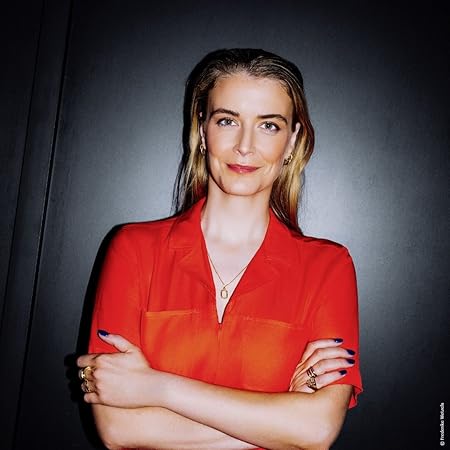
Annika Brockschmidt
Annika Brockschmidt is a freelance journalist, author, and podcast-producer who currently writes for the Tagesspiegel, ZEIT Online and elsewhere. Her second non-fiction book America's Holy Warriors: How the Religious Right endangers Democracy was published in German in October 2021 and was an immediate bestseller. She co-hosts the podcast "Kreuz und Flagge" ("Cross and Flag") with visiting professor at Georgetown University, Thomas Zimmer, which explores the history of the Religious Right.



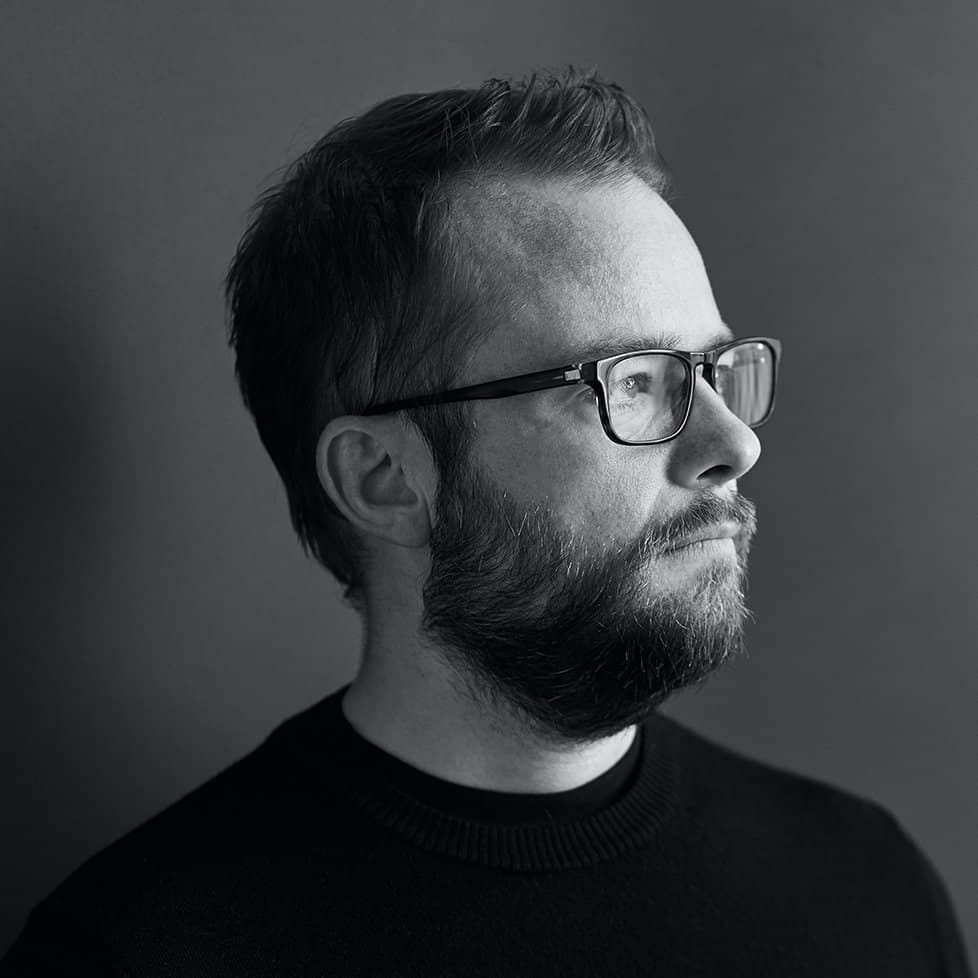
Roland Meyer
Roland Meyer studied art history and media theory at the Karlsruhe University of Arts and Design, where, in 2017, he finished his PhD on the media history of facial images. From 2007 to 2014, he was a research assistant for art and cultural history at the College of Architecture, Media and Design of the Berlin University of the Arts. In 2016/17 he worked as a curatorial assistant on the special exhibition »The Face. A Search for Clues« at the Deutsches Hygiene-Museum Dresden. In 2017, he representatively led the research group Das Technische Bild at the Hermann von Helmholtz Centre for Cultural Techniques of the Humboldt-Universität zu Berlin. From April 2018 to August 2022, he was a post-doc researcher and lecturer in art history at the Faculty for Architecture, Civil Engineering and City Planning of the Brandenburg University of Technology Cottbus-Senftenberg. From September 2022 till June 2024, he has been an research associate in the SFB »Virtual Lifeworlds« at the Ruhr University Bochum. From July 2024, he is DIZH Bridge Professor in Digital Cultures and Arts at University of Zurich and Zurich University of the Arts. His research focuses on the history, theory and aesthetics of networked image cultures.


Transcript
Annika Brockschmidt: Welcome to the Straight White American Jesus Sunday interview. I'm Annika Brockschmidt, author of Amerikas Gotteskrieger and Die Brandstifter, and host of podcasts like Feminist Shelf Control. Today I'm very happy to be speaking with Roland Meyer. He's a professor for digital cultures and arts at the University of Zurich and the Zurich University of the Arts, and we'll be talking — I'll be talking to him, not sure why I'm speaking in the royal "we" — about his work on generative AI and its usage by right-wing actors, and about what he calls the aesthetics of digital fascism. Roland, welcome to Straight White American Jesus.
Roland Meyer: Yeah, thank you. Thank you for having me. Looking forward to our conversation.
Annika: Yeah, this is actually a trend on the Sunday interview where I'm speaking to someone in English for the first time who I normally speak to in German, so bear that in mind. Let's just jump straight into it. Can you explain to us why AI-generated images seem so pervasive on the right? Like, is there something inherent to the technology of AI, to the way that it produces images, that really lends itself to far-right causes?
Roland: I would say so, and I think far-right actors, far-right accounts have very early on seen how attractive AI images are to them, and I think for several reasons. So one is that they are what I would say structurally nostalgic — they have a very specific relationship to the past. They are also very much repeating and reinforcing dominant cultural patterns, including racial and racist stereotypes, gender clichés, and sexist stereotypes, and that also is kind of attractive to far-right actors. And in some ways they are also populist by design. They have a kind of populist aesthetics that is very effective on social media, and that's not by coincidence, but really by design. So there are these, I would say, three dimensions: a relationship to the past, a discriminatory bias that is very much part of the technology, and also this kind of populist aesthetics. And I could say a lot about all of these dimensions. But I think far-right actors very early on have seen how well these AI image generators suit their interests, and at the same time progressive, liberal, left-wing actors on social media have very early on seen that they are opposed to generative AI for several reasons: because it's exploitative, it uses artistic content, it exploits creative labor, it also exploits human labor in the form of data labor, data work in the Global South on a massive scale, and it's extractive in every other respect — it uses massive amounts of energy and other resources. So there is a kind of ongoing divide in how the left and the right look at these images and their aesthetics, and I think that has become very clear in the last two or three years. And the more the right uses these tools, the more the left, I think, opposes it, and that also fuels that dynamic, because a lot of right-wing actors actually use these tools to troll, basically.
Annika: Sure, yeah. I want to kind of dig into maybe the first area that you mentioned, because you said the images that generative AI produces — or that are being produced when people use this tool — they are discriminatory in the way that they produce images, and I'm assuming that is because of the — I'm lacking the IT language to say this correctly — but the data that AI has been fed. Like, can you explain to us why that is? Why there is a structural bias inherent to AI?
Roland: That is, of course, in the training data. You have to realize that all these models are being trained with vast amounts of content scraped from the web, so it's like a whole messy archive of contemporary digital visual culture, and that contemporary digital visual culture, in the age of platforms and social media, is already full of racist, sexist stereotypes, full of cultural bias. That is one part — already the training data is biased and discriminatory. What's more is that the very way that these AI, especially text-to-image tools, function is in a way that not only reproduces the bias that is already in the training data, but it reinforces and amplifies it. So my way of making it explainable to myself is always to think of generative AI as a kind of pattern recognition in reverse. So if you think about pattern recognition — for example, the task for a model, for an AI software, would be to distinguish between patterns, to distinguish between cats and dogs, for example, or a very common task: to distinguish between male and female, and already there you have a cultural kind of framing that these are the only two options a software has. But anyway, so that would be labeling images, that would be object detection, facial recognition, all these kinds of pattern recognition tasks that have been automated in the last ten to twenty years with machine learning techniques. And now with generative AI we have a kind of reverse-engineered process — and technically it is based on the same process — so you don't label images, but you start with a label, with a prompt, with a description, and the task of the AI model is to come up with an image, with a kind of visual pattern that best matches that description, that matches it in the most legible, in the most immediately recognizable and plausible way. And that, of course, produces stereotypes and clichés — that, of course, reinforces what people are already expecting, much more than even the training data itself would produce if you would just have a kind of statistical mean of all the images of, for example, men or women. It is a reinforcement of stereotypes, for example, also gender stereotypes and clichés.
Annika: Right, and when it comes to AI-generated images, in the way that you describe it and talk about it — and this is not just you — a term that pops up again and again is "slop," to describe the imagery output that AI churns out. Why that term? Like, what is sloppy about these images? What does the term help us understand?
Roland: I mean, there is a tendency to call everything that generative AI produces "slop," and I'm not sure that's the best way to handle it. I think the term — which I believe was coined as the word of the year by Merriam-Webster, in 2025 it really came up, yeah, it's so — slop is a kind of term of our times, or already of last year. Yeah, it's part of the lexicon now. And I think it came up with a certain type of AI-generated content, not so much anything that is generated with these kinds of software, but a certain kind of content on social media — first on Facebook especially, but later on like everywhere: Instagram, TikTok, you name it — that was produced just to generate engagement, just to generate clicks. And it was produced by specialized accounts who do nothing the whole day other than churn out AI-generated content, which is optimized to generate clicks, often boosted by bots that bring this content into the timelines and feeds of users who are not actively seeking that kind of content, but who get this kind of content presented without really wanting or searching for it, and then react to it in some way or another. And the most famous example of that in the early days — so to speak, like I don't know, two years ago — of course: Shrimp Jesus, which already —
Annika: I'm sorry, I just — I just love that. That is a real — I mean, I don't love it, but it's amazing to me that that is a real sentence that we get to say now. Shrimp Jesus. Can you tell us what Shrimp Jesus was, or is?
Roland: How — Shrimp Jesus, I think, was — I think it was a historical artifact by now, and has to be memorialized in the big future museum of AI slop from the 2020s. Shrimp Jesus, I think, appeared on Facebook in a lot of different versions, but basically it was always some recombination of our Lord and Savior and some kind of shrimp or other animal of the sea. And why, especially this combination, I'm still not sure. But I mean, there are two things to say about it. One is that the whole slop production was based on recombination of successful patterns, so to speak. Sexual motifs and religious motifs — especially Jesus, in many different versions — turned out to be quite successful on Facebook and generated a lot of engagement, a lot of comments. Also, people commented on AI-swapped images of Jesus with "Amen," for example, and these comments and these reactions, of course, further fueled the distribution of this kind of nonsense content. And different genres of slop then got to be combined. So there were versions — or a kind of successful genre in these early slop days — that were also images of veterans, images of kids who produce some cakes, bakery, or arts and crafts, and then asking, "How do you like what I made? I made this with my own hands," so there were all these comments aiming at some response, some answer. And kind of successful genres were then mixed, so we had then Jesus with, for example, the shrimps — I don't know exactly where the shrimps came from. But you had also Jesus with flight attendants, which was a very obviously kind of soft-pornographic genre mixed in with that, and snakes for some reason. And I think all these visuals — as surreal and as absurd as they may be — were produced by a logic of recombining things that have a strong, immediate, affective response that they produce. And that, of course, these were still images then, and now, of course, it's all video, and it has been diversified in many, many different directions. But I think the main thing about slop is that it is synthetic content, mass-produced, cheaply produced, produced to generate clicks and engagement, and optimized for circulation on social media. And the kind of metrics, the feedback from the platforms, directly informs the producers of this content what works and what doesn't work, and with generative AI you can quickly react and turn out new content based on what is successful and what's not, and that's — that's a slop economy, I guess.
Annika: Beautifully put. Slop is basically — slop is one genre of AI, if I'm understanding you correctly — or is slop a spectrum?
Roland: I think, yeah. I mean, it's probably — I think slop is an effect of the combination of social media platforms, monetization schemes on these platforms, the filter logics and the moderation logics of these platforms. So, for example, that AI slop became so successful in the first place, especially on Facebook, was a result of a Facebook rearrangement of the content moderation guidelines — they restricted very much any kind of news content and political content, and so this kind of unpolitical, strange, surreal, absurdist content could flourish because other kinds of content were restricted. You have these platforms, once you have their architecture and the mechanisms, and then you have a new way of production with generative AI that allows you to scale up content production in dimensions that were not possible before, so you can produce tens or dozens of videos every day, without any relevant cost for you as a content producer.
Annika: Right, and when we look at the types of images — if we leave Shrimp Jesus for a little bit — and we look at the types of images, the sort of image language used by right-wing accounts, whether that's just, you know, your odd personal-use right-wing account, or whether that's really big accounts — not just in the US, but internationally, because this isn't just a US phenomenon. You know, from AI-generated images of an ethnically cleansed Gaza Strip to tech CEOs — Elon Musk, Alex Karp — depicting themselves as, I don't know, superheroes and gladiators in strange settings that kind of have like a cultural echo, but also a kind of little-bit-uncanny-valley quality. AI-generated content not only seems to be everywhere on the right, but it's also being used in specific ways to fulfill certain roles. I think, on the one hand, to depict dehumanization and cruelty towards those that the right thinks are not deserving of human rights or bodily autonomy, and on the other hand, to paint its leaders or its wannabe leaders or its adherents as these kind of masculine warrior kings, whether that's in a toga or in a cape or — I don't know, whatever tickles Elon Musk's allegedly ketamine-addled brain any time of the day. Can you kind of unwrap that for us a little bit? Like, what's going on in the way that right-wing actors use AI when it comes to gender and gender performance, masculinity, and the way that men and women — because, as you said, to them there's only this binary — are depicted, and what that does for the right?
Roland: I think you already gave a wonderful panorama of the kind of content you would see. I just kind of go on with that. I think the two main tendencies in the last around two years in AI-generated content from far-right, neo-fascist actors are, on the one hand, nostalgia, and on the other hand, dominance and cruelty, and they are often mixed in some way or another. So the one kind of strong, attractive moment — as I said — of generative AI for the right is that it allows them to delve into a nostalgic world of a past that has never existed, but that only exists in the imagination, only exists in the images that we have. Images of a 1950s or sometimes the 1980s — not quite clear which epoch — but images of a past that for them seems to be a past of male dominance, a past of white Christian supremacy, a past of a world in which a man could still, with a job in the industry, have their patriarchal role of the breadwinner for the family. These kinds of nostalgic images of past greatness are very ubiquitous on the right, and especially also now on the accounts of, for example, the Department of Homeland Security, or the Department of Labor, or other accounts of the US government, which directly want to address this kind of nostalgic longing for past greatness. Because they want to make America great again, as they say.
Annika: Of course, of course.
Roland: And as kind of the opposite side of the same picture, you have these images of enemies — you have these images of those who are subject to state violence and cruelty, those that have to be kept out, and those who have to be dominated. And that is, of course, images of — other kinds of images — of people who are depicted as kind of faceless masses of migrants, as hordes of foreigners somehow invading the country. So that is always in kind of the other side of this idealized past that has to defend itself against the others. And they are also then visualized. And as another dimension of this idea of dominance, and especially male dominance, you have all these kinds of self-stylizations of Trump, Musk, and so on in often pseudo-historical costumes. So there are these Musk and Trump images of themselves as gladiators or Roman centurions, but it's never really a historical costume — it's always, and that's very typical for generative AI, this kind of futuristic mash-up of time. So it's not a specific historical formula that is being used, but rather it is this pastness that is fueled by images from the 19th century, historical images of Rome, as well as computer games and superhero movies, all meshed up into one kind of imaginary visualization of hypermasculinity in that case. So I think these — for me at least — are the most prominent kinds of image worlds: the ideal, the other, and the kind of male dominance that is being needed to defend that ideal against the others, obviously.
Annika: When looking at the images that you've studied — and occasionally when I stumble across a particularly egregious one, I tend to send it to you, so I feel like this might also be the moment for me to apologize for that. I'm not really sure who else to send it to. I'm like, oh, maybe Roland can do something with this.
Roland: No, I'm glad — please, please keep sending the slop.
Annika: But I was wondering: in the images that you've studied from these sort of neo-fascist actors online, are there differences in the motifs and in the style of the images that fascist actors in the US versus, for example, Germany or Europe use? Like, are they being honed in on a specific nationalist fantasy? Is there a difference in the imagery they use, apart from these sort of more general common denominators that we've talked about?
Roland: I would think so. In general, there is a whole kind of visual mythology about the frontier in American neo-fascist imagery, which especially the Department of Homeland Security uses a lot. That, of course, is absent in images from the AfD — Alternative für Deutschland, so-called, the neo-fascist German party — because the frontier myth is nothing that resonates with a German public so much. What they, for example, and other right-wing accounts use a lot are images of kind of mid-European, German medieval old towns with timber-frame structures, façades, and cobblestones. So this kind of ideal Heidelberg-type vibe of how an ideal German image of a town should look. And whereas the image of a town — I already kind of allude to a debate that was very prominent in Germany, started by our conservative Chancellor Merz about the so-called Stadtbild. You remember that? So Merz — he, as he does on a regular basis, made public comments that very much tried to mimic the xenophobic and racist politics of the AfD, and in that case he talked about problems in — and it's hard to translate — the Stadtbild. So what that would be is the image of a town or the image of a city, but it's really like the visual appearance and the atmosphere — the thing that when you go around a town you would see — that as a concept.
Annika: You see, in what you remember sort of as the image of the town — this weird meta-level is already baked into the term Stadtbild.
Roland: Exactly. And the problems in the Stadtbild, of course, were foreigners, were migrants, and the answer was deportations, basically. Yeah, that's what he said.
Annika: Basically what he was saying.
Roland: And that was not very subtle, but still maybe a bit too subtle for right-wing actors who really then visualize their ideal Stadtbild. And their ideal Stadtbild is, of course, this kind of ideal Heidelberg, or whatever, with all-white people in there, with a nice white policeman, and — interestingly — no cars, for some reason.
Annika: I thought that was strange.
Roland: Yes, but I think the ideal — I don't know, because also cars would be a temporal marker, right? So these spaces, these images of towns — it's not clear when and where they are. They are kind of out of time, so to speak. They could be in the 80s, even earlier, maybe not in the 40s or 30s, but you never know. But yeah, so once you have to have cars in there, it would be too contemporary. But now you have these kind of ideal cityscapes. And in one example I recently saw from a right-wing, neo-fascist AI music act, I would say, called Traditionsträger — which would translate as "bearer of tradition" — you have exactly that image of the Stadtbild, and then you have a demonstration of all-white German citizens with their German national flags, and they are of course defending that against some gray people you see in the foreground only from the back, probably the elites of some sort. And so that idealized cityscape is kind of a background for a national uprising. That account is very interesting — they produce, also in mass, not only images but songs, AI-generated songs on Spotify.
Annika: Yeah. Sorry, I just had to think about that, because that's the first association I had when you described the account. Do you remember — I think it was the Department of Homeland Security — they posted this image of, I think, a landscape where you could see a person riding a horse, and there was like a fighter jet above it, and it said "We'll have our home again," and that was a song lyric from a song by Pine Tree Riots — that's a group that's popular in white nationalist circles. And just to be sure — and they kind of made it easier for us — because on Instagram, I think the DHS also posted this song as music underneath it. The lyrics are basically great replacement theory in song form. And that was my first association. So if Traditionsträger was riffing on Pine Tree Riots to churn out a fascist slop, that would be quite, quite ironic. But sorry, I interrupted you.
Roland: Could very well be, but also could be the same idea coming from the same kind of political — yeah.
Annika: Yeah.
Roland: It's not too original. Although I call it an account, because what is it? It's not a band or whatever. So they're kind of interesting also in their use of nostalgia. So they have another song that is called The Last Generation — and they kind of reuse and repurpose this idea of the "last generation." Not the last generation that could still prevent climate collapse, but their idea of the last generation — the last generation that remembers the good old days before everything went wrong. And then they have this extremely West German, nostalgic 1980s kind of setting, which your listeners will not know, but they have all these things that if you grew up in the 80s in Western Germany, you would remember and have a kind of nostalgic feeling about. And that is evoked, but as something that has — as a past that has to be defended in the present — by this kind of last generation of Gen Xers who now have to, yeah, defend Germany against, of course, the great replacement theory, basically. That's what's behind it every time.
Annika: That's really interesting, because in a way it's like paradoxical in itself, right? Because they're like, this is an image of the days that have passed, but the idea of it and the promise of it returning is what has to be defended. It's kind of a warped concept in and of itself. And do you know anything about streaming numbers? How — or is that hard to find out?
Roland: I would have to check. I haven't done that research.
Annika: We've gone very niche, to be fair. But that's really interesting. I noticed, because I was checking in preparation for this episode — I was checking my screenshot archive of horrors — I think it was during the campaigns for elections for the European Parliament, if I remember correctly. Where there was at least one AfD campaign spot that I remember that also had this kind of dichotomy: you would see like sort of cherub-faced, blonde children at a town fair or something, at a carnival, and then you would have as sort of the racialized other sort of amorphous, dark-skinned men and women in what was probably supposed to be burkas. So there's a specific feel — especially in European right-wing AI imagery, the Islamophobia, the anti-Muslim sentiment is quite strong. But there's also maybe, as a commonality to the US image content, there still is this idealization of rural landscapes and rural living in a way that doesn't really exist anymore, if it ever even existed in this idealized form. It's almost like agrarian-coded, romanticized depictions of stuff you might see in painted postcards. And then, of course, the German traditional garb — at least of Bavaria, the Dirndl — seems to feature quite prominently in depictions of AI-generated women that get shared, creepily enthusiastically, by accounts close to the AfD or in the AfD periphery. Is that something that you've noticed?
Roland: Yeah, yeah, exactly. I think it's just a kind of code for their idea of traditional femininity, of course, and a certain idea of the traditional family. Interestingly enough, at least some of these German far-right accounts seem to directly copy American ideas of white Christian nationalism — so far that they have these ideas of an ideal blonde family in a church with weapons, which is not a thing you have in Germany, right. But in this kind of — so there is a kind of internationalization of these fascist family tropes. I mean, in addition to these kinds of rural and small-town fantasy ideals, there is also a kind of strong strain of, I would say, nostalgia for a better time of industrial capitalism, somehow in the post-war decades. And you have that very strongly — not surprisingly — in the Department of Labor account, which had this whole thing where they posted for month after month these AI-generated nostalgia propaganda posters in a kind of 1950s style with white working-class heroes that were supposed to kind of rebuild America. And this idea of building, this idea of reindustrializing, this idea of an economy that could still give jobs to white guys without a college degree — that is a very strong thing, I think, in that American government propaganda. But you can also find that sometimes in far-right accounts here. But I think the — as you already said — one main thing in Europe that I think is special is that enormous importance of Islamophobia. And you see that — I think everybody sees that — in the UK, and for example also in the Netherlands. So there were big campaigns in the Netherlands that used, for once, not a view into some imaginary past, but a view into an imaginary future. Although the future was the same as now, but only with Muslims — so the idea of it was a very one-to-one visualization of the great replacement theory. The future wasn't at all futuristic, it was just — yeah, this kind of horror image for them of being replaced. And that they kind of love, I guess, to visualize — their fears. I think there is a real lust. Also there is a lust in depictions of humiliation, of cruelty, but also in depictions of what is considered to be a threat or a dystopian future.
Annika: And I mean, that also kind of tracks with the fact that — even in sort of right-wing to fascist fiction — the sort of titillation in the detailed descriptions of the violation of a white woman by non-white immigrant men — that's kind of the whole genre of The Camp of the Saints thing, which I think both Stephen Miller and Steve Bannon have lauded, but of course not only them. I think Marine Le Pen has also listed it as a book she's a big fan of, which is unsurprising. But I find that quite fascinating, because in a way, generative AI is not subtle. Like, I think that's the whole point — it's all out there. There's no subtext. And yet I sometimes find it hard to sort of find a term that perfectly encapsulates this. But I think you've actually found one that fits really well, because you describe what we've talked about as the aesthetics of digital fascism. And can you explain to us why you think that term fits here, and why it is important to you to describe it in this way? Because for our international listeners, the F-word — fascism — whenever it's used in German-speaking discourse, there's always a bit of a murmur around it. But I think you really make a good point in using it this way. So why "digital fascism"?
Roland: I mean, I'm not the first or only one to talk about digital fascism. For example, my dear friend and colleague Simon Strick talks about digital fascism, although he — and I've learned a lot from him — now tends to talk more about "fascistization," I think it would be in English. So this kind of ongoing process of normalizing fascist talking points, fascist ideologies, fascist worldviews, even in still more or less functioning liberal democracies. And I mean, I think the whole Stadtbild discussion would be an example of fascistization — of an appropriation of ideals and even memes of the far right in what would normally be considered conservative discourse. I think what interests me nowadays about the question of digital fascism in relation to AI is really the view that both the far right and the tech bros have of AI, and where it converges. So interestingly enough, there is — from last summer — an executive order by Trump that was all about preventing "woke AI." And the whole idea about preventing woke AI is that AI, in its kind of "natural" — so to speak — form, is first and foremost an instrument of truth. So they take the whole discourse on algorithmic bias and discrimination and turn it around and say, "No, the problem is not the bias of these models, what you liberals would call the bias. The problem is when companies begin to fight the bias and implement dangerous ideologies such as diversity, equity, and inclusion." And they have their examples. A famous example of Google, who tried to limit or mitigate the algorithmic bias, and then it produced those female and Indian historical figures that were ridiculed and scandalized on X by Musk and others as also a form of "great replacement" and ahistorical woke indoctrination. And that example comes up again and again to say: when companies act against the "natural order" of AI, so to speak, what we get is a distortion of history. And on the other hand, what we need is this kind of AI as a force that can restore American greatness on every level — both economically, geopolitically, ideologically, wherever. And what you really see — and I think that would be the best example for me of digital fascism — is in that infamous book by Alex Karp, which is called The Technological Republic, and which, kindly enough, he condensed into a Twitter thread for all those of us who haven't read it. What you have there is very much — and I think it's not only Karp's idea — this idea of technology, especially AI, as a force that has to be unleashed, a kind of very masculine, martial force, and that, as he says, Silicon Valley has lost its way developing photo-sharing apps, which, of course, are kind of coded as female and not serious.
Annika: Clearly.
Roland: And now what has to be done, of course — this kind of unleashing of AI in a way that is directly compared to the Manhattan Project, to the nuclear program, for the defense of Western civilization. So the program is AI without regulation, as both a symbol and a tool for not only Western dominance, but a kind of — in that case — white Christian male dominance. And it is kind of even mirroring their idea of dominance. And when you look at how they use people like Musk, for example — how they use it to visualize themselves — or Zuckerberg also, and the way they talk about their brand-new toys, those enormous data centers that they build all around the world, and especially in places where people are not expected to resist, although increasingly they do — fortunately. I don't know if you remember that post by Zuckerberg, where he has — I think that one is called "Prometheus," another is called "Colossus" — so I have all these ridiculous names — these massive hyperscale data centers. And the one by Zuckerberg, he had an image where it was superimposed on Manhattan, so you had this big blue block of a data center that kind of crushed all of Manhattan under it. And for me that is a symbol of how they view AI as this kind of force that crushes everything that is in their way. This technology becoming a myth.
Roland: That is fascist, basically. That is — the mythologization of technology is a kind of core tenet of historical fascism, and they repeat that very, very openly and very directly, I would say.
Annika: Again, it's not subtle in any way. It's kind of sometimes striking in its lack of subtlety. I sometimes catch myself sort of searching for a deeper meaning just out of habit when they really just put it all out there. I was wondering — as a researcher who studies this kind of imagery — if you look back at what we have now — it's the end of May 2026 — and if you look at what we've seen so far of Trump 2.0 and the way that various government accounts that we've already mentioned have been posting through it, posting AI-generated fascist imagery: was there a specific moment that really stood out to you? I know it's hard to narrow it down, but was there a specific moment under the second Trump administration of an image that was posted by a government account or by a US official account that you feel deserves special attention in what it tells us about how they're operating this imagery?
Roland: Yeah, I would — I mean, I could say — yes, indeed, there are so many options to choose from. No, I think for me the most important, most striking — in a way, most shocking, although there were much more shocking images later on — was that Ghiblified image of a Dominican woman being arrested by ICE agents, and that was part of that whole Ghiblification trend.
Annika: Which we — I was about to say, could you explain what that is?
Roland: I guess. So when a new version of ChatGPT was launched in early 2025, people found out that it was very easy — and obviously for them entertaining — to turn photographs into images in anime style, loosely reminiscent of Studio Ghibli, that famous Japanese anime studio. And they did that en masse. Even Sam Altman from OpenAI changed his profile picture into a Ghiblified version. But also the Israeli Defense Forces had their Ghiblified slop — the Indian Prime Minister used it — and then, I think first the Department of Homeland Security, but then reposted by the White House, used it for that image of a woman who was being arrested, and she was crying in tears at her arrest, and that image was then turned into that cartoonish, anime-like meme. And for me, this combination of a kind of "cutification" — but also reinforcing the cruelty and celebrating the cruelty in that form of a meme — really struck me as something very uncanny and very resonant. And also the reactions were very telling. So people, of course, protested against that on social media. And then Kaelan Dorr, I think is his name, the White House — one of the White House social media guys —
Annika: Oh yeah, said —
Roland: "The memes will continue, the arrests will continue." So this formula, which has been repeated over and over after that, I think really brings together a lot of what cultural theorist [unclear] calls "memocracy" — this kind of turning politics into a kind of meme production. So this public celebration of cruelty against immigrants in the form of quasi-ironic internet content, and the memes are becoming a form of violence — not only a form of representing or celebrating, but really part of the violence, so to speak, part of the performance of dominance. And the interesting — and also very dark and shocking — thing is that they kind of repeated that, basically, a year after. So they took a photo of a woman activist, Nekima Levy Armstrong, from Minnesota, who was arrested at a demonstration against ICE.
Annika: Oh, this was the protest at the church, wasn't it?
Roland: Yes, exactly, that was it. And on that photo she is kind of calm, kind of expressionless, and they turned that photo — not into an anime, not into a cartoon, but really manipulated the photo, still keeping the photographic look, but made her cry in an extremely exaggerated way that reminded one very much of that other image. If you have seen that before — and that was, yeah, like the next level of turning people into memes as a performance of cruelty, of dominance, of state violence. And I think that, yeah, for me is still kind of emblematic of at least one of the ways this administration uses their social media accounts and generative AI.
Annika: I want to ask you about the way that — again, we've already touched on Shrimp Jesus, but I want to ask about religious, Christian imagery in a different way, in a less shrimpy way. How it — this has been turning up and showing up in right-wing and neo-fascist AI-generated content. I think probably everybody who researches the US political and religious right has probably seen some AI-generated religious imagery, at least since after the assassination of Charlie Kirk. I think that's at least, to me, when it really spiked. How does Christian imagery show up in right-wing AI content? Is there a sort of iconography of digital fascism? Would you say?
Roland: I mean, I think in general, religion — as in the case of both Muslim and Christian imagery — works as a way of marking identity and marking others. I think that is a very common use of it in all these examples that we've already talked about. Also the Department of Homeland Security has some allusions to white Christian realism that come with Christian symbolism. Of course, there has been this infamous image of Trump as Jesus. Afterwards —
Annika: He surely thought he was one, of course, of course.
Roland: And that sparked so many memes. So in a way it also — I'm not sure it really hurt him so much, although it was, I guess, for some people in his base a step over the line, because it was — there was no second level to it. It was —
Annika: Sacrilegious.
Roland: Kind of. I think the Charlie Kirk story is very interesting, and a close colleague of mine, Kathleen Kratna, whom I'm working with here in Zurich, she is actually doing ethnographic research, so to speak, on the evolution of Charlie Kirk memes.
Annika: Interesting.
Roland: And one thing that she has told me is that you can kind of distinguish between certain phases of what she calls "Kirk slop." And it began with visualizations that were kind of close to MAGA fantasies, which were not necessarily produced by MAGA accounts. I think a lot of also early Kirk slop was produced by so-called slop farms — accounts that do that commercially. One month producing, for example, videos of Charlie Kirk going into heaven, meeting the recently deceased Pope, or Hulk Hogan, or both, or whoever you meet in heaven, of course. Yeah, I mean, that's a whole genre. And interestingly enough, also a whole genre is really his kind of — how do you say — ascension to heaven directly from the scene of the shooting, where you don't see the shooting, you just see him kind of leaving the stage and flying into heaven. Which also in generative AI works very well, because AI videos are very good at transformations of spaces and scenes, sometimes not so good at depicting plausible action and their consequences, although they have become much better at that also. So there was this first wave, which was fueled really by commercial slop farms who saw that this is content that generates a lot of engagement. But then it really became a meme, and it became a meme that could be adopted by completely other accounts. There was a whole wave of "Kirkification" — you could even have a Kirkify filter on your Instagram and make yourself into Kirk. Kirk was —
Annika: Oh my god.
Roland: And then it became more and more absurd. It became kind of a stock character of brain rot content.
Annika: Explain what you mean by that.
Roland: I think that I noticed that in a lot of now AI-generated brain rot videos you get the same characters all over again. And that can be these fantastical creatures like the Italian-originated brain rot figures — which are these kind of cartoonish figures, Ballerina Cappuccina, I think, is one of the more prominent ones — but you have also like the whole range of international figures from the news. Of course, Trump. Of course, Epstein. And Kirk is kind of like one of them, and they can be put together in all kinds of variations, sometimes intentionally to really tell some kind of story, sometimes in more absurdist ways. And I think Kirk has become this kind of meme of himself — like any of these other figures — and that can be recycled and recombined in many ways. And then out of that memification — as far as I understand it, but that's something that Katharina could describe in much more detail — more recently, there were certain waves, also with certain songs that came up. There was an AI-generated song, "We Are Charlie Kirk."
Annika: "We Are Charlie Kirk," yes.
Roland: And of course on TikTok, songs kind of produce genres, mini-genres, formats that can be filled. And then there was a whole other wave of Charlie Kirk slop. But after that — or even parallel to that — the groypers, so these guys following Nick Fuentes even further right from the MAGA crowd, completely antisemitic, even more racist, and completely also internet-brained and whatever — they began to produce stories about Kirk and Agartha, I think is the name for this kind of strange far-right esoteric myth of a hole in the earth where you can have this kind of all-white parallel world. And then Charlie Kirk somehow, by drinking Monster Energy drinks or whatever, flies into this world, and it's completely not understandable anymore for people who are not completely online for the last few years, I guess, and completely part of that far-right community. So that is a kind of further step of memification where the religious content is kind of completely changed — or replaced by — this right-wing meme mythology, or whatever you would call it.
Annika: Almost — yeah, it becomes a sense, like it becomes a point in and of itself. It kind of, at some point, seems to lose its original meaning in a way.
Roland: And that's why — I mean, it's a stock character, so you recognize it, you have some association still, but it can be recombined and put into different contexts, and then spun into its variations. And these kinds of comics are then extremely repetitive — so once one new genre is produced, there are dozens and dozens of variations of the same stuff, as long as people click on it.
Annika: Right. And before we finish up, can you tell us where our listeners can connect with you and your work? Where can they find you online, at least?
Roland: You can find me on Bluesky as @bildoperationen, which is a very German word — it would be "image operations" in English, but it's called Bildoperationen. And same handle on Instagram.
Annika: Yeah, but they can also find you, I think, if they just type in your name. I mean, it's a kind of common name in German —
Roland: So I guess on Bluesky I might be one of the more prominent ones. On Instagram, I'm not sure there's a chance, but it's like — yeah, "Meyer" is like "Smith," the most common name, more or less.
Annika: Right. And I'm going to ask Roland one more question about how AI has influenced the way the far right and fascists interact with each other online. Subscribers, you can stick around, and if you are not a subscriber yet, today, of course, is the best time to sign up. You can see the show notes.