
Summary
In this episode, Annika Brockschmidt sits down with Adrian Daub, Professor at Stanford University and author of the upcoming book What Tech Calls Governing. Daub provides a searing intellectual history of the vibe shift in Silicon Valley, dismantling the myth that the tech world has undergone a broad political transformation. Instead, Daub argues that we are witnessing the radicalization of a billionaire elite, a small class of men like Marc Andreessen, Elon Musk, and Peter Thiel, who have moved rightward not because of shifting data, but out of a reactionary backlash to post pandemic social pressures and the accountability of the MeToo and BLM movements. By examining the ideological bridge from 1960s counterculture to modern cyberculture, Daub reveals how the hippie to tech pipeline created a foundation for a brand of power that refuses to recognize itself as power, leading to a strange paradox where the world’s most influential men consistently frame themselves as persecuted outsiders.
The conversation dives deep into the specific ideologies driving today’s tech giants, from René Girard’s mimetic theory to the biohacking and eugenics adjacent subcultures of the ultra wealthy. Daub offers a brilliant critique of the current AI hype cycle, arguing that framing Artificial Intelligence as an unstoppable force of nature is a deliberate political maneuver designed to bypass regulation and democratic oversight. Beyond the policy, they discuss the revealing and often bizarre aesthetics of the tech elite, such as the AI generated gladiator imagery favored by aging billionaires, which Daub links to a historical fascist obsession with the idealized male form and ego. Looking forward, the duo explores the Palantir problem and the structural flaws in Silicon Valley’s current political bets, while offering a preview of Daub’s next project, Project 1933: Fascism Then and Now, which contextualizes our current moment within the darker chapters of 20th century history.
Episode Resources:
-
Adrian Daub: What Tech Calls Thinking
Meet The Guests
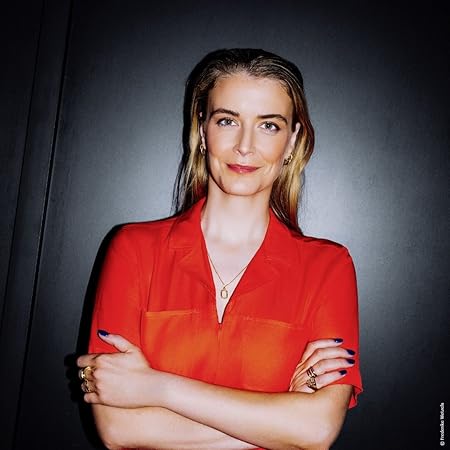
Annika Brockschmidt
Annika Brockschmidt is a freelance journalist, author, and podcast-producer who currently writes for the Tagesspiegel, ZEIT Online and elsewhere. Her second non-fiction book America's Holy Warriors: How the Religious Right endangers Democracy was published in German in October 2021 and was an immediate bestseller. She co-hosts the podcast "Kreuz und Flagge" ("Cross and Flag") with visiting professor at Georgetown University, Thomas Zimmer, which explores the history of the Religious Right.





Transcript
Annika Brockschmidt: Welcome to the Straight White American Jesus Sunday Interview. I am Annika Brockschmidt, author of Amerikas Gotteskrieger, America's Godly Warriors, and Brandstifter, The Arsonists, and host of podcasts like Feminist Shelf Control. Today, I'm very excited to be speaking with Adrian Daub about his new book, What Tech Calls Governing, which is out in German right now. If I've understood that correctly, under the title — I'm going to say the German title, because why not — Was Diese Welt Beherrscht. And Adrian is a professor of German studies and literature at Stanford University, so he's right at the source, as well as the director of the Michelle R. Clayman Institute for Gender Research. And basically, whether you want to learn about Novalis, Adorno, Wagner — by the way, I just realized that there are some Wagner notes right on the show behind me — or the cancel culture panic, or the weird gender and sex politics of the modern right, Adrian is your guy. That's Adrian, that's your claim to fame. Now, that is what you are known for.
Adrian Daub: Oh, God.
Annika: Life choices.
Adrian: Yeah.
Annika: But this is actually the second time that we, as two native German speakers, will be recording a podcast episode in English.
Adrian: That's right, because you were on In Bed with the Right to dispel myths and to explain the German election to our listeners, which is still a very, very popular episode. Remains so, because people every once in a while are seized by the question: what the fuck is up with Friedrich Merz?
Annika: I mean, that is a question that I think puzzles me daily. Yeah, I have daily moments of thinking about Friedrich Merz, and that's quite unpleasant. I have to say, no care for it. No. And so the last time we spoke in English, the German election results had just come in, and let's just say things have gotten distinctly worse since then.
Adrian: Yeah.
Annika: And the vibes were already bad. And by the way, we just — I don't know if you saw this, because it's quite early in the morning on the West Coast — we just had the first ever nationwide poll come out that sees the AfD in first place.
Annika: AfD, 26%. CDU, 25%. So if there was an election this Sunday, that's what would be happening. Anyway, so you know, this fun stuff aside, we're not here to talk about the horror show that is German politics today, but we're here to talk about your new book, which is great, but describes a different sort of horror show, if I can tease it in that way. And this is actually the second book that you've written about the mindset behind the elites of the tech industry, behind Silicon Valley, right? The first one was published, I think, a couple of years ago now.
Adrian: 2020. Came out in October 2020, and then in German in November — it came very, very quickly.
Annika: And that was called What Tech Calls Thinking.
Adrian: Yeah. So that title — for German listeners, What Tech Calls Thinking is a play on the way Was Heißt Denken by Martin Heidegger is usually translated. But I liked the title beyond the joke, which probably only I really appreciate. I liked it because — I don't want to say, sometimes it gets introduced as like, "Oh, it's about how tech thinks," and I was like, I definitely don't want to write that, and I don't know how to write that.
The "calls" is really important because my contention — it came out of an editor saying, "Why don't you write an intellectual history of Silicon Valley?" I said, "I don't think you can, because I think an intellectual history confers a certain amount of gravitas, and you're like, this person read this other person and has done something with their thought." And I'm like, "These people have gleaned, like, a third of this book while on a Peloton. And then like, used the buzzwords, and put them in their own private sort of mythology and cosmos." I don't want to call that intellectual history. So it's like, okay, but they're calling it thinking, they perform it as thinking, they perform it as intellectual work, as thought leadership — as they like. But the same is true for the new book, because they're in charge, but it's not quite clear they understand that they're governing. They're very petulant when you're like, "Well, you're actually in control here. What do you want to do with that control?" And they're like, "Well, I mean, that feels like a very rude thing for you to say to me." And I'm like, "Well, no, I'm sorry — you keep making these claims about how your technology will reshape the world, and seem deeply offended when people think that that might create reciprocity, that this may create certain claims on you, your money, your person, that there might be ethical constraints, responsibilities on you." And so again, I was like, well, it's not how they govern — we can all see how they govern — but it's what they call governing.
Annika: So what was it that made you want to dive into what tech perceives as — or the tech elites, we should probably say — what they perceive as both thinking and then later governing? When did you start writing the first one?
Adrian: The first one, I think, in 2019. It was 2018, 2019. And it was very much a product of a particular moment. I had started thinking about it around 2012, 2013, when some of my smartest students started going into tech, which is fine. Like, this is how you make money in this area if you want to live here. I kind of get it. But they did it with this kind of naivete that really shocked me, where they're like, "I want to do good things, and I'm therefore going to — oh, wow." And you're like, "Oh my God, I thought I taught you better than that."
Annika: That's a lot to unpack.
Adrian: And so I was really like, I need to understand how these people find this compelling. These kids should know better. Well, funny thing happened on the way to the forum: by the time I started writing the book, a lot of those same students had spent time in the industry and had come away quite disillusioned. They would come back to me and say, "I now understand why you were so crestfallen when I said that all the way back then. Let me tell you what's actually going on in these companies." So suddenly I had this very privileged window. And it's not that their interviews formally made it into the book, but they would point me in the right direction — like, "You gotta check out this guy, he's a fucking trip," or "This is the thing they're all doing, can you look into that?" So that often became newspaper articles. And at the same time, I had a lot of friends in the valley who likewise were getting older and starting to really feel that things were off, and sort of disillusioned with the whole place. So I just got a never-ending stream of, "You gotta check out this fucking joker." So I had really good seats for this moment when I think the kind of investment — the libidinal investment — in Silicon Valley kind of shifted. Where people really... there had been a kind of dominant zeitgeist that had proposed that Silicon Valley somehow did things better, and we all had to learn from them. And then it sort of shifts right before the pandemic — people are like, it starts with the Cambridge Analytica scandal, but really by 2018, 2019, the idea that these people are kind of a problem predominates.
And I think — and that had knock-on effects in Silicon Valley — these people did not take it well that people were no longer just giving them big slobbery kisses, but being like, "Hey, you appear to be a massive multinational company. Can we see your books? Are you a fraud?" These kinds of rude questions were asked, and a lot of the top echelon didn't take it well.
That's also — you've alluded to it twice now, and I thank you for that — it's not a portrait of these companies. I'm not saying anything about your average Googler. I'm not saying something about a guy who works at Meta or a person in Salesforce's legal division or whatever. This has become more and more so a story of the top echelon, and really of the kind of medially visible billionaire class in Silicon Valley, who have indeed — since 2020, and I'm sure we'll get to that — radicalized in a massive way. The rest of the place, as far as I can tell, hasn't shifted that much. And really, it's the boss and investor class that really has done what your weird uncle on Facebook did — like, fully radicalized, like has started sharing weird Nazi memes.
Annika: Yeah.
Adrian: And like fulminating about how no one's working anymore, while you're like, "You're going to tennis right now. I'm not sure you're in any position to lecture anyone on working."
Annika: This is interesting. Whenever that pops up, I can just hear — I only hear the Kim Kardashian. "No one wants to work anymore. Get off your fucking ass and work." Sorry, but yeah.
Adrian: Kim, Kim, we stan a working queen — which apparently she is.
Annika: I mean, she is. It's weird. Deeply weird. There's a great different book on that coming out, but that would derail me further. Sorry, it's called the Kardashian Colloquium. Anyway, very interesting — with a K. I think you would like it. There's a lot of political and philosophical angles to unpacking the other rich text that is the Kardashians. Anyway, you're listening to Straight White American Jesus. I will stop talking about the Kardashians now. But because you just said so — it was really something that shifted within the elite of the tech industry. I think that's so important, because I'm sure we've all read and heard a lot about the alleged so-called vibe shift, the shift to the right, generally politically speaking, but also in Silicon Valley. And that kind of is an assumption that's often taken at face value without being really interrogated. Who has shifted, and who is claiming that?
And one of the people who really likes to claim that — I think it was in 2019 — Marc Andreessen, one of the names that keeps popping up in your book, one of the tech billionaires we're talking about today — he claimed that there was a vibe shift that was sweeping the country, and one that was even happening, as he claimed, in San Francisco, in Silicon Valley. And what you show in this book, in your analysis, is that that's not necessarily true. So who's Andreessen talking about here, and why did this happen so quickly? Because it did happen in a rather short amount of time.
Adrian: Yeah, I mean, yes and no. One of the problems is — it's not that the liberalism of the tech industry was largely overstated before, especially at the top echelon — but there are, I think — not to be reductively Marxist, but go ahead — someone makes $200,000 a year, they're going to be less likely to be a bleeding-heart tax-and-spender than someone who makes $40,000. Like, yeah, these were often the richest people on the block. Again, the people I know all vote Democratic, but do they have certain conservative tendencies? Like, yeah. I mean, that comes with having two cars that people can scratch, a front yard that someone can take a shit in, and maybe not knowing as many people who are really struggling as you used to. Yeah, like, it was never as hippie-ish as its outside reputation. But still.
I mean, we don't have data, obviously, on these companies — that would be kind of creepy, even for them. But —
Annika: Sorry, just one more thing, because you just mentioned hippies. Maybe for our non-US listeners — something that I think Europeans often project onto the historical hippie movement in the US is that it was automatically staunchly anti-capitalist.
Adrian: Yes.
Annika: Which wasn't the case broadly speaking, I would say.
Adrian: Yeah, especially the Northern California variant was very compatible with founding — usually small — companies. But they valorized the form of the corporation. My colleague Fred Turner has written about that in his book From Counterculture to Cyberculture, where he says this isn't really that big a transition. At the same time, in terms of their voting behavior, in terms of their social attitude, and in terms of how they think about trans children, for instance, they're going to be kind of on the left.
And I mean, just to give your listeners kind of a sense — the vibe shift, Andreessen never defines what he really means by vibe shift, but clearly it has something to do with Donald Trump, so votes for Donald Trump would seem to be a pretty good proxy. And I looked into this. I mean, the voting data for the counties that Silicon Valley really draws its about 900, 950,000 employees from — that would be San Francisco, San Mateo, Santa Clara — Donald Trump did gain some votes, but like in the thousands between 2020 and 2024, right? Santa Clara County has something like 3.5 million —
Annika: Yeah, that's —
Adrian: Is that right? I forget exactly how big it is, but it's immense. I think there's something like almost a million voters, and so it's like a tiny shift.
Annika: Yeah.
Adrian: The biggest shift is to non-voting.
Annika: Interesting.
Adrian: From Democrats to non-voting. This would be the enthusiasm gap that we can all debate on what it was brought on by. But certain explanations suggest themselves. And at the same time, there's just no real groundswell.
Annika: Yeah.
Adrian: So that's of course extremely non-granular, and you can look at other breakdowns. You can break it down a little bit by precinct. There are — one good thing about these ultra-rich is that they kind of segregated — there are like two or three communities where they love to live, like Atherton, Woodside, Los Gatos. These places tend to have a higher-than-FDA-recommended dose of CEOs in them, right? And if you look at those — I've been, I'm still crunching the numbers. San Mateo County, unfortunately, changed its precinct structure between 2020 and 2024, which makes this very hard. But yes, from my spreadsheet so far, even there the shift is there, but it's extremely minimal.
What I think is happening — my suspicion is — the same way that in 2020 in your family chat there was that one uncle who went crazy, and he went crazy precisely because everyone else is like, "What the fuck are you talking about?" It's not a milieu that kind of moves, it's the one single contrarian. And that's often how these guys perceive themselves. They are surrounded by wives, children, co-workers, golfing buddies who are like, "What the fuck are you on about?" But that actually in some way makes their radicalization stronger, and kind of makes them think, "Oh, I'm swimming against the mainstream, but also there is this big movement, and I'm part of it."
And that big movement is sort of suggested by the fact that, as you were alluding to, a lot of these guys don't have that much human contact anymore, but are getting their brains cooked on Twitter. So they do in a weird way create a collectivity, but they created it with, like, caterers or whatever — they created it with white supremacist accounts on X, with other weirdos on message boards. That's the kind of thing. They get radicalized in the way we think of our youth getting radicalized. It's really quite remarkable. But here's a 62-year-old guy on his way back from a squash game, and he's —
Annika: Deeply dark.
Adrian: It's really dark, yeah. And in some ways they're victims of the same services that make them rich, like Pablo Escobar just snorting mountains of cocaine — it's like, you guys should know this is harmful. You made it. What the hell? Why are you consuming this shit?
Annika: Don't just gobble it up. It's so interesting. I especially find the stuff that Marc Andreessen says out loud into microphones not fascinating because I think it's intellectually stimulating, but it's quite telling about how he thinks, or what he values, or what he considers intellect or influence. If we take him and others like him — because even though, as you said, these people were never bleeding-heart liberals to begin with, and there are variants to this — Peter Thiel told us back in 2009 how he felt about democracy. Sure, but in their public behavior —
Adrian: The ladies participate —
Annika: Mostly those pesky ladies who don't like libertarians, and that's a bummer, real bummer. So democracy has got to go, you know, nothing else to do. But if we look at these people who have, in these last couple of years, radicalized in those kind of weird silos of obscene wealth — can you tell us what sort of societal moments were it that led these very, very rich, influential people, from what they've told us, down this path? Sort of moments that they perceived as personal slights against themselves, because I feel like this sense of being owed something and being besieged at the same time — so you're all-powerful, but you're also a victim —
Adrian: Yeah.
Annika: That's quite fascinating to me.
Adrian: Yeah. And I mean, they've had this forever, and it's how they've been able to evade regulation for so long. "Oh, we're just a little scrappy multi-billion-dollar company."
Annika: Just a mom and pop.
Adrian: Yeah, mom and pop rideshare service. But in general, I think — Andreessen is a good case in point. So one story he'll readily tell is that he feels like he wasn't respected by the Biden administration. And that's — I'm sorry, that choice of word is so wild.
Annika: Yeah, respected.
Adrian: Yeah, yeah. Exactly. They wanted — which is also this kind of moving goalpost, like it's tone policing, like it's not like there was a perfect point. This is your ex post facto rationalization for a radicalization process that you underwent. One clear point is the attempts to start regulating some of these companies in earnest. This would have been actually during the first Trump administration, which they don't remember — but, like, you know, there was a 2018 push to put Meta sort of on a chain, and that clearly upset a lot of investors in Silicon Valley. But it was also the attempts to bring crypto and later AI companies under some kind of regulation. You'll note that Trump is basically banning state-level regulation of AI. This is the kind of thing that tells you where they got upset.
But then there are other things, like there is the pandemic, which really messed these guys up — for one thing, because they were treated just like everyone else, which they found to be, you know, despicable, and really just oppression. They also — it was a moment of personal humiliation, which I think was easy to miss, because we were all like, "What the fuck is going on right now?" But if you were here, you got to see all the headlines about their weird solutions to the pandemic. They were all super confident — like, "Silicon Valley will fix it," and they were going to fix it the way they fix everything else. They were like, "Oh, we're gonna make an app," or "Palantir will contact-trace for us," or "The blockchain will save it" — in one case — and you're like, "Okay, I don't think I'm following, but okay."
And all that, of course, became kind of very publicly ridiculous, ex post facto, by the thing they hate most — established authority and state authority. It was, you know, a biotech company and governments being like, "You get your injection, or else you're not going to the airport." That made it possible to return to some kind of normalcy. It was not these weird gizmos. I don't know how many — at some point I counted how many apps I had ended up downloading on my phone that were supposedly going to be the way we could go out. I mean, I think Germany committed to one much longer than anyone else.
Annika: There was like one centralized big app. Yeah.
Adrian: And even that didn't really work. But in the end, you got rid of it the same way you got rid of smallpox. And I don't think that sat very well with them.
The next thing that happened was that in 2021, 2022, as things did start opening up in the Bay Area — which had a longer-than-usual lockdown, which is also probably important for your listeners to realize — there was a spike in crime in San Francisco. And this was something that largely did not target the wealthy, except like — the number of VC investors who parked their Bugatti on the street and couldn't get it broken into, I think, is kind of limited. It really hit people who had just rented a Lexus at SFO and then got that broken into, which sucks. I'll acknowledge that. But I don't think that was Marc Andreessen, if I can be quite honest with you. I think his driver would have been in the car. But they experienced this as an attack on the wealth creators, the value creators. And this was a rare moment where probably they were in agreement with the lower rungs of the hierarchy in their particular companies, so the kind of person who doesn't share market-oriented politics on anything else — let's say someone in a corporate legal role at Google or OpenAI or whatever — might agree that the number of tent encampments by the highway are a problem, et cetera. So there was like this brief moment of coalition.
And this sort of came to a head — I think it was 2022 — when Bob Lee got murdered, the CEO of Cash App. And this was like a moment when David Sacks and people like that, and Elon Musk, just went off on San Francisco and basically portrayed the city as allowing psychotic homeless people to murder CEOs — open season on CEOs. It turns out that the killer was another tech person. Those two knew each other. It was a crime of passion, you know, some kind of long-simmering grudge that boiled over. But it crystallized that moment where they really — they were like, the thing they'd always wanted — to be victims — now felt really ready at hand.
So you get these moments building up to the 2024 election. The crime issue was a big one; crime was already going down. It was very clear this was a momentary spike. But something like the recall of our district attorney, Chesa Boudin, was big. It was championed not just by weirdo billionaires, although they did champion it — but that actually went a little bit further down the chain. My friends, who I take to be perfectly dyed-in-the-wool San Francisco liberals, would be like, "Well, we've got to get rid of this guy. I don't really think this does anything, but whatever."
So there was kind of a readiness. And then the next recall effort targeted a school board that was perceived as too woke. So you can kind of see how this becomes more about culture — a culture of permissiveness, often a culture of permissiveness towards minorities. And then there's also a post-Black Lives Matter, post-#MeToo retrenchment in a lot of these companies. A lot of people like Andreessen did experience 2020 — where their employees really pushed for a racial reckoning within the company as well — as a kind of imposition and a kind of dictatorship. And when you hear Andreessen talking now about "there's a changing of the elite," you're like, "Oh wait, you think you weren't the elite and the woke were the elite? How the fuck were they the elite? What were they in charge of?"
But in his mind, this is basically the counter-revolution against 2020. And again, that is true for a smaller slice of people. From the crime stuff to the anti-woke stuff, you do lose a lot of people who maybe were with you when it was about tormenting the unhoused, but who are not willing to just flat-out say racist shit. But that, I think, is sort of the trajectory of a prototypical VC investor who's been part of this vibe shift.
Annika: That's so interesting, because you show — and I'm assuming that this is one of the reasons why you now wrote this second book, What Tech Calls Governing — because we're seeing how big tech and the US government now under Trump have become more tightly intertwined in a way that we didn't see before, but that was also foreshadowed in the months and the year before this last one. And when we look at how some of these influential figures, what they're talking about, how they're behaving — so we have Alex Karp, you know, head of Palantir, he's been rambling on about the supremacy of the West that needs to be maintained, and Palantir can and should be used to kill the enemies of the supposed quote-unquote West. Elon Musk has been retweeting Nazi content for forever now. DOGE has already killed so many people. Peter Thiel has been touring the world with his own sort of weird autodidactic version of a bastardized René Girard-inspired theology that very conveniently justifies whatever he does — that's so nice for him, that's how that tends to happen, very conveniently. By the way, did I ever tell you that I happened to listen to one of these talks kind of as a jump scare in person in Hungary? Yes, where he was announced as a surprise guest at the MCC Fest.
Adrian: Of course. Yes. Matthias Corvinus Collegium.
Annika: Yeah, Collegium, yeah.
Adrian: Collegium.
Annika: Yeah. It was wild. The lecture on the Antichrist was very — slaps — interrupted by an incredible thunderstorm, because this was open-air, so it was quite poetic. But so —
Adrian: Can I ask which one you heard? Because there are four of them by now, although frankly the fourth one is mostly filler.
Annika: Yes, I heard the one where he rambles on a lot about the atomic bomb, Greta Thunberg, and the Katechon.
Adrian: You've got to be more specific. Oh, the Katechon is, I think, mostly two. The first one is very art historical.
Annika: No, no, no, it's mostly complaining about how certain scientists he doesn't like and figures like Greta Thunberg will — and AOC — he did bring his PowerPoint, unfortunately. Yeah, he did. I wanted to record it secretly. Unfortunately, the only space left was right next to his security team, so I was like, I'm not going to do this.
Adrian: Yeah.
Annika: Anyway. So these people seem to have, in their own ways, radicalized in a way that makes it very interesting to ask the question that your book poses: what are the sort of common denominators when it comes to these people's ideas of power and ruling and governing and hierarchy in general? I mean, I know you found an answer to the question. What stood out to you the most?
Adrian: So one is definitely the fact that they have a picture of power that rules without — and is recognized without — friction. So there is a kind of fantastical version of power. And I sort of talk about the fact that they fly into science fiction so quickly. It's often very clear in AI talk. AI may well become dominant, but every technology known to humans had to be implemented in society through social means. It's not straightforward. The train line can go this way or that way. A printing press — you can issue licenses for it. It'll make some people rich and powerful; it'll make commensurate other people. These are social decisions. But if you hear AI boosters talk about it, it's like this power will act almost on its own.
Annika: Kind of like a force of nature.
Adrian: Like a force of nature, or a divine force. And again, I'm thinking of them — some of these people are deep into this — this is how they envisioned this, like it's just fated. Which, in a weird way, then makes them kind of bystanders of their own power. And you can see that with Elon Musk very well — that this guy seems genuinely surprised sometimes by the fact that he has this influence. Like, why would you be surprised? You are basically the richest man on earth. What do you think happens to the richest man on earth? I think he might be influential.
And this ability to wield power while sort of being dis-identified from it, I think is very key to what tech calls governing. And it is in fact the big commonality that it has with the Trump administration. We have a president who's very capable of saying, "Someone really should look into this," and you're like, "Yeah, man — do you know someone who runs the government?" They're capable of incredible insurgent energy, claiming to stick it to the government, while — I always think of this, I mean this dates me, but there's a scene in Apocalypse Now where Martin Sheen gets to this battle somewhere in the Vietnamese jungle, and he crawls around in these trenches forever, and he keeps asking, "Who's in charge? Where's your commanding officer? Who's in charge?" And he meets these two guys — "Who's in charge?" — and they go, "Ain't you?" And it's like, yeah, if someone's in charge, it's you guys. Like, if you want to talk to the manager, it is you. You are the manager.
Annika: Coming from inside the house.
Adrian: Exactly. My house, yeah. And so — to me, that is really a constitutive element of this: a power that cannot fully identify with itself, partly because it doesn't fully believe itself. That is to say, these guys have a kind of fascist theory of power, and they judge themselves to be deficient in it. They kind of think, "No, but I'm a nerd, I'm a weirdo, I'm a creep — I cannot wield this power, because the way I've been taught power should look, I don't look like that." Think of — if you want to get a picture of the ideal, you only have to look at the bizarre AI-generated slop that Elon Musk will retweet of himself. That is the guy who would have the power. That is not Elon Musk. And Elon Musk knows that. No amount of jaw-chiseling will do that for him.
Annika: No amount of looksmaxxing.
Adrian: Looksmaxxing, though — I don't know if he looksmaxxes, I hope — I hope he smashes his jaw with a hammer, but —
Annika: There is a chance.
Adrian: Yeah, yeah, no — I think he just gets tons of plastic surgery. And you know, my guess is the nootropics — luckily those don't do anything, but sure, this helps. But yes, I think it is this kind of power that stands aside itself, because it partly can't fully believe itself, because it is actually more invested in the power trappings of American liberalism than it cares to admit. It sort of carries that residually with it. The same way some Democratic parties that seem to be tilting towards the right sort of seem to think that the institutions that rein in fascists are just going to be around forever. And it's like, oh, you sweet summer children — no, those things die. Yeah. But they can't quite believe it. They're like, "Well, it's not gonna be like back then." It's like, well, that's what they said back then.
And the other thing I think is also that part of why this power doesn't feel full and self-assured is that it ultimately is something of a sign of weakness as well as of strength. These people are as dominant as they've ever been. At the same time, I don't think they should like where they are. There was a moment when Meta, when Alphabet, etc., were not American companies — they were companies for the world. Everyone Googled. Germans Googled, Pakistanis Googled, Americans Googled. Great. Now we're getting to the point where they're, as you say, fused to the US security state — to where SpaceX is the space program — which means that suddenly you've identified with a national project that, for a corporation, is not the best thing, especially if the guy running your country keeps starting trade wars. Like, it's very easy to imagine that the EU at some point is like, "Okay, we'll just ban X. We know it pisses off a good friend of Donald Trump's, and honestly, what? No one's gonna miss this fucking sewer at this point. It's not like depriving our citizens of T-shirts."
Annika: Where the Nazi swamp is gone. Horrible.
Adrian: Yeah, we're depriving them of the Nazi swamp. So there's that. There is the fact that a lot of these undertakings — people just seem to be voting with their feet. I mean, the metaverse, to me, is always a really interesting thing. It was sold to us with the same air of inevitability. It's worth looking back at coverage of the metaverse.
Annika: And it was wild.
Adrian: Yeah. People are like, "It's all coming." It sounds a lot like the way they talk about AI, to be honest.
Annika: It does.
Adrian: And in the end, people were just like, "I want legs, man. I don't have legs in this. This is weird."
Annika: Yeah.
Adrian: I got sick from the Oculus Rift device I wore. I think it was a kind of early — they were kind enough to demo an early version for me. It was fun for 10 minutes, and I was like, "I'm gonna fall over this trash can. I need to take this thing off." And they're like, "Yeah, it does tend to happen." I'm like, "Okay, but how do you think someone's gonna attend a conference in this?" I mean, to game with it was pretty fun for 10 minutes, but the idea of having to hear someone lecture in this is honestly among my top five nightmares.
And also, the identification with the Republican right — you know, depending on what happens in November, it does look like the Republicans did not succeed in fully coordinating the state and abolishing democracy to the extent that they'd hoped — let's be clear — which means that there is a non-zero risk of a Democrat eventually being in power. And while one should never underestimate the Democrats' capability for yellow-bellied cowardice, I do think that the incentive to be nice to these people is close to zero, and the appetite for really showing them the business, I think, is pretty high among the electorate.
Annika: Oh, yeah, definitely. I mean, I think — as much as I am not a fan of making political decisions based on results from focus groups — I think that would poll very well.
Adrian: Yeah, there'd be no downside, right? The same with the EU and trade on Silicon Valley. I think they've maneuvered themselves into positions where they're heavily identified with very specific projects that don't appear to be that long-lived. And that is not the bet they wanted to be making. I think the bet they made after 2008 was much more sustainable, which was to basically make yourself identical with neoliberal globalized capitalism and sort of very wishy-washy rainbow coalition rhetoric, while being controlled entirely by mostly white men. That, I think, the bet on that surviving is a lot better than the bets they're making now. And that's because those are forced bets — those are not bets they wanted to be making.
So that's the other thing: it's a power that sort of understands itself as in decline. I always think of this — and Quinn Slobodian and Ben Tarnoff, in their new book on Muskism, talk a little bit about Musk's South African background. And it's hard not to think of sort of late-apartheid politics, where you can see which way the wind is blowing, but you have this weird politics of forestallment, politics of postponement, politics of delaying the inevitable. And I think that's kind of where they're at. They're all living in the laager, somewhere. That's how they talk.
Annika: Right, like Andreessen. He can basically hear — you can kind of imagine, but not really — the masses at the gates of his lair, his mansion, his whatever. I think that is a part of the sense of dread that seems to propel these people. They know that in spite of their immense power, there might be a reckoning coming for them, in whatever way that might look like.
Adrian: Yeah. I mean, the bet has to be that parliamentary democracy or plurality democracy will not survive until the reckoning comes. One big — I mean, again, I'm careful about pronouncements about AI. I seem to be the only person on the planet who's careful about this. I'm like, I'm a literature professor, I don't know. But I can tell you what I know as someone who's been around for many Silicon Valley hype cycles: it is a hype cycle. Like, sometimes there's something real behind a hype cycle, sometimes there's not. What's very noticeable is how they talk about it. For them, this is class warfare against the very people who humiliated them during the pandemic — the white-collar workers who said, "I don't want to come in, I don't want to get sick, I want to have childcare leave, I want to care for my sick aunt." They think they can make them obsolete and finally fire them.
Annika: Kind of also drying out their surroundings at the same time. Poisoning the drinking water.
Adrian: Right. There's that. Yeah. I mean, that's a matter of bonus, I guess. But the interesting thing is — their hope is, how do you do that? Well, you declare war against the professional managerial class, as Barbara Ehrenreich would call them, which can sometimes align with management, sometimes align with workers, because they're both.
Annika: Yeah, yeah.
Adrian: And so their vision is that, like a people's tribune, they bypass the white-collar workers straight towards the Trumpist base — just proletarians, basically, or sub-proletarians, really lumpenproletariat — who they meet online. But their bet, I think, on the size of that lumpenproletariat is wrong. Like, I think it's actually a pretty foolish bargain, which means they're gonna have workers, their managers, everyone mad at them. I do think this is ultimately — I wrote myself into a place of kind of hopefulness in this book. I do think that they're not in a good place.
Annika: Quite rare in our field of work.
Adrian: I know.
Annika: I was kind of pleasantly surprised when I was reading the book. I was like, "Oh, this is taking a slow but pleasant turn."
Adrian: I think, like — I mean, yes, if they succeed in abolishing democracy, then we're fucked. I don't know. I think they're not. These are the people who invented the metaverse. I'm not sure they can deliver.
Annika: Hold on to that, more so, yeah.
Adrian: Killing democracy is best left to real professionals, like Friedrich Merz.
Annika: That man is just plowing forward.
Adrian: Yeah.
Annika: Adrian, I just — we have to talk about Carsten Linnemann at some point. Oh, God, yeah. Jesus, yeah.
Adrian: What a sweetheart. But yeah.
Annika: Every German listener just now, at this moment, heaved a very big sigh — yeah — at my utterance of this name. But yeah.
Adrian: But yeah, so that's — I think that is my hope. I do think that I see the plan, I see the overall direction, which someone like Andreessen or someone like Thiel, I think, sees things going.
Annika: Yeah.
Adrian: But I also know that these are billionaires ensconced in their weird palaces, surrounded by weird yes-men who are frankly grifting them. "Why don't you take this pill? Why don't you run for governor? Why don't you put a weird proposition on the ballot?" These are mostly sorry parasites, people who were around Louis XIV. And I do think that inhibits your ability. And then they go online and are around these crazy-making spaces like Twitter.
Annika: Talking about IQ all the time.
Adrian: Exactly. It does become this kind of — it's not a movement that is built to create greater and greater coalitions. It is one that, in fact, does the opposite: it just shuts more and more people out. Which is, ironically, also very logically true of Trumpism.
I'm working, as you mentioned, on the 1933 book right now. And one of the things that's very spooky about the Nazis in their first year is how they figured out how to play to constituencies that were not convinced Nazis by January 30th — and how they really managed to sort of not necessarily convince them, but make them speak their language, or participate in a particular aspect of it. Make them feel like maybe just holding still and waiting is the right thing to do, or that they're participating in this one mediated way, but not fully going in. And now, that's okay, that's okay.
And if you look at what Trumpism has done in its first two years back in power — it essentially seems to be designed for the kinds of people who reply to Elon Musk or JD Vance tweets with three fire emojis. And it's like, well, that's not how you build a coalition. That is how you distill the next group that's going to storm the Capitol. Like, these people can end up in a deeply regrettable place, or a mass suicide. But it's not sustainable. It's Jonestown logic.
Annika: Yeah.
Adrian: It's not sustainable. It's not a growth model. And I feel the same way about Silicon Valley's political ambitions.
Annika: Yeah. I find it quite interesting, because you also spend some time in your book on the way this tech elite sees the world and how they are trying to find proof — because you just said they're so insecure in their power — they're trying to find natural, biological proof of their supremacy that they themselves don't really believe in, but think they should have, but can't really seem to grasp. So I think it's quite fascinating to see this incredible cruelty and callousness to the way of thinking that you describe, and at the same time, there's this sense of entitlement combined with the sense of embattlement that we've been talking about — not just neediness, it's a desperate neediness. It's not enough to make the rules, to dictate how the world works, what technology people use, who lives and dies. When we're talking about USAID, it's in their minds offensive to be held accountable in even the vaguest of ways. Yeah, I mean, I'm sure we've all seen the DOGE Bros — you know, the equivalent of the "big balls" testimony. That's a sentence I never thought I'd say.
Annika: Yeah.
Adrian: Yeah, that's the other thing — they've debased the way we talk. We all have to talk about frickin' Palantir, and I haven't talked about Palantirs since I was 14 and reading The Lord of the Rings, and here I am now discussing Palantir.
Annika: That's wild. But do you know, I find — you write about this posturing as the underdog, even as they — I think that's the example you gave — as they're dismantling USAID, effectively condemning people to death that they don't seem worthy of living. And I hope you don't mind — I'm going to do the awkward thing where I quote your words back at you, and I will take full responsibility for the translation. This is not Adrian's work. I translated your German quote into English, so sorry in advance. He wrote: "This makes them susceptible to modern populism, which does not believe in its own populism, and to authoritarianism, which never truly believes itself to be in power, not even when it exercises power in a dictatorial manner."
And that really reminded me again of Peter Thiel, and the way he thinks about himself.
Adrian: Yeah.
Annika: That's kind of the desolation of this.
Adrian: Exactly. A guy who thinks that it is bullying to out him, and it is not bullying to destroy the newspaper that outs you. I mean, that's it — you have a theory of power that is like that of a comic book. It's not based on how society works, or an objective analysis. It's a sense of aggrievement. It's kind of adolescent. It's hyper-individualistic. It's fantasy. We're living in their LARPing, essentially.
Annika: And when we look at how all of this relates to Donald Trump — I think the parallels are quite obvious, but what you do is you go a bit deeper, you zoom out. You write the following — yes, I do have a second quote — about the way that this dominance-play, like dominance-laughing, almost, is performed by these tech billionaires and those who think like them. You write: "It draws its strength from a lack of understanding, indifference, even ignorance. It does not understand the things it dominates, and it does not respond to this lack of understanding with shame, but with a perverse pride."
And the example you give — this is one of my favorite parts of the book — is how this relates to the Trump regime, and it's Scott Bessent, and what he said about the Federal Reserve.
Adrian: Yeah, that's a great quote, isn't it? He's like, "I don't know what anyone over there does," basically. And first of all, Scott Bessent knows what they do. He's been in the business for 20 years. Second, it was very clearly a bid to become Fed chair — either, like, "I don't know this thing. Oh, let's put you in charge of it." That's maybe frightening. Yeah. But also, the fact that the ignorance is kind of feigned. It's not real. It's often that these people forget expertise that they have. That is the corrosive thing. "Big balls" didn't understand USAID, but they weren't playing people who did understand what it did, and sort of chose to accede to that logic.
I think that's how a lot of us are with AI. Every time we hear the phrase, "Oh, well, the AI is not quite ready yet" — and I'm like, it's never fucking ready. Have you noticed this? Like, every time: "Well, yeah, right now it gives you all this kind of garbage, but down the line—" and I'm like, okay, maybe, but it feels very weird that people are losing their jobs to a technology that is not quite ready for prime time. Like, imagine that with self-driving cars — self-driving cars are pretty freaking good, I have to say — and imagine they ran over people at a constant clip, and you're like, "Well, I mean, it's not perfect, but we should fire all the Uber drivers." It's wild. I find it very strange, the way we allow our idea of something working — a kind of folk mythology of how something ought to work — to sort of become the way people decide it works, even if they know better.
"Big balls" didn't know any better — he's 22 and an idiot. Not to defend him; he shouldn't have taken that job. But he is probably genuinely an idiot. But Scott Bessent, I think, is not genuinely an idiot. He just plays one on TV — for his boss. And I think that is far worse. The fact that people who ought to know better are acceding to these things over and over again, and are sort of playing along with power that isn't yet fully matured — like AI — but that has to be respected and acceded to as though it were already mature. To me, that is the central pathology of our moment.
Annika: One key moment in the radicalization of the tech elite that you point out in your book is Mark Zuckerberg's congressional testimony — I think it was 2018?
Adrian: I think it's 2018, yeah.
Annika: Which is really interesting, because in that hearing, he basically got it from both sides — from both Democrats and Republicans. And what to you was the difference? Why was the Republican criticism less offensive to it? Because I think this tells us quite a lot about the sort of switch-up in affiliation with one party that kind of seemed to happen here.
Adrian: Yeah. I mean, Zuckerberg afterwards had this meeting with Facebook leadership where he basically talked about an existential threat to Meta and to Facebook. And that was very clearly about Elizabeth Warren's question, because they were essentially driving at antitrust questions, which really does concern the integrity of the company. Followed to their conclusion, they would suggest that there cannot be a single Meta — that it would have to be broken up, that you'd apply the logics of US antitrust law, which used to once be quite robust. But from the Republicans, of course, he got the anti-woke questions — what we today would call the anti-woke questions — about free speech concerns, shadow banning, et cetera.
Annika: Which —
Adrian: Are easy as shit to accede to. Like, one little tweak of the algorithm — make Tucker Carlson your fact-checker-in-chief — and Bob's your uncle. It's very, very easy. So that is the thing — he obviously hated being there and hated getting it from both sides. He must have realized he had very few friends in that room. But he must have also sensed — or whoever was with him must have been like — well, one of these is extremely easy to satisfy. Because they're not upset at our power. They're upset that our power doesn't uplift white men enough, right?
Annika: We can do something about that.
Adrian: We can do something about that. The other one is really about how we wield power. And well, that's central. That's the whole ball game. And so it sort of makes sense. That's the forking path that a lot of these companies find themselves in.
And in Zuckerberg's case, it coincides with a bunch of other things that are happening. I think the turn towards the metaverse is sort of like him trying to prove to himself that he is a genius. It's just a kind of a project of midlife — an $80 billion life crisis.
Annika: Gender anxieties.
Adrian: Exactly. The gender anxieties around Sheryl Sandberg, the fact that they had gotten professionalized by this lady — there's all this stuff that's going on for him. So it's not the only thing, but I do think that's a key moment. And I do think — on the one hand, I don't know how much the Republicans knew they were rolling out a red carpet to him, because it could have sounded like hectoring. But at the same time, it's not an accident that they understood, like: they looked at that company and were like, "Well, this is very much an average American company, where white male Americans are in charge. We can like this." We don't like that it won't allow us to Holocaust-deny. And Mark Zuckerberg is like, "Well, I can do something about that. Some light Holocaust denial just comes with the territory." And you know, then it becomes this kind of thing where the Republicans — who also, as you know, love this kind of pose of victimhood — can identify with the CEO as a victim.
I would urge people to look back at early statements about Twitter when it got taken over by Musk. There was talk — also against actions against Tesla after Musk started DOGE — there was talk of compelling advertisers to stay with the platform by law, because it was infringing on Elon Musk's, you know, white supremacist free speech. That Delta Airlines was like, "I don't know if we need to be next to CSAM material — I think we can just advertise on Instagram instead." And it's like, "No, you must speak there now. You must hang out with Elon and his Nazi buddies."
Annika: State power looked a lot more fun.
Adrian: Yeah. And I believe it was Pam Bondi who suggested that people who scratch people's Teslas could be prosecuted for terrorism. Like, sure. Suddenly it's all about consumer choice until you can identify in victimhood with that CEO. And you're like, "If you don't buy this guy's shit, you're a criminal, okay?" And this is what fusion with state power looks like. It's a grievance complex on both sides, and they found the perfect way to express it together.
Annika: You point out that a lot of this way that this tech elite is thinking about governing is incredibly dark and almost like a celebration of not just dystopia, but nihilism — or dystopia as utopia. And because you, like me, I would say, have moments of being chronically online, you cite an evergreen tweet, which is also, I think, very illustrative about the weird relationship — you've mentioned it already — that these guys have with science fiction and fantasy. You quote: "At long last, we have created the Torment Nexus from the classic sci-fi novel. Don't create the Torment Nexus."
Adrian: Yeah.
Annika: And given that Peter Thiel named his surveillance machine Palantir — as a fantasy and sci-fi connoisseur — why is that so bizarre, and why is this such a weird thing with these guys?
Adrian: Well, the whole point of the Palantír is that it's a technology that destroys you, that destroys the wielder. The one main Palantír we meet in The Lord of the Rings basically drives Saruman, who uses it, insane. But it's par for the course for these guys. They tend to identify — I mean, how many AI ads have you seen that basically evoke Skynet from the Terminator movies? In the hype cycle, dystopian warning and utopian promise almost fall into the same thing. And that's why I would always be careful about people who think themselves critical of this industry falling into AI doomerism. I think that's — you're giving up something very, very dangerous, something very central, which is: this is not an all-powerful technology. This is a technology that will be deployed, and at very crucial junctures regulated, by human beings — one way or the other, whether it's state regulation or the companies themselves.
And short of, like, it somehow gets hold of the nuclear codes — which, you know, whatever, if that happens we're all just fucked — but very, very likely, the P-doom scenarios really are the same as the "oh, we won't have to worry about X anymore because of AI." It's just hand-waving away the process of doing politics, the process of having a society where these things are decided, where people get together and say, "I don't like the way this is being deployed," or "I don't like this being automated, I don't think it should be."
I was yesterday introduced to our new AI financial tool at Stanford, which I can ask questions. It's basically a glorified Google, but it does hallucinate. So they're like, "Don't take it for gospel when it says you can get this approved." And I'm like, "Well, what happens if I do?" And they're like, "Well, for the time being, while the technology is not fully matured, we let it go through." And I'm like, okay, so basically you're double-dog-daring me to find bizarre shit that this thing will approve and just buy the fuck out of it. Is that the idea? This is bizarre.
But yeah, you can sort of see where this is going — very likely, which is that there are going to be use cases for AI where companies judge the possible legal exposure is minimal, and fine, we'll fire the people. There are going to be other things where they're like, it's really important to have someone to blame, and it needs to be Steve, not Gemini. It has to be Steve who fucked up. So the reason to get back to our Palantir tech billionaires — the reason they like this stuff is because it's total and it's mythical, and it's power that sort of doesn't — that erupts into people's lives without having to integrate itself, without having to go through the layer of the social. And it's a fantasy. But it's also a promise. That's how they think their technology is going to work, when in fact we know full well how these technologies usually integrate themselves into society — by meshing with the social, where certain uses will be prohibited, some things will be allowed, some things will indeed go by the wayside, some new jobs will be created. There's a kind of friction — what does Clausewitz call it — friction, that normally occurs when something like this is introduced.
And something like the Palantír, or something like Soylent, or Skynet — this is the unremitting force, this is the angry god, this is a metaphysical force. And I have got some news for you: I don't think it is. I think it is a more-or-less-okay plagiarism technology — or, let's say, probabilistic generation technology — and you will find that it has some very serious limitations, and there are parts of society that it will not find entry into. And it will call for more politics, not less. But something like Palantir, as a name, is meant to move it towards the meta-political or apolitical.
Annika: So one of the conclusions that you draw in your book is also — when reflecting on your other work — you basically say that what this tech elite calls thinking or governing is very compatible with fascism.
Adrian: Yeah.
Annika: Can you give us an example of that — I know we've been talking about this for an hour — but an example that really distills this for you?
Adrian: Yeah. The big thing is the hierarchies. They position themselves as hyper-libertarian, but if you looked closely and asked, "Well, if the state were to withdraw, what would emerge?" — well, white men would naturally be at the top. It's like, okay, so there is actually a very serious gendered and racialized hierarchy behind this. And that is, I think, the big compatibility. Like, someone like Marc Andreessen experiences Trumpism as a return to normal, and to what it ought to be like, because ultimately he thinks white men are better. Like, a lot of the MAHA shit is just eugenics with extra steps — which is very popular in Silicon Valley. But honestly, this was true when a bunch of Silicon Valley influencers started thinking about Stoicism, when they started thinking about biohacking. All this stuff is ultimately eugenicist — soft eugenics, often with a self-help book, but it is eugenics. And I think that idea — that there is an elite that is biological, it's innate, and that any encroachment upon it is government interference — is something that American fascism shares with Silicon Valley.
Annika: And before we finish up, can you tell us where listeners can connect with you and your work? Because speaking of fascism, I hear you've just finished yet another book.
Adrian: Yes. So Project 1933: Fascism Then and Now is coming out, probably early '27 or late '26. It is going to be a hardcover. It is going to be quite affordable, and I think people should pre-order it. It is on Amazon and anywhere else non-evil where you want to buy your books.
You can also, of course, always check out In Bed with the Right, where we discuss gender and sexuality issues around right-wing politics, very broadly conceived, with my wonderful co-host and colleague Moira Donegan. We're just about to record an episode today on Guy Fieri. I do one on food. Food is —
Annika: Exciting.
Adrian: Yeah. Who's not, like, a terrible guy? It seems like. So I'm excited. No, I was the moment someone suggested to us, we're like, yeah, maybe.
Yeah, and you can follow me on Bluesky and on Instagram. I am always happy to hear from folks. Oh, yeah, and What Tech Calls Governing will come out in English in August — August 18th, I believe, is the pub date. Normally, these things drop a couple of days early. So again, if you would like to pre-order, that would be great. I would think it's quite affordable. Again, my books are always cheap, and I would love to hear people's opinions of it.
Annika: All right, I'm going to ask Adrian one more question about tech CEOs who post AI-generated pictures of themselves as gladiators and in togas — subscribers, you can stick around. And if you are not a subscriber yet, today is the best time to sign up. You can see our show notes to get access.