
Summary
Brad Onishi sits down with therapist and author Jay Stringer to explore his new book Desire, a deep dive into how we form identity, intimacy, and meaning in a world shaped by shame and disconnection. Jay reflects on his upbringing as a pastor’s kid immersed in evangelical purity culture, including harmful messaging around sexuality reinforced by spaces like Liberty University. Together, they unpack how teachings that equate arousal with sin create lifelong shame cycles, especially for young men, and how cultural artifacts like Every Man's Battle reinforced these patterns. The conversation introduces the concept of differentiation—borrowed from biology—as a key to healthy relationships, using the metaphor of a symphony to illustrate how individuality enables deeper intimacy rather than threatening it.
From there, Brad and Jay broaden the lens to examine what it means to live a meaningful life in 2026. Drawing on thinkers like Annie Dillard and Albert Camus, they explore how meaning emerges not in spite of life’s absurdity, but in response to it. They discuss the stories we inherit, the “provisional selves” we construct, and the midlife invitation to interrogate what we’ve been taught to value. The episode also tackles masculinity and vulnerability, arguing that domination and hyper-masculinity often mask unaddressed trauma, and that true connection requires risk and emotional honesty. Ultimately, they frame defiance—not despair—as the path forward: a refusal to believe our lives don’t matter, and a commitment to building lives rooted in connection, purpose, and resistance to dehumanizing cultural forces.
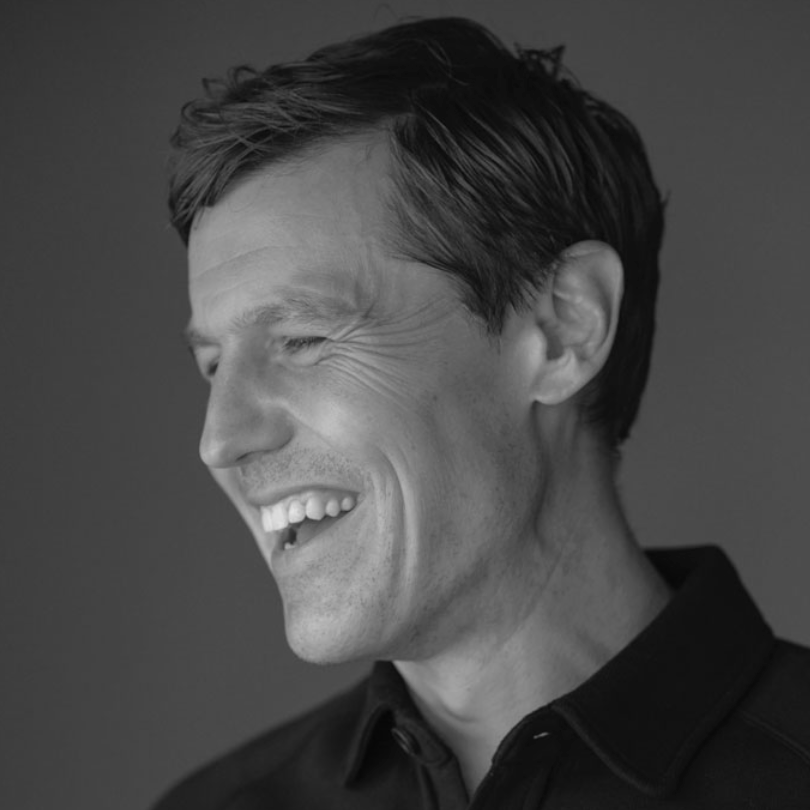
Meet The Guest





Transcript
Brad Onishi: Welcome to Straight White American Jesus, the Sunday Interview. I'm Brad Onishi, author of American Caesar: How Theocrats and Tech Lords Are Turning America into a Monarchy, founder of Axis Mundi Media. And here today with a first time guest, somebody I'm so thrilled to talk to, and that is Jay Stringer, who is the author of a new book called Desire: The Longings Inside Us and the New Science of How We Love, Heal and Grow, as I just talked about. Jay, thanks for joining me.
Jay Stringer: Thank you for having me. It's an honor to be here and looking forward to seeing where we go.
Brad: We're going to cover a lot today. I think we're going to talk about how we can think about living a meaningful and purposeful life in a world that feels devoid of that. I think a lot of folks are like, hey, wait a minute, this is SWAJ, this is religion and politics, how do we get from there to a meaningful and purposeful life? But one of those is just your story. You wrote a book called Unwanted that really addresses themes that I think a lot of folks listening will be intimately familiar with, for better or for worse — Christian purity culture, shame, trying to find your body and yourself after coming out of those high control spaces. Would you just give us a little snapshot into your journey? Where did you start and how did you get to where you are?
Jay: Sure. I was born when my dad was in seminary, so I'm a pastor's kid. I went through puberty while attending a Southern Baptist high school, which is just one of those dreadful experiences. Some of the first sex talks we had — it was in Virginia, so we had Liberty University speakers, people in their 20s coming to give a teaching, often about sex. So I remember one of the first sex talks I ever got within purity culture was this guy talking about — he referred to these people as Eskimos, the Inuit people — but basically he had this dagger, and they would dip it into seal's blood. Then the Inuit people would keep it outside of the camp, and what would happen is the wolves would come in and lick the seal's blood and just get so enamored by this blood that it couldn't discern the difference between seal blood and wolf blood. And then in the morning you would have a dead wolf. And even as I'm saying this, I feel like I'm reliving my own sense of trauma. But no joke, the speaker changed that to: a lot of you boys are masturbating, and I'm telling you that it feels really good, but in the morning you're going to be spiritually dead. And I remember being probably a junior in high school, just turning around, being like, you just consigned a whole student body to a lifetime of shame and stigma around this.
So that's part of the background I came from. Then as I went off to grad school and seminary — I got my master's in counseling and also a master of divinity — you just read a lot of books for men trying to outgrow porn. You get something like Every Man's Battle, best-selling book in that evangelical space, and one of the direct lines in there, verbatim, is — speaking to wives whose husbands are trying to leave porn behind — "present your body as a merciful vial of methadone to him." And just a sense of, what is that? What happens to libido rates with women when they are seen as methadone?
So seeing all of these paradigms that really are not helpful — some of my own journey to address purity culture, my own porn use, just trying to understand what is my sexual story in a very unformed lack of education — I often say that learning about sex in the church is a little bit like going to a culinary school that will only teach you about salmonella, and then they have the audacity to ask for a masterpiece. So much expectation, so much burden placed on us, and yet no education, no formation, no scientifically accurate sex ed required in most of these states. It's just heartbreaking to see.
So my first book was Unwanted, and I was trying to thread the needle between not just labeling everything — in Christianity, if you're struggling with porn or infidelity, you're a sex addict — but also not just saying everything is normal and you do you. I wanted to understand the nature of desire and arousal, and so that first book was really looking at whether we could begin to predict not just whether people watch porn and have affairs, but the types of pornography they would seek out on the internet, the types of affairs. That book was, in some ways, something of a prophetic critique of the evangelicalism I came out of. So whether it comes to sex or politics, or any realm of life, I just didn't really experience the formation of a mind. That was some of my backstory leading into this book on desire.
Brad: Well, there's so much I feel like we could spend the next however many hours talking about. Folks will know on this show I did a series called "Mild at Heart," which was a total play on Wild at Heart, the John Eldredge infamous evangelical classic. We've talked a lot about the ways that everything is turned into sex addiction or porn addiction in the evangelical world, and there's no sense of there being healthy boundaries, healthy senses of exploration. There's a deep disdain for your body. So folks listening will be familiar with those tropes.
One of the things that just comes to mind quickly for me — we can touch on this and then move on, and we can come back to masculinity here later — as a man in purity culture, I always say I hated myself twice. Because I hated myself when I was that junior in high school that you just talked about, because I had sexual desire and that was a sin. Any lustful thought was considered a sin. So every time I had a thought as a 16, 17-year-old boy, I was like, well, I just committed adultery. I feel terrible. I will go repent now. And then I got married at age 20 to my high school sweetheart. And what I had been taught, and what she had been taught, is that men were sexual savages. So you go from "don't have a sexual thought" to — according to John Eldredge and all the other purity culture books — "God made you in a way that you're the kind of being that will want to have sex five and nine times a day. And if you don't, you're not a real man." And so then I'm like, well, we don't have sex five times a day, and I'm not really sure — I have things to do, there are some errands I have to run, I have to go to the bank later, I have a job. I don't think I can have sex eight times today, but I'll try. And I just don't feel like a real man. And I think she felt that way too — not that she would put it like that, but I think she would say, I don't understand why you don't want to have sex morning, noon and night, every day. Isn't that what God made you for? Is it me? I must be the problem. Anyway, those are things I've talked about on the show in the past.
Jay: And that's part of the madness. In the new research we just completed, the number one source of sex education for people was their own abuse. We are living in a world where to develop sexual education, to understand certain things, requires some level of abuse, tragically, to learn about your body. One of the things I experienced along those lines as well: biologically, between the ages of 13 to 15, adolescent boys will experience about a 20x increase in testosterone. You're going from a Strider bike to a motorcycle, from essentially a shot glass to a pint glass. And the only education you receive is the conflation of arousal equals sin, as you just said. So in my high school — we were joking about this at my 20-year reunion — the amount of increase in unspoken prayer requests between the ages of 13 and 15 was like 20x: "I'm struggling with arousal." Again, taught to conflate arousal with sexual sin.
The compounding interest of shame is just astronomical. You start feeling like crap about yourself, and then you do some things, and you're not formed and you don't understand your body, you are never invited to understand what's happening inside, and then it gets baptized in religious language, and you just rise again feeling horrible about who you are. The nature of shame, at least as a clinician, is not just that we're unworthy of love or belonging, but the more shame-based you feel, the more you actually seek out evidence to confirm the core belief. And that becomes part of the madness — I don't just deal with shame I've inherited; I've actually created storylines that support that narrative. So it is just a place of madness for people.
Brad: And in your new book Desire, there's so much about the things that we want, the ways that we can reckon with shame and guilt, but also with the desires that we have as human beings. I've learned doing these interviews that if we try to cover the whole book, we're going to get to about page nine and then an hour will have gone by. But you talk about a desire for wholeness, a desire for growth, a desire for intimacy, a desire for pleasure. I'll be really honest — when I read the chapters on intimacy and pleasure, they challenged me. There are a lot of hard questions to ask oneself, a lot of challenging introspective pathways that one needs to go down if you want to ask yourself, what do I really want in terms of intimacy, and what do I really want in terms of pleasure? One of the things I'll just touch on briefly before we get to the last part — a desire for meaning — is that in that lack of sex education you just outlined, there's no differentiation between intimacy and pleasure. You get married as a purity culture good soldier, and then it's all supposed to be pleasure. The idea of intimacy, whether that's physical, emotional, or erotic, is just completely blown by. And even now, after all these years of trying to reckon with this and really do the work, those chapters were really, really challenging for me. I'm wondering if those were some of the most difficult for you to write, some of the most meaningful. Where did those land for you as you went through the process of putting this book together?
Jay: Part of where I would start with that is, I think for a lot of us, the concept of desire itself carries a lot of transference. A lot of us came from cultures that may have seen desire as something selfish, or that might, God forbid, turn into something sexual. Then we became adults, kind of left the church, left evangelicalism, and then a new creed took on — and I love Mary Oliver's line, "what is it you want to do with this one wild and precious life that you've been given?" Fully support that. But then also, "follow your heart." And yet no one was actually teaching us how to form our desires, how to intentionally do the formation work. So now we have a lot of challenges we need to ask ourselves: are our desires truly liberated? If more people than ever are falling in love with AI as a business product — AI is astronomically growing with regard to sexual desire and romantic desire — that's a question we need to ask ourselves. We've gone from the suppression of desire to the liberation of desire, which no one wants to reverse. But if we really began to get a sense of what's happening in our desires, I would say that we're not really forming them.
So those categories of intimacy and pleasure — part of what I'm really trying to grapple with is this notion of differentiation. Differentiation is taken from cell biology, and essentially, for a plant to grow, cells have to differentiate and individuate. A great example would be a symphony. When you go to a symphony in San Francisco or New York City, you want your violinist to be the best violinist in the city. You want your percussion team to be Juilliard-trained. You want them to have put the hours in so that when they arrive at the stage, they're bringing the best of themselves. Differentiation is required for some level of connection and intimacy. But the purpose of a symphony is not just that there happens to be a great violinist or clarinetist. It's that somehow all these differentiated instruments have come together to create music.
Dan Siegel, great neuroscientist, would say that the two strongest needs of a person are to be authentic and to be meaningfully linked. That sense of authenticity and individuation, but also I need to be connected to a people, to a cause, to something. Part of what evangelicalism often did — and often our understanding of intimacy does — is that we really want unity, we want connection, we want eroticism. But we arrive at the stage of our romantic partnerships very underdeveloped, and then we blame our partner, we blame ourselves, we blame our marriage. Part of what I would say is that no, your marriage, your romantic relationship, is doing exactly what it's supposed to do when it starts to get hard. Because it's revealing the depth of your connection, but far more the depth and vastness — or lack thereof — of your differentiation and individuation. So that's a really key component of the book: before you figure out meaning and purpose and intimacy and sex, you've got to understand something of who you are and where you are underdeveloped as a result of your upbringing and the cultures you've been part of.
Brad: I think what stuck out for me was this idea that if you're in a relationship, a long-term relationship, a marriage, the feelings sometimes of difficulty or isolation, the feelings of challenge or like you're just not understood — those can be signs that the relationship is not working or needs to end. But there's also a good chance they're signs of an opportunity for you to really develop in the ways you just talked about, and that's the harder route. I'm not here to advocate for people staying in relationships that are unhealthy or toxic or abusive, but that was a really striking example — this is important and it's an opportunity. And I'll just make the comparison to church: we still hear in church that if you're bringing up hard issues that divide people and necessitate really difficult discussions, you're somehow doing something wrong, because you've divided the body of Christ. The same was then applied to marriage or a long-term relationship — if it's hard and there's stuff to work through, it must be broken. And I think one of the enduring lessons I took away from these chapters was a great reminder that those difficulties are built into any relationship that's ever going to work, and they're signs that it is a long-term relationship, and a chance for you and us to grow together.
Brad: We can't save each other, and I think we're often taught that we're supposed to, whether that's through marriage or soul mates, and it just doesn't work. You can pretend that it will, but it just won't, no matter what you do.
All right. This leads to the last bits of the book that I kept coming back to. In Unwanted and in Desire, you do a lot of great diagnosis, and you really uncover the various components and parts. You offer so much guidance, and so many places for reflection and changing patterns in terms of thoughts and habits and rituals. But one of the questions that needs to get brought up often with folks who are leaving high control religion — or those who've never experienced it but are themselves trying to figure out who they are, authentic relationships, how to live a flourishing life — you ask this question in chapter 14 about a meaningful life.
You talk about this guy Kenji, who had a road prepared for him by his parents, a very privileged upbringing, elite schools, elite athletics, tons of money, tons of care. And as an adult who had graduated from an Ivy League school and was successful, living out his 20s, he "felt disconnected from his hopes and emotions, lacked relationships where he was deeply known, and had no clear direction for his life." And then the question follows: what do we want to be free for?
What I wrote in the margin was, what does it look like to live a meaningful life today? Increasingly it feels like we're individualized, we're atomized. It's hard to form friendships and relationships. It's hard to have a village, as you talk about later in the book. It's hard to feel connected and seen by people. And it just more and more feels like we work, we watch Netflix, we witness the horrors going on around us in terms of our politics and our public square and our neighbors, and then we do it all over again. The quest for freedom, but also the quest for deep relationship and deep connection, is really hard. So what does it look like to live a meaningful life today, according to the paradigm of desire you're presenting here?
Jay: Yeah, I'm trying to answer that question for myself these days. Middle-aged male loneliness is the single greatest health factor facing American men — that was the big stat a number of years ago. I remember seeing a meme recently: everyone talks about the miracles of Jesus, but no one talks about the miracle of having 12 close friends in your 30s. It's so difficult.
Part of the way I would begin to answer that is — I think of Annie Dillard, who was a Pulitzer Prize-winning author, and in her book Pilgrim at Tinker Creek she says, "I never knew I was a bell until the moment I was lifted up and struck." What she meant by that was: reflect on the moments in your life where something inside of you was ringing. That could be a childhood memory of something really meaningful or peaceful — you were riding your bike around a neighborhood, you went to Disneyland and had the time of your life, it was your grandmother's house when you walked in and she would have some treats for you, and you knew you were loved. But it could also be something you did in your adult life: a project, a community engagement, a backyard fire where you're having guttural laughter over a Scotch with friends. Those moments where the bells are ringing inside of you, I think, are trying to get our attention with regard to what is meaningful.
But I also think about the category of what's the albatross in your life — that thing that's hovering over with a sense of dread. That could be your in-laws, that could be finances, that could be your own self-hatred and dysmorphia, a sense of loneliness and severe pain. Part of what my research has shown is that embedded within our symptoms, embedded within the albatrosses and the heartaches and the misery of our life, are actually clues to healing and growth that we need to pay attention to.
So part of what we're all in right now is we have bought something of the lie that my meaning comes from being significant, being successful — and that was Kenji's story, doing a lot of things where he was outwardly successful but always having that question in the back of his mind: Am I successful enough? And never feeling like he actually felt joy, and never felt like he was deeply connected to people. I think the way you go about finding connection is through your own desire, through what is trying to wake you up, and also what are the things that have broken your heart throughout your life. Embedded within the bells and the albatrosses are how you can live a meaningful life. Because, Brad, your background is very different than mine, so what a meaningful life looks like for you is going to look very different for me. And yet, the more vulnerable we are, the more we are in touch with our own story, the more we understand where our traumas and heartaches are, the more that those themes will actually provide some compass headings about how to find the meaningful life that we are seeking.
Brad: You know, this is skipping ahead in the book, but I do want to bring it up in light of what you said. You have a section in the last chapter that asks, "What story does your life tell?" And if you listen to the show regularly, you know I love talking about story. I have the chance sometimes to speak at conferences and with various groups. One of the things I tell non-religious groups — atheist groups, humanist groups — is we need to tell a story. Facts and evidence and data are awesome, and I love those things. I love to argue and would love to bring all my evidence and data to any argument anyone wants to have. But when you go to a religious group, whether it's a pro-democracy, pro-social church, synagogue, temple, or what I would call an anti-democratic, anti-pluralist, exclusionary, xenophobic, racist church — both of them are going to tell you a story.
You asked this question in the book: what story does your life tell? And one of the things that will always plague me about our current moment is when your life becomes work — trying to make ends meet, trying to make your rent this month, trying to make sure you have healthcare for your family, make sure your car will get you to work, come home exhausted, watch two hours of Netflix, go to bed. It's hard to think of your life as a story you're living out. But I think about that all the time. What is the story of who I am? What are the stories I'm embedded in? What roles am I playing in those tales? Because I showed up here on earth without choosing to be here. I don't remember my birth. I'm going to die and I'm not going to know my death — I'll be gone. So I'm caught in between these two life-constituting events that I'll never know or experience. And as someone living in the in-between, all I can do, it seems, is make meaning by living out a story that has some significance that's bigger than me — some meaning, some sense of discovery, some sense of love and renewal, some sense of care and pleasure, but also some sense of ensuring that others have the ability to experience those things too. What role does story play in all of this for you, because that part of the book is really important to me?
Jay: It's central to everything I do. All of us are living out a script of a particular story — a script from my dad always said this, or this is what it looks like to be a good Christian. We have all been groomed with regard to what a good life, a good church, a good community begins to look like. So part of the adult invitation is we need to interrogate our desires. We need to interrogate the things that we have defined as meaningful. Is that connected to our story? Is it connected to something that is wildly unhealthy and traumatic? Because you can develop a bond to a very traumatic system, and you can also develop a bond to trying to leave that traumatic system behind.
So I think about this category of a provisional self. Provisional self is not your fully developed self — it's temporary. For me growing up, my dad was a pastor, very involved with church duties. My mom was a stay-at-home mom, often pretty disappointed that she was losing her husband to the church. Part of my job as a young boy was to check in to see how my mom was doing — could I help out with the dishes, could I be good? And my dad and I didn't have much of a relationship until I started reading dead theologians in high school. The more I read the dead theologians, the more my dad and I's relationship took off, and the more I tended to my mom, the more connected we were. So my provisional self was about how can I be good for pastors, how can I be attentive and kind to women. That was the meaning of my life.
But part of what happens to all of us — and as a clinician I would say this typically happens between the mid-30s and mid-50s or 60s — is that the soul will initiate a crisis. Could be financial wreckage, could be some sexual infidelity, could be a mental health difficulty, could be an illness. But that crisis, that catastrophe, is part of the soul's way of waking someone up to ask: is that really the meaningful life you want to be living? Or do you want to begin to define meaning on much more of your own terms?
I'm reconciling this in my mid-40s — okay, I've been good, I've been a therapist, I've been insightful, that's been my provisional self. But now that's no longer sufficient. So I could either wreck my life in the next couple of years, or I could begin to differentiate and say, what else from my childhood, what else from themes and culture am I trying to wake up to? So I'm not just trying to serve my own life but really learning how to be a good ancestor. I think that's part of the pivot in the 40s: the first half of life was trying to build a name, build recognition. But now I'm in a much better place to say there's so much beauty in the world, also so much profound trauma. How do I engage it? How do I want to be as an ancestor when I die one day? So I think that corners me every day to be able to ask: what type of life is meaningful, not just to myself, but to those around me? Embedded within our stories, embedded within the provisional self, there are clues to what has been meaningful to you. But part of our adult task is to interrogate what is meaningful — to ask, is this good? Is it true? Is it beautiful? Is it baptized in something deeply unhealthy and evil?
Brad: One of the things I say a lot these days — and it's jarring when I say it, and I think people think I'm trying to be funny, but I'm not — is, "I'm going to die soon. Should I be doing this?" And it sounds morbid, but what I mean is I'm also in my 40s, and I have this view now of my life as: I have some decades left on this earth, I hope. I hope it's three or four or five more decades, but I don't know. And the sense of meaning you're pursuing here is really important to me in the sense of: I have these many years that I think might be left on this earth for me. What's the story I'm going to live out, and what are the things I'm going to leave behind so someone else can pick up the story behind me?
There's a quote from Camus — and I'm going to throw you a curveball here, but no one told you Camus was coming. Camus talks about the fact that pursuing a sense of meaning is just a distraction from the absurdity of our life. There's this existentialist allure in that — he's so resolute, so unflinching in terms of his view of the human condition. And I think where I've arrived is that I don't think there's any way to resolve my condition. The human condition is irresolvable. I have a condition that can't be cured, and so instead of trying to cure it, I'm going to spend my life loving myself into the world in a way that's actually going to give some significance to the seconds I have here. And what we discover — and I think you do a wonderful job talking about this in the book — is that often it comes down to really important questions we can ask every day: what am I going to learn today? What new thing am I going to try? And who can I help? Camus might say that's more distraction. And I would say: listen, man, whether or not I do those things, my life will always be irresolvable. I'm a walking absurdity, but I can be a significant one, and I can be meaningful to others while being absurd. That seems better. How does that hit you?
Jay: What would you say is your condition? I want to better understand what you mean before I answer that question.
Brad: I know folks listening are going to be in different places. Some folks are lifelong atheists, some are agnostic, unsure. Some have come out of high control religion and are trying to figure out if they want to stay as a quote-unquote religious person. Some are spiritual but not necessarily joiners in an institution or a group. Others are like, man, I just came here for religion and politics, and y'all are out here talking about Camus, so I'm not sure this was a good idea.
So what I would say to everybody listening is, regardless of where you fall on that spectrum, you were born without a choice. You got thrown into this place. Now you've got to be here, and unlike so many other organisms on this planet, you are aware of yourself. You're aware of others. And you're aware of the fact that you're going to die someday. And that leads to the greatest sorrow — to be human is to be in pain, period. There's no avoiding it. There's just no getting around it. It also leads to a chance for what I would call transcendence, not in the sense of rising to the heavens, but a sense of doing things, pursuing things, suffusing your life with a sense that most other organisms on this planet don't have. You already talked about it: when you sit with a friend on a park bench and talk for two hours and connect, when you teach your little kid how to hit a baseball or how to ride a bike, or you play with water guns and water balloons in the summer, when you go visit your grandma and listen to her tell you about what life was like then and what she struggled with and how she overcame, when you join with others to protect your neighbors from the people trying to kidnap them — there's a sense of love that you would never get unless you were that mortal, irresolvable human that someday will die and has to live with that grief on an everyday, ongoing basis. And so that's the condition.
Jay: That's the possibility of me. And I would say that's probably one of the core reasons why I would identify as a follower of Jesus — because of that interplay between death and resurrection. So I think about grief every day of my life. When you don't grieve, you become very narcissistic, and that's part of what we're seeing in our politics today, in churches. In the absence of grief — I used to think about narcissism as a sense of this person is full of themselves. In my high school, it was like: they had to have a Ford Mustang Cobra Saleen edition, Tommy Hilfiger, the most attractive girl in the class, and we said they were full of themselves. But clinically speaking, what I learned is that narcissism is not a fullness of self — it's actually an absence of self. If you don't know who you are, you are going to identify with very strong things like military force, might, domination. Because that gives you solid ground. It begins to help you understand: this is who I am. It's a reflection back to you. Your high net worth, your download numbers, all of those become reflections back to who you are.
But if you are honest about some of the pain points in your life, the suffering, the pain — I think of midlife, of just being like Odysseus, going through trying to find home, but crying all the time. The more in touch you are with your pain, with your trauma, with those stories of heartache, the more you are actually going to descend into the earth. And that's part of what we see in biology — for a plant to grow, the seeds actually have to go down first. They have to go down into the underworld in order for the shoot to emerge. And so when I think about honest places of meaning or growth, it's: how in touch is someone with their trauma, with their disillusionment, with the heartache of their life? Because what happens in the underworld is you develop a limp, you develop a wound. And as Robert Bly would say, through a man's wound lies his genius. The more you enter your wound in that underworld, the more you can really trust the meaning and goodness of what you're doing in the world. Because it's not a power grab, it's not domination, it's not "I don't like who I am but I can identify and merge with systems of power." It's a sense of authenticity, a sense of alignment with those who have also been wounded, who have been hurt.
But as you put so well, when I play with my kids, when I see Jon Batiste play an instrument, I'm stunned by that. When we talk about Beethoven, Mozart, Jon Batiste, we don't say they labored and everything was painful as they sat at the piano. We say they played. And so I think that's the interplay of death and resurrection — there's some sense we have to be familiar with death, we have to be unafraid of it. But there is also profound beauty in life that's really hard to join, if we're honest. Kids teach us how to play. The best artists and musicians are always inviting us to grapple with the fact that there actually is life and beauty in this world. Do you want to get caught up in the flow? No different than getting caught up in a river.
To me, that's where I have found the deepest meaning in my life — when I'm deeply connected to the grief of my community, but also deeply connected to the artists, the creatives, places of beauty that exist in our world. And last comment I'll make there: Viktor Frankl talked a lot about man's search for meaning. Joseph Campbell would say, I don't think people are really seeking a meaningful life — I think they're seeking experiences of being fully alive. I think it's both. We want experiences that bear deep meaning and purpose, but we also want to feel fully alive in our lives and in our community. So there's such an interplay between honesty about the condition of heartache, and deep honesty about the possibility of new life.
Brad: My colleague Mary-Jane Rubenstein has a great book called Strange Wonder, and in that book she really links the etymology of wound and wonder. The etymological links are a little bit tenuous, but nonetheless, the wound is often what leads us to the wonder. And I think for me, the wound that is at the very heart of the human condition — which is irresolvable, which is mortality — leads to the wonder. Pain is inevitable. And if I give up on the wonder, if I give up on the play, if I give up on the community, if I give up on the love, well, then I just had the condition. And I didn't even take the parts that were on offer. I didn't take all of the dimensions that were possible. I was just left with the thing that was inevitable.
There's another saying from the Lost Generation — they're all in Paris in the 1920s, Fitzgerald and Hemingway, all trying to figure it out. There's this sense that the real stuff you can't avoid: that's pain, it's disease, it's tragedy, it's war. But there's all this make-believe that we do as humans. That doesn't mean it's not real. It means it's what we are able to do as creatures acutely aware of ourselves and others. We can play, we can imagine. We can create symphonies. We can play games, tell stories, recall the past, invent, learn new things.
And that leads me to something I want to close on, and if you have time for one more question — defiance. Defiance is the bold refusal to believe that our lives don't matter. I think in 2026 there's a sense that a lot of folks want us to think our lives don't matter — that billionaire lives matter, that powerful politician lives matter, that aristocratic lives matter. But the common person doesn't. If you are caught, if you are left behind, whether it's in an ICE raid or a climate crisis, well, you're just one more person. If you're a soldier who's killed in an Iran conflict that started seemingly distracted from the Epstein files — so be it. Defiance is the bold refusal to believe that our lives don't matter. And below that I wrote: this is resistance. Today, for me, resistance — for a lot of people — is the refusal to believe that our lives don't matter, because so many people want us to think that. Do you have further thoughts on this idea of defiance and resistance?
Jay: There's this C.S. Lewis notion of a friend — a friend is someone who doesn't just share the same hobby or a similar interest, like "you like Islay Scotch, I like Islay Scotch, let's go drink Lagavulin together." He would say a friend is someone who shares a common question, and you don't need to agree on what the answer is. So in that sense, I have a lot of friends I don't agree with on everything, but some of my best friends are those who are defiant — those who look at the world and say, something about this is screwed up. Something about this is not the way it's supposed to be, and I'm not going to sit idly by as this happens.
So I felt that defiance with regard to purity culture. That was part of my anger — why are so many adolescents getting buried in shame and guilt for their entire lives because of these messages? I was going to say "shitty," but like, shit can grow stuff, it's manure, it doesn't even have that purpose to it. So that sense of: I have defiance with regard to that particular topic, and that led to my life matters, I want to make a contribution, I want to add a verse, I want to add some level of change to the system.
And Brad, just getting to know you, that sense of defiance against systems and realities that are stealing joy, that are stealing dignity, that are stealing life from people — I think that's part of the role of defiance. You have to find something that pisses you off. But part of what I loved about the Jewish prophets was it wasn't just enough to tear something down, it was always unto building something. When prophets are there, they're going to get stoned, they're going to get killed. But the purpose of a prophet is not just to tear down, but to actually imagine what new life might come. What if we actually got this right, and weren't a people full of greed? What if we actually were not just seeking after the kings that the rest of the world has, the military domination that the world has? What if we actually believed the story that we were given?
So I think defiance is so important to finding the meaning of your life. But far more importantly, the connections you need to sustain you in some of those agonizing dark nights — do I keep going, do I keep pressing forward? And all I can tell you is there are a lot of days I'm like, no, I'd rather drink and disconnect from this world than have to live with defiance. So it takes a lot of energy to live with defiance, and that's where it's good to see some other people take shots and kind of be a light, even when I feel like I want to go dim. So I think defiance is so important to make change.
Brad: Well, there's so much more to talk about, and if you have like two more minutes, I want to ask you just about vulnerability, masculinity, but the book is out now. It's called Desire. Can you tell us where folks can find you, where folks can find speaking engagements or book tour, anywhere they're like, hey, I need more of this, I need more Jay, I need more of this book?
Jay: So the website is the central hub. It would be jay-stringer.com, and then Instagram is jay_stringer_. Why all the underscores, you ask? There's also another J. Stringer who's a British crime fiction novelist, and he's older than I am and beat me to every single freaking social handle, every website. So I have all these dashes, unfortunately. But the website has information about the book. I do a lot of science and assessments that you can use to understand your relationship to desire. I do intensive speaking, a lot of that on the road, helping organizations, churches, denominations think through some of these matters, and then I do a lot of individual and couples intensives and retreats. That's where you can find me — primarily Instagram, some on Facebook, but there are multiple Jay Stringers out there.
Brad: If you find a British crime novel, you may enjoy it, check it out. But that's not the right Jay Stringer. Okay, so keep that in mind.
All right, as always folks, we'll be back later this week with It's in the Code and the weekly roundup and other great content. You can find us on Discord and you can find us on our brand new websites: axismundi.us and straightwhiteamericanjesus.com. Sign up to our newsletter to stay connected and make sure you know everything we're up to. We have some great stuff coming up, including a webinar with Sarah Posner and hopefully Matt Taylor, Julie Ingersoll, and other live events and bonus episodes. So stay connected with us there.
All right, Jay, real quick — you've got to go, but masculinity is something that has turned into the most prominent men in our country. Donald Trump, Pete Hegseth, Andrew Tate, RFK Jr. — we're yelling, we're screaming, we're acting tough, we're really into war. And there's just no place for another model of masculinity that might be different from that. There's also no sense of vulnerability to me, and it strikes me — and this is really my question — this book is called Desire. One of the things that I think many men do really poorly, including myself, is they have desires, but they're embarrassed to tell anyone what they really want. Because it might be kind of hard to let people in that deep. This is actually what I want — and that could be family, career, money, that could be what I want for dinner tonight, it could be sex, it could be love, it could be what I need emotionally. But when it comes to desire, you have to be vulnerable, don't you, if you want your desires to somehow be nourished and recognized?
Jay: Absolutely. Even vulnerability in Latin is "through the wound" as well, so vulnerability requires you have to be in touch with the wounds of your life. Let me try and make this short, but after my book launch, my brother-in-law got me a very luxury facial in New York City. Part of what we were talking about was the masculinity journey — what it was like for him to probably be the first man, in many generations, to ever have his face be treated with kindness. For me, it was less about masculinity and more just about: I can't believe the amount of money being spent on me when it could be used anywhere else — pay off student loans, help people who can't eat tonight. That's part of what I was grappling with. But as I allowed my body, my face to be engaged — the face bears more beauty and more shame than any other part of the human body. When you see people cover their face, that's a sense of shame. So for my face to be touched, to be engaged — I mean, I cried getting this facial because it was all these places of woundedness around my face, things that have been said, ways that I've been hit, physically hit — all of this vulnerability came out just through the tenderness of having my face engaged.
When I think about powerful men — I haven't worked with any of those as clients, but I've worked with powerful men with very high net worths, and they all have formative traumas. I'm a therapist; I'm not reducing everything to trauma. But one of the things you learn about trauma and vulnerability is when trauma happens to us, it creates fragmentation. I can't trust the ground underneath me. I can't trust my mom, my dad. I can't trust this person, because this system allowed for this to take place. So there's fragmentation. After fragmentation comes the need to numb. And why do you numb? Because trauma comes from the Greek word meaning wound. When you are wounded, you can't stay in the heartache of being abused, of being bullied, of being ridiculed, mocked, humiliated. You have to disconnect. You have to find some way to dissociate. And then eventually you're going to end up feeling some level of isolation as a result of the harm done to you, but also some of the choices you made to self-soothe after that.
Why is that important? Think about a lot of powerful men that have never addressed their own vulnerability, that have never addressed their own wounds. Part of what you need when you're coming out of a system of trauma or stories of heartache is you need stable ground. Military power, political power, provides that stable foundation of: I don't feel weak anymore, I feel powerful. It is a type of thirst that the more you chase it, the less vulnerable you feel, the more mighty you feel. Road rage — if I get pissed off and give someone the middle finger, that's dopamine, that's adrenaline, neuroadrenaline, catecholamines. All of that feels really good in the context of unaddressed trauma.
So part of my answer would be: there is a lot of unaddressed vulnerability, and the way that gets played out is through hyper-masculinity, a sense of domination of others, because it provides neurochemicals — you get a hit when you dominate other people. We've seen studies that when you are sadistic to someone, when you are angry with someone, it feels good to feel powerful. So I think we have to really grapple with: what are the unresolved heartaches that are actually wreaking havoc through domination in our world today?
Tied into the narcissism we were talking about earlier: if we don't have rites of initiation of men — this is who you are, this is what our community needs, this is what dignity means, this is where you come from, and here's part of meaning for your life — we are having very uninitiated men, and the only places of power that they see in the world are power grabs and domination and ridicule. That's what they're trying to look like and emulate. All desire, at the end of the day, is mimetic — I see you having something, and I want that thing too. So the more examples of narcissistic leadership that we have, unfortunately, that's either going to create more defiance in a good way, or it's going to create more mimetic behavior. Back to the point you raised so well: how do we develop a culture of defiance when so much of the mimetic behavior is going to be to emulate really powerful, abusive systems?
Brad: How do we live out a story that will ground us in something other than copying those who think that domination and pain and submission are really the only ways to live a good, manly life? And I think that's a question for next time, but that's all part of it for me — if you don't have a story, then mimesis is what you have. And if everyone around you is saying, to be a man you dominate and you hurt and you control, then that's where you'll go.
All right, Jay, thanks again for your time. Thanks for coming by. Not often I get to do Camus on this show, so that was just super fun. Appreciate you and everything you're doing.
Jay: Such an honor to be with you. Thank you for having me.