Summary
In this episode of the Straight White American Jesus Sunday Interview, host Leah Payne speaks with award-winning journalist and historian Caleb Gayle about his acclaimed book Black Moses: A Saga of Ambition and the Fight for a Black State.
Caleb Gayle is an award-winning journalist and professor at Northeastern University. He is the author of We Refuse to Forget: A True Story of Black Creeks, American Identity, and Power and a contributing writer at The New York Times Magazine. His work has also appeared in The Atlantic, TIME, The Guardian, Guernica, The New Republic, and The Boston Globe.
Longlisted for the National Book Award for Nonfiction, named one of The Washington Post’s Best Nonfiction Books of the Year, and selected as a New York Times Editors’ Choice, Black Moses tells the remarkable story of Edward McCabe, a Black political leader who nearly succeeded in founding a Black-governed state in the Oklahoma Territory at the turn of the twentieth century.
Together, Payne and Gayle explore McCabe’s ambitious political vision, the racial politics of the American West, and the broader historical context of Reconstruction, westward expansion, and Indigenous displacement. The conversation also reflects on how forgotten stories like McCabe’s challenge familiar narratives about American democracy, race, and political imagination.
In this episode:
- The cinematic structure of Black Moses and how Gayle and his editor shaped the narrative
- Who Edward McCabe was and why his story has largely disappeared from mainstream American history
- McCabe’s audacious plan to create a Black state in the Oklahoma Territory
- The Reconstruction-era search for Black self-determination and how McCabe’s vision differed from projects in Liberia or Haiti
- The American West as a site of competing dreams—and conflicts—among Black settlers, white settlers, and Indigenous nations
- McCabe’s political strategy: organizing, coalition building, and attracting Black migration to Oklahoma
- Why Oklahoma ultimately aligned itself with Jim Crow politics during statehood
- The unfinished project of American democracy and the importance of political imagination
Black Moses: A Saga of Ambition and the Fight for a Black State by Caleb Gayle
Can the Rodeo Save a Historic Black Town? One woman’s quest to rescue Boley, Oklahoma, The Atlantic, by Caleb Gayle
Episode Links: We Refuse to Forget: A True Story of Black Creeks, American Identity, and Power by Caleb Gayle
Find Professor Gayle at www.calebgayle.com, Instagram: @calebgayle, Twitter: @gaylecalebFind Dr. Leah Payne at drleahpayne.com, subscribe on Substack, follow her on most social media platforms at @drleahpayne, listen along at Spirit & Power: Charismatics & Politics in American Life & Rock that Doesn’t Roll: the Story of Christian Rock, and read along: God Gave Rock and Roll to You: A History of Contemporary Christian Music.
Meet The Guests
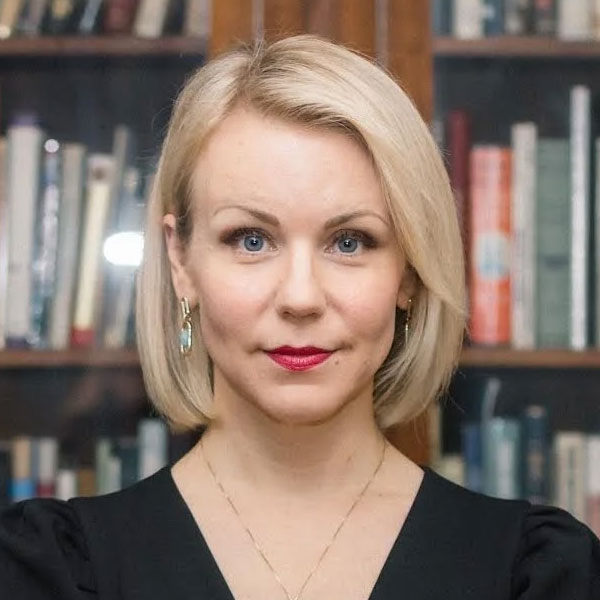





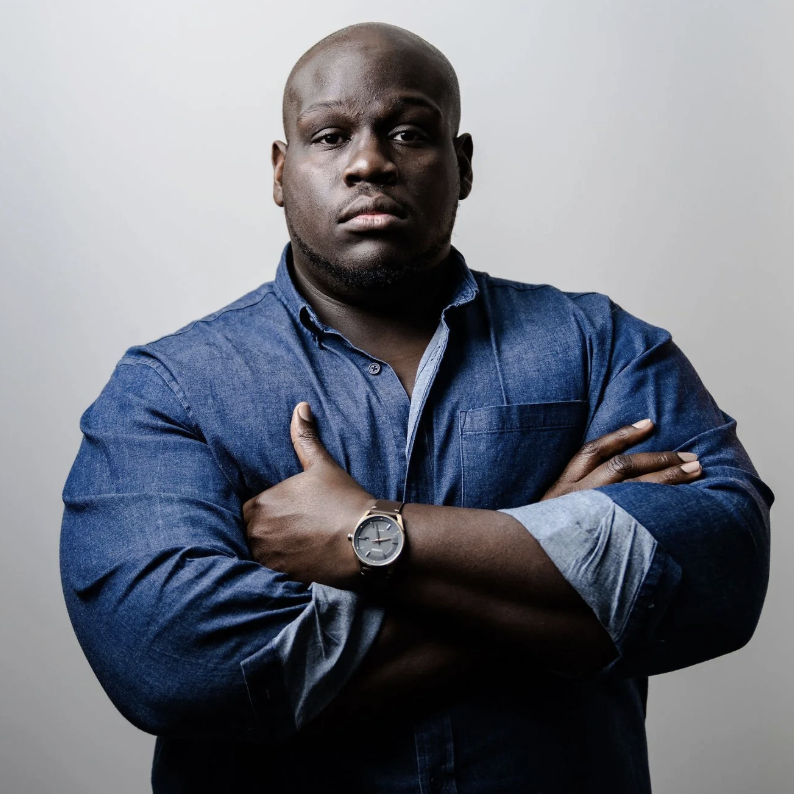
Caleb Gayle
Caleb Gayle is an award-winning journalist and the author of We Refuse to Forget: A True Story of Black Creeks, American Identity, and Power. A professor at Northeastern University, he is a contributing writer at The New York Times Magazine, and his work also has appeared in The Atlantic, TIME, The Guardian, Guernica, The New Republic, and The Boston Globe.

Transcript
Leah Payne: Welcome to the Straight White American Jesus Sunday Interview. I'm Leah Payne, author of God Gave Rock and Roll to You: A History of Contemporary Christian Music and host of Spirit and Power: Charismatics and Politics in American Life. Today, I am speaking with Caleb Gayle about his new book, Black Moses: A Saga of Ambition and the Fight for a Black State. Gayle is an award-winning journalist, a professor at Northeastern University, and a contributing writer at The New York Times Magazine. His work has also appeared in The Atlantic, Time, The Guardian, and many other prominent news outlets.
Black Moses has been long-listed for the National Book Award for Nonfiction, named one of The Washington Post's best nonfiction books of the year, and was selected as a New York Times editor's choice. In this powerful work, Gayle tells the remarkable story of Edward McCabe, a Black political leader who attempted to establish a Black state within the United States — a bold vision shaped by the hopes of Reconstruction and ultimately thwarted by racism, politics, and competing claims to land in the American West.
Welcome, Caleb Gayle, to the Straight White American Jesus Sunday Interview.
Caleb Gayle: Thank you for having me.
Leah: Actually, I want to start with a question about how you decided to introduce the characters — the main characters in Black Moses — because it's very cinematic, the introduction to the book. When I first started to read this excellent, excellent book, I noticed that they're listed as a cast of characters. Was that your choice? How did you come to frame this in such cinematic terms?
Caleb: Yeah. I mean, you know, you and I are both creatures of the academy, and so as such, we don't usually think in those sorts of terms. This book initially — or at least the first kind of draft of it — was about 30,000 words of an intro about Quakers and questions of fugitivity. And my editor was like, "No."
Leah: Editors take all the fun stuff out.
Caleb: They do, they do. And so as the book was revised heavily over the course of a couple of years, I had buried this scene of Edward McCabe — the main character — getting shot at, and I'd buried it like 50,000 words deep. And my editor was like, "Well, doesn't that just encapsulate everything?" And so then as it felt more and more cinematic, we realized that it would be really helpful for the reader — just for their knowledge, so they could follow along — if they could see this cast of characters, almost like the rolling credits before and after a film. And that's what it really was. I would love to take credit for that, but that was really the creation of my editor, who was like, "All of what you've presented to us sucks. How about you make it suck less by ensuring that people can follow along."
Leah: Yay, editors. Well, I think that's very helpful. In fact, the thing that I was picturing — and maybe because of the setting — is I was picturing the kind of old Western where you get a little picture of someone, maybe you get a little reel, and then their face is frozen and sepia-toned. So that's what I was picturing as I opened the book.
Caleb: This is helpful feedback, because that's what we were aiming for, at least. That's what the archival material lent itself towards, and so it's great to hear that that resonated with you in that way.
Leah: For people who haven't read Black Moses yet — hopefully by the end of this interview you will have ordered your copy — there are some very well-known characters, people that almost need no introduction. Theodore Roosevelt is one that most people know. Abraham Lincoln — heard of him. But you're introducing readers to a figure who I think most Americans have never heard of: Edward McCabe. I would love for you to share, first of all, what drew you to his story, and why you think someone with such ambitious political goals has largely disappeared from mainstream histories of the United States. And also — since we brought a Western into it — what drew you to Edward McCabe?
Caleb: Sure. So I think there are two things that drew me. One, which is like some thematic obsession that I have, and then two, which I'm going to call the luck of the Irish.
So the thematic draw: I'm really attracted to losers, or people who history has kind of deemed as losers. Edward McCabe had this grand vision — as is clear with the subtitle of my book — to create a Black state in the American West, specifically in the Oklahoma Territory, at the conclusion of the 19th and beginning of the 20th century, right after Reconstruction had faltered and as Redemption had rolled through the American South, introducing Jim Crow and really decimating the dreams of a lot of African Americans. I am deeply interested in people who dream very big and lose very big. And McCabe was that. Because that feels very iconically American — that someone would envision something so, quote unquote, crazy and get really close, but very much like Icarus, get those wings singed on the way up and down. That's why. And I think that's also part and parcel of why his story is relatively obscured from view, even though the remains of what he built were 50 Black towns — 13 of which still stand tall in Oklahoma, several of which still stand tall in Kansas. His work was really to try and architect a narrative of Black belonging in America that was done by their own hands. And I think that runs quite counter to the dominant narrative of Black people, especially at that time.
So that's one. Two — the luck of the Irish — is that I, a long time ago, saw a plaque for McCabe in Guthrie, Oklahoma, where he had his office, and I just swore he was an Irish or a Scottish man. Because no Black man that I've ever met would be like, "Yeah, I want my own Black state that I would run as the governor, or senator, or congressman, or both, or all three, I don't know." And so to some extent, I think that's what really drew me — this loser who I thought was not a Black guy, was in fact Black, and got close, but ultimately failed. That's what attracted me most.
Leah: I love thinking about him in a long line of dreamers, and maybe even alongside American utopian communities — so the Oneida Community, or John Alexander Dowie. I love thinking about him that way, because it gives you a roadmap for that audaciousness. Because it is kind of out there to just say, "Hey, let's do it." But Americans are kind of out there.
Caleb: Definitely, definitely — especially relative to their peers all over the world. And you mentioned Oneida — not only is he kind of an inheritor, in the sense that Saidiya Hartman was talking about where we choose our inheritances, but who we believe to be his pastor, who's featured very prominently earlier in the book, Henry Highland Garnet, gets a lot of his training in abolitionism as part of the Oneida Community. He's part and parcel an inheritor, both by choice and by lineage, if you will, of this effort to try and reach for something as close to utopian as possible — but to also do so in a way that positioned him, in a narcissistic way, a lovingly narcissistic way, as the progenitor and leader of said utopian effort.
Leah: It makes a lot of sense in a lot of ways, because you have to have a pretty healthy sense of self to make such a claim. So I totally understand — that puts him kind of in the same territory as a Joseph Smith. You have to have a vision that people want to participate in. One of the things that I think is really distinct about him is being a Black American who wants to create something new in the American political system, in the American political project. I wonder if you could tell us a little bit about how his vision compared to his contemporaries in this era. What was really striking about what he was trying to do, versus the many other efforts at Black liberation that were going on that might not have approached it in this way?
Caleb: Yeah. So I think the easiest way to answer the question is that the question of the quote unquote Negro Problem had been attempted to be answered by so many people. In this book, you're not just going to stay in the American West — you're going to go to Liberia, you're going to go to Haiti, you're going to go to a lot of different places, because there were efforts made on behalf of Black people, often without their consultation, to create homes for them elsewhere, to dispatch them outside of the United States. And part of the innovation that McCabe was offering was: How about we do it right here in the United States of America? I can solve your Negro Problem by consolidating a Black constituency into one place within the Oklahoma Territory. That is the peculiarity, if you will, of the McCabe idea — that he was going to take his counsel from other Black people here in America.
The difference is that even though Haiti didn't work and Liberia didn't work, those efforts were supported heavily by both private and public interests — in part because it wasn't a Black person leading said effort. It was, in many cases, white guys in rooms deciding, probably over some good bourbon, how to figure out a solution to the Negro Problem that didn't require much of them — in fact, it required expelling those people from this place in order to see a future they might not actually agree with.
Leah: There were two iconic Western images that were in my mind when I was reading this book: the Gold Rush, and the transcontinental railroad's construction. I was thinking about that hurry, that pacing — it was closing the frontier, making commerce and military-industrial efforts a lot more doable for this growing American empire. And then I was thinking I had never really thought about the pace at which Americans — both Black and white — were trying to adjust to post–Civil War life, and what that would look like, and what role Black people would play in the United States. Your book helped me think about what that must have felt like. I wonder if in some ways it felt sort of frantic. I loved the pacing. And with that Western imagery in mind, I wonder if you could talk a little bit about how McCabe's work is situated within this concept of the Western frontier, and how his vision was—
Caleb: Yeah, you know, without taking your listeners through Aryan historiography — which, if you ever hear someone starting to go into that, you can just push pause and move on — what I will say is that we're probably all familiar, even if we don't attribute it to this guy, with Horace Greeley. We're familiar with "Go West, young man." Go, try and figure it out, strike out on your own. These parts of America are settled, but the West is completely unsettled. And we know that that was false.
Part of the conflictual nature of McCabe's project is that he called it the "Negro colonization scheme of Oklahoma." And for your listeners who might not be aware, there were a lot of people already in Oklahoma who were promised the Oklahoma and Indian territories as the last instance in which the United States government would interfere with their lives as Indigenous people and nations. So what made it that much more iconically American — iconically Western — is that he was doing what a lot of people in these Westerns do. "Oh yeah, come on out, it's gonna be great!" — Far and Away, Tom Cruise and Nicole. I thought of that. Daniel Plainview. There Will Be Blood. Cormac McCarthy and Blood Meridian. "It's gonna be amazing." But there were already lives, customs, rules, laws, nations, people with generations of history and attachment to those places. So what makes it iconically American isn't that anyone was destroying any one person's dreams — it's that McCabe was really representing the collision of many people's dreams in an environment that had been constructed to be very suited to zero-sum politics. If any Black person won, that meant that several other Indigenous populations, or white people, or poor white immigrants — as portrayed by Nicole Kidman and Tom Cruise in Far and Away — someone had to lose. When in actuality, there could have been an opportunity for a lot of shared abundance. So even though I wrote this book in part to get away from our toxic zero-sum politics, I found myself enmeshed in it just about 100-plus years before.
Leah: That's really fascinating, and it's fascinating how Oklahoma — I don't know of any other place where this would have been possible. When I think about other forms of American expansion and other colonizing forces, this one particular place — you can see that it's a land of opportunity. But then, for someone like McCabe, it also makes what had been happening in a variety of contexts for Indigenous people so literal. This land is just gone.
Caleb: Exactly. Yeah, yeah.
Leah: That's really fascinating. I did think of Far and Away when I was reading this, because I was a certain age when that movie—
Caleb: —came out, and it took you in. I mean, it takes everyone in when you watch it.
Leah: Oh my goodness, absolutely. That last image where their hands are in the stake in the land — I mean, I haven't seen it in 20 years, and I thought of that when I was reading your work. One of the things that I found to be so impressive about McCabe was how savvy he was about coalition building and lobbying and political maneuvering — and I just want to emphasize how close he came to succeeding in his goal, which is an incredible accomplishment. I wonder if you could talk a little bit about his skill on that front.
Caleb: Yeah, you know, first of all, thank you. But also, what I think is instructive about McCabe is that I didn't find him to be a lofty, oratorical person who believed that all of the power came through rhetoric. In fact, he's quite sparing in his public remarks, but quite stated in his political actions. He was focused explicitly. Part of the reason he got so close is that he wasn't offering lofty speeches at the Republican or Democratic National Convention. No — in fact, he was just saying, "I am going to advertise explicitly to Black people. I'm going to get as many Black people here as possible" — oftentimes by stretching the truth and making it seem as if Oklahoma would be easier to, quote unquote, colonize. He was saying, "I'm going to call this my town. I'm going to actively start to put the pieces in place such that even if the President of the United States doesn't decree, 'Here is McCabe's land and it shall be called Black Oklahoma' — even if that didn't happen — that when it came time for Oklahoma and Indian Territory to become the state of Oklahoma, I will have gotten enough Black people here that the Black state will be inevitable." If he could get a university founded in the name and honor of a good friend of his, John Mercer Langston — he thought, if he could just start putting the pieces together, then it's not a function of distant academic or opinion punditry. It was much more a function of organizing on the ground. And admittedly, it did get him closer — probably closer than we ever have been, and closer than we ever will be again, to anything of the sort.
Leah: I'm really fascinated by the idea that he has a lineage to the Oneida Community, these visionary, upstart-type innovators. I wonder if you could talk a little more about what goes into making a McCabe in this era. What are the ingredients that go into making someone with that kind of vision and that style of leadership? Because you're right — when you think about the charismatic figures who would create such a project in other settings, you think of a "sage on the stage" type of person. What made him him?
Caleb: Yeah. I mean, I think a few things. One, he was born far and away from the horrors of American slavery. He was born in New York. He became a feature on Wall Street. He advised people in Chicago. He was relatively unattached from that experience. Two, he wasn't doing it alone. What this ends up being is — even though it's called Black Moses — at the time, your listeners who will hopefully soon become my readers will encounter people who were telling themselves and telling reporters at the tail end of Reconstruction: "Look, we've tried Lincoln, we've tried Jackson, we've tried all of these people, but every man is his own Moses." That's a direct quote from a formerly enslaved person who was saying, "I'm getting the heck out of the South. I'm going to the American West for some measure of opportunity." And they weren't just doing it similar to what we'd see in the Great Migration during the 20th century — they were going to build explicitly, to construct their own place, because they were done trying these other figures who might not be able to deliver the total salvation they were looking for here in America.
And I think the last thing is that what really made him was examining the failed projects of some of his other peers — the Blanche Bruces, the very first Black person elected to the US Senate to serve a full term, for Mississippi; Governor Pinchback, Lieutenant Governor Pinchback, who then became governor of Louisiana; the work of people like John Mercer Langston — that he would often go about naming towns or streets after some of these figures. But in many cases, they were providing case studies through Reconstruction and its failure that presented to him clear examples of what not to do or what not to count on. He was an astute learner of his peers, propped up by a lot of those peers who decided to enter into the project with him — the thousands of Black people that came over to really help make the case on his behalf. But also, he grew up incredibly privileged. Incredibly, incredibly privileged. And I think that offers a very different lens through which he likely viewed what was possible.
Leah: I really appreciate that point about him growing up in a privileged setting, because he would have had some insight into how bureaucracies work. And I think I could see someone who has had a certain amount of privilege being able to analyze political realities in a way that would be helpful for his organizing. But of course — and I don't want to spoil too much of the book — it's not a surprise to say that there is no independent Black state in the United States. His vision ultimately collides with forces of white settlement, political ambition, and racism. I wonder if you could talk a little bit about what his particular failure tells us about the limits of those Reconstruction-era possibilities.
Caleb: Yeah. I think the main lesson that he learned in real time was that America made its bet, and its bet was not on the future that he wanted, but on the South. And you know, there are tons of really phenomenal works your listeners can go read — Imani Perry's South to America as an example — where you really can't understand America without understanding the power that the American South has had for many generations. It's really forced, over the course of this country's history, the hand of the government to contort itself to accede to the wishes of the South. So Oklahoma decided, when Oklahoma was becoming a state, not necessarily to depart from the lessons of the American South, but rather to align itself with it. There's a reason why part of the book contemplates the moments at which Oklahoma became the American South — where it embraced Jim Crow philosophy not just in a broad way, but explicitly through its very first set of laws. It wasn't water rights or other things you'd expect. You can look at Arkansas, you can look at Texas, you can look at Missouri — a lot of the first laws they passed had nothing to do with racial divisions. But in Oklahoma, they decided to bear-hug that, because, as we have done throughout American history, they were going to bend to the worst impulses of the American South that they could imagine. And that's exactly what they did. And that's what ultimately did McCabe in.
Leah: This is fascinating to me. I was raised on the West Coast, lived for a number of years in Nashville, Tennessee.
Caleb: Oh no. Yes.
Leah: And one of the confusing things to people who are not Southern is that Southernness is so much more than a geographical location. It's a frame of mind. I was very confused about that. And if you just look on a map where Oklahoma is, you can see that in action. I can appreciate that it didn't necessarily have to be that way. I think that's a really helpful takeaway from this book in particular.
So — and listeners to this podcast are really interested in the intersection of religion and politics and race and ethnicity — for listeners today, especially in a moment when conversations about race and democracy and self-determination are so intense, what do you think McCabe's story reveals about the unfinished project of American democracy?
Caleb: That's a weighty question, and I'm certain that in a minute, there's a dissertation I'd love to read about it. What's interesting to me is that I remember when I turned my book in and my agent read it and my editor read it, they said, "That's a tragic tale." And for me, I didn't see it as such. I saw it as yet another attempt and an encouragement to keep on attempting.
You have to imagine — in the early phases of McCabe's efforts to found a Black state, that level of imagination was the baseline. None of us currently are trying to do that. We're trying to hold on to existing laws on the record. We're trying to not see the complete demolition of all diversity efforts. We're holding on for things that have theoretically already been agreed to in law — whereas McCabe was literally imagining. And there is something very powerful about the imaginary, because it then extends what you ought to ask for, understanding that you might not get it.
So to some extent, I found McCabe enlisting us — long after he had gone — in this project of imagining what we can achieve. Not just, you know, how do we maintain fair contract rules when it comes to the issuing of vendor agreements at the state and local level for women and people of color. It's not just that. We should dream a touch bigger than that. We should fight for those things, yes. We should aim to ensure a certain degree of fairness and equity along matters of race and identity. But can't we possibly be doing more? It's not as if the U.S. government has sent federal troops — like they did in the 1870s — to withdraw from places that were actively becoming more hostile towards Black people. We're not even asking them to do some base-level considerations of safety. Perhaps then, in that case, we should do more and better than just fight for these scraps. Because I think what McCabe was offering — or at least aiming for — was a much more abundant life. Not just theoretically, on paper: "Black people are free, they are allowed to vote." He was not satisfied with that modicum of opportunity. He wanted more. And so I think likewise, to answer your very complex question hopefully somewhat succinctly, we should be dreaming for more. We should be aiming for much more.
Leah: What I find fascinating about your response there is that it echoes something I heard the newly elected mayor of New York say recently about the left, or progressives, or Democrats — I can't remember which version he was talking about — that they needed to take bigger swings in terms of creating a vision. And he compared national-level politics in the DNC unfavorably to the RNC by saying, "Hey look, on the right, they've got vision, and I don't really see that on the left." So this is a really fascinating potential call to action in that regard. Dream bigger dreams — is that what we're saying?
Caleb: Exactly. I like that.
Leah: Do you have 10 more minutes? Okay. So I want to ask you one question — and feel free, I can take this out of the interview if you don't feel like you want to respond to it — but I was thinking about, because I've known you from this other podcast where you shared a lot of your personal story, and I was thinking about your own family's history in Oklahoma, in Tulsa. I wondered if you'd be willing to share how your personal background informed the way that you wrote this book, or even just the way that you approached McCabe.
Caleb: So — for listeners who aren't familiar — my family moved from New York to Oklahoma when I was younger. And we weren't in Florida, New York, or Westchester County, or upstate, or Western New York, or Buffalo. It was a radical culture shock to go from New York, New York — wow — to Tulsa, Oklahoma. But what has always struck me, from the days after we moved, was that even though I expected to not see one other Black person — because, like you listening to this podcast, I probably had a very distorted or myopic view of what Oklahoma was and is — I just thought Oklahoma was a bunch of white people. And to some great extent, it is. But I didn't realize that when I would see Black people riding horses to Walmart to go grocery shopping in the middle of a major city in Oklahoma — like Tulsa, or Edmond, or Yukon, or Oklahoma City, or Lawton/Fort Sill — that they were harkening back, whether they realized it or not, to a much grander story about the ways in which we experimented with extending our dreams beyond what we thought was possible.
That it harkened back to a story where the very first Black rodeo was founded just miles from where I grew up, in a town called Boley, Oklahoma, which was created by Black people who were once formally enslaved by the Muscogee (Creek) Nation. That sentence probably made your head spin, listener, but that's what happened. In fact, most of the PBR — the Professional Bull Riding — circuits, challenges, bulldogging, hog tying — were invented down the street by a bunch of Black people. That story is as odd as it is true. And so kind of the task, as Imani Perry would say, was not for the past to haunt me, but for me to haunt the past, as a way of better understanding my present and future. So this entire book was very much inspired by the eight-year-old kid who was bewildered when he would see an entire family of people who shared his skin tone riding on horseback in the middle of the street.
Leah: Well, one thing that I'm struck by is the power of media to shape our imaginations. I remember being in honors high school history class when my teacher, Mr. Roche, showed us some of the earliest pictures of cowboys — and there were not that many white people in the picture. And I remember that being a bit of a surprise to me. But of course that was because my imagination had been shaped by 20th-century American film and all of that. So I really appreciate that point. And — to that point — this is such a cinematic book. Maybe this seems like a silly question, but this should be made into a film, for sure. And so we talked about a lot of deep and heavy stuff, but I would like to know: who would you cast as Edward McCabe? Has anybody asked you that?
Caleb: Yeah, that has been a topic of much discussion lately, because of some interest from several folks — both about this book as well as the story that I wrote about the Boley rodeo—
Leah: That one definitely needs to be a film. Okay, keep going.
Caleb: Yes, but you know — I think what I find really interesting about McCabe is that he was as committed to the doing as he was to the speaking. And he was so committed to it that he was not the best father or husband, as you will come to learn in the book. And so to some extent, I could see, like, an Aaron Pierre playing him — the guy you all might remember from Rebel Ridge, who's also going to be in the Lanterns series. I could likewise just as easily see a host of other people. I could see John David Washington play him. But I just — that's a great question, and it's been the response I've given to people who actually do need to know: Who would you cast? And I am completely flummoxed.
I think even LaKeith Stanfield — especially after seeing him in Judas and the Black Messiah — I could see Daniel Kaluuya playing one of McCabe's best friends, A.T. Hall, Jr. So there are a lot of people I could see playing a part, but admittedly, I don't know.
Leah: I had a thought — not for casting, but I was thinking, if I were watching a movie about this, I almost wondered if his best friend could make a good proxy for the viewer. Maybe he's the character who's the audience—
Caleb: Yeah, for sure, because he lived to over 100 years old. He lived a really long life. Was a newspaper man. Was kind of an iconic figure of Kansas and Pittsburgh politics. So, oh yeah, it'd be very interesting.
Leah: Him telling his great-grandkids — make it happen, Hollywood, is what we're saying.
I want to thank you for joining me. And to everyone who's listening, please go out and buy Black Moses by Caleb Gayle. To find out more about Caleb's work, check out his website at calebgayle.com.
All right, I'm going to ask Caleb one more question — subscribers, stick around. And if you are not a subscriber, today is the best time to sign up. See the show notes to get access.
Thank you for listening to the Sunday Interview at Straight White American Jesus. I'm Leah Payne, author of God Gave Rock and Roll to You: A History of Contemporary Christian Music. Find me at DrLeahPayne.com or at Dr. Leah Payne on Substack and most other social media platforms. Check out our website for the content schedule and make sure to sign up for our newsletter to stay up to date on everything at SWAJ and Axis Mundi Media.