Summary
Dr. Andrew Whitehead joins Brad Onishi to discuss his groundbreaking research revealing a disturbing connection: Christian nationalism is one of the strongest predictors of discrimination against Americans with disabilities. As the Trump administration slashes protections, funding, and civil rights for disabled people, from dismantling DEIA efforts to appointing RFK Jr. to HHS, this conversation exposes the theological and ideological roots of ableism in the Christian nationalist movement. Whitehead's peer-reviewed research shows that those who embrace Christian nationalism are three times more likely to believe we've "done enough" for people with disabilities and twice as likely to say disabled Americans "demand too much." The discussion traces these attitudes through Project 2025, prosperity gospel theology, and the historical fusion of Christian nationalism with free-market capitalism that elevates economic productivity as the measure of human worth.
This episode challenges listeners to confront how certain strains of Christianity have interpreted disability as divine punishment or an opportunity for charity, rather than recognizing structural barriers that demand collective responsibility. From religious school vouchers that exclude disabled students to the dangerous myth that autism is spreading like a disease, Whitehead and Onishi reveal how the imagined "ideal American body" in Christian nationalist ideology is explicitly straight, white, native-born, and able-bodied. The conversation offers a powerful counter-vision through theologians like Nancy Eiesland, who reimagined God as disabled, and calls for Christians to vote for policies that truly value all people, not just prayers, but action.
Meet The Guest
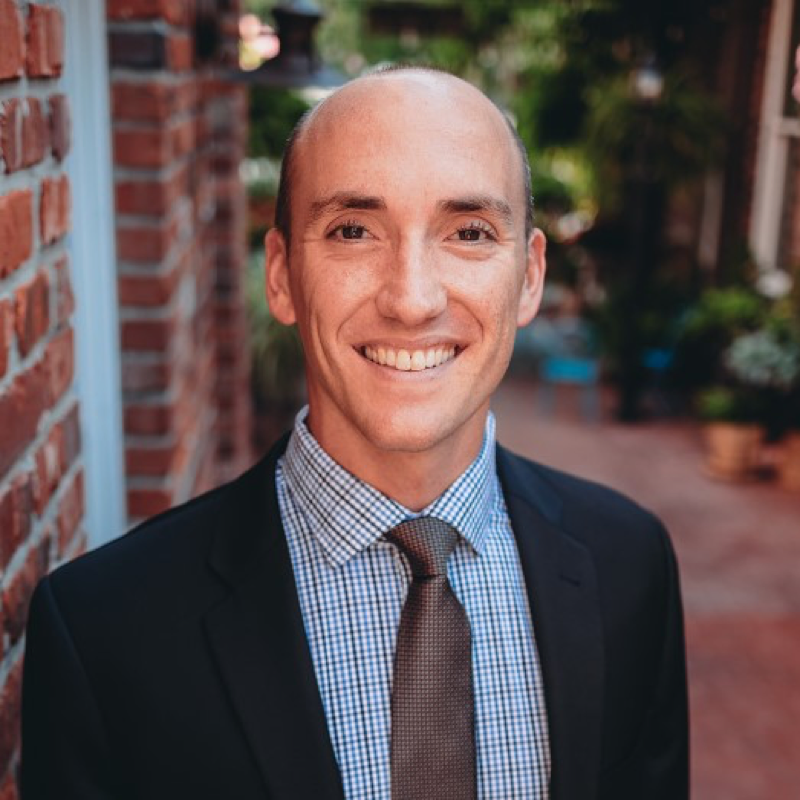
Dr. Andrew Whitehead
Andrew Whitehead is Professor of Sociology and Executive Director of the Association of Religion Data Archives (theARDA.com) at the Center for the Study of Religion and American Culture at Indiana University Indianapolis. He is also a research fellow for the Charles F. Kettering Foundation.
Whitehead is one of the foremost scholars of Christian nationalism in the United States. He is the author of American Idolatry: How Christian Nationalism Betrays the Gospel and Threatens the Church, which was awarded the 2024 Gold Medal Book Award for Religion from Foreword Reviews and the 2024 Midwest Book Award for Religion and Philosophy.




Transcript
Brad Onishi: Welcome to Straight White American Jesus. I'm Brad Onishi. Great to be with you for this Sunday interview. Today we welcome back someone who has been on the show numerous times and is an amazing scholar and person, and that is Dr. Andrew Whitehead. Andrew, thanks for coming back.
Andrew Whitehead: Yeah, thanks for having me back. Always fun to be here.
Brad: You are a world-renowned sociologist, professor of sociology at IUPUI. You are the author of Taking America Back for God with your friend and colleague Sam Perry, the author of American Idolatry — all about the threat of Christian nationalism to the church and to democracy. The creator of American Idols, the Axis Mundi podcast series that remains to this day pretty popular and outlines many of the themes in your book. You've done so much great work in this area. You are a pioneer and a seminal figure in the field for those of us who have been thinking about Christian nationalism.
Today we're here to talk about what I think is an undercovered aspect of that conversation, and that is the ableism that is rife in the second Trump administration, and surprisingly, from Christian nationalist sources.
Let me set this up. Twelve days before Donald Trump took office, according to The Guardian's Sarah Novich, Charlie Kirk and people like Christopher Rufo were online bemoaning the fact that there are sign language interpreters at news conferences, calling them "wild human gesticulators" and labeling it a farce. Elon Musk was sulking around his pet project, Twitter, wishing he could use the R word and telling people it was time to bring it back. This was all part of a sense that something was in the air as Trump got back in — that Trump's in office now, and now we can use the R word and we can get rid of all these things we don't need, like sign language interpreters.
As soon as Trump took office, he moved quickly with executive orders to slash protections, funding, and rights related to Americans with disabilities. He dismantled diversity, equity, inclusion, and accessibility — DEIA — efforts that protect disabled people, removed the government's ability to enforce disability civil rights laws, undermined healthcare affordability and access for disabled people, destroyed public health infrastructure, stripped the ability of disabled children to receive free and appropriate public education through cuts to the Department of Education, slashed services, benefits, and regulations that help keep disabled people in their communities, and decreased disability protections in employment.
He also appointed RFK to be the head of Health and Human Services. Donald Earl Collins, faculty at American University, says that Kennedy's policies and worldview are shaped by ableism wrapped in racism and patriotism — this because of RFK's approach to autism and his claims that autistic people will "never pay taxes, they'll never hold a job, they'll never play baseball, they'll never write a poem, they'll never go out on a date. Many of them will never use a toilet unassisted," which is wildly offensive and inaccurate, both at the same time. Kennedy refused to believe the data that autism is not spreading like a disease, but instead that we have better tools to detect folks who are on the spectrum socially and neurologically, and he's just gone on to spread disinformation time and time again about autism and other disabilities.
Here's the thing, Andrew: we might be listening to this and thinking, well, yeah, it's kind of what I expect. It's Donald Trump. It's Robert F. Kennedy Jr. It is Chris Rufo and other online trolls. But you have a new peer-reviewed article out all about ableism and Christian nationalism, and one of the main hurdles that you identify comes from Project 2025. Would you mind opening up here by telling us how Project 2025 is a kind of purveyor of the kinds of ableism that I just talked about?
Andrew: Yeah, I'd be happy to. That's a really great and thorough overview of just the lay of the land where we're at. And one thing you didn't mention, but that also plays into this, is religious school vouchers — the push for those — because that also connects to this idea of taking money from publicly funded schools, which are legally required to give all kids a free and appropriate public education, to now religious schools that in some ways and in some places can refuse to serve various students, even those with disabilities. So that's yet another angle to this.
When we're looking at Project 2025, a lot has been written on this, and we know that the organizations that created it — a lot of the authors describe themselves as Christian nationalists. Looking at the things they support, these are hallmarks of Christian nationalism: this desire to privilege a particular expression of Christianity and have the government enforce that particular expression in all aspects of our civil lives.
As they wrote this huge document, there are multiple places that outline and highlight where cuts should be made. Dismantling aspects or all of the Department of Education, which is generally tasked with ensuring that about $15 billion a year is spent well in the public schools to help support programs for kids with disabilities, because a lot of states may not have those funds. Cuts to Health and Human Services that would serve adults and children with disabilities. The Social Security Administration. Just firing everybody in the federal government — almost 300,000 people are now out of jobs. Those cuts themselves weaken the ability of the government to ensure that the support people are legally required to receive actually happens. Backlogs develop. People can't get the work done. If there are lawsuits or people have been discriminated against, those get backed up too.
So we see that it isn't just trying to cut programs, but also weakening the levers of the federal government so that folks who are disabled can't live and work and exist in our society and culture like they used to. And then we have cuts to SNAP, cuts to Medicaid, trying to change how those are funded. All of this is in Project 2025 — this desire to do that, shrouded within the boogeyman of DEI. But accessibility is a part of that, because different abilities and disabilities are a part of diversity and inclusion.
We have folks in the very highest positions spreading misinformation broadly and widely, as you pointed out. But then too, we just have the functioning of the federal government being weakened to ensure that it can't actually serve the American people broadly. And I think this is the big thing: when we talk about ableism and disability, an accessible America serves everybody, no matter where we're at, because at some point or another, we are going to have family members, ourselves, or whoever needing to have access. Those are the things we're really looking at, and we see in Project 2025.
Brad: So we have Project 2025, and we know that anyone who's studied that document can see the Christian nationalist overtones in there. Kevin Roberts makes it all on the table from the start in the foreword. So it's one thing to say, okay, Christian nationalism is in Project 2025 and Project 2025 has these ableist goals and wants to cut all of this stuff in the name of a Christian nationalist, ableist ideology or theology. It's another thing to look at data and say: do people who score as Christian nationalists score as people who are in favor of these cuts and these rollbacks of protections for disabled Americans?
Let me ask you first: what's Christian nationalism? And then I'll ask you about what the data says.
Andrew: So Christian nationalism — the empirically supported definition, which is now over a decade old and has informed dozens of surveys — is this desire to see a very particular expression of Christianity, a particularly conservative strain, fused with American civic life, and have government at all levels defend and preserve this fusion as being central to our national identity — who we are and particularly which Americans truly belong. The benefits of citizenship: who do they go to? Those that adhere to preferred social norms and social categories of this particular expression of Christianity. It's the people that deserve it, and who deserves it is determined by those that embrace this particular expression of Christian nationalism.
Americans embrace this strongly, some are more sympathetic but don't embrace it as strongly, and a lot of Americans resist and reject it. We find that it is distributed across the US population, and we see it being lived out in the policies, like Project 2025.
With this research, my goal was to look at Christian nationalism across the US population using a large national survey of the American public, and then also asking questions that get at ableism, because it's something we haven't really looked at in the research. We've had suspicions that this is connected, because Christian nationalism, as we've shown over and over — in your work, in your book, and lots of others — is connected to these preferred social categories and identities: what race and ethnicity you are, whether you're a natural-born citizen, your gender, your sexuality, your religion. Ableism and disability is another one of those markers that is likely connected. So in asking these questions, I measure ableism and draw on a lot of other work that has created these scales, and then look at both of them together to see if they're intertwined.
Brad: And you came away with a pretty straightforward conclusion — that the data shows that being able-bodied is one of the preferred social categories of Christian nationalism, that Christian nationalists prefer and in some ways privilege those who are able-bodied over those who are not. Is that a fair summation of the major conclusion of the paper?
Andrew: Yeah, that's the executive takeaway of this research: that Christian nationalism is strongly and significantly associated with ableism, even when we control for all different types of demographic information — whether the person is disabled or not, or even knows somebody who's disabled, whether they're a certain type of Christian, their age, their gender, their political views. When we hold those constant, Christian nationalism is still a significant predictor of how ableist they'll be.
Ableism, when we're talking about that, refers to this tendency to discriminate or stereotype against people with disabilities — this idea of assigning value to intellectual and physical abilities, generally preferring able-bodied people as the ideal. The reason ableism is so important to talk about and understand is because it tends to hide and obscure the social and cultural challenges that Americans with disabilities face and experience. A lot of what they're up against is structural in nature — the funding, the federal support. And so if ableism is a part of our social structure and the way our society operates, it's going to hurt and marginalize people with disabilities in ways that when you're not disabled, you just won't see. Understanding that is really important, because we want to bring that out into the light — it's not just the individual's fault that they're struggling, but that we as a society have kind of absolved ourselves of the collective responsibility of ensuring that people with disabilities get the help they need and can survive.
Brad: All right, let's go to the data. You have a number of survey questions and ways that you asked people about things. I'm going to start by describing the categories of folks.
When it comes to Christian nationalism — people who believe that as a social and cultural identity, Christianity should be privileged and preferred, and that this is a Christian nation — you have these categories: rejecters, resistors, accommodators, ambassadors.
Friends, if you're listening at home, you're driving your car, you're walking the dog, let me slow down. You have people that outright reject this. They're like, nope, not a Christian nation, we should not do any of those things, this is a country built for and by everybody — it's pluralist. You have resistors, people who do not adhere to Christian nationalism in any strong or robust sense. Then the scale tips, and you get accommodators — people who are willing to accommodate Christian nationalism even if they're not hardcore or militant about it. You might have a person at your church or in your neighborhood who really likes the fact that this candidate's a Christian and can't vote for someone who's not Christian. Did they go to January 6? No. But are they an accommodator of Christian nationalism? Yes. And then we have the ambassadors — people who wholeheartedly represent Christian nationalism in terms of their beliefs and worldview.
So you asked people about the situation for people with disabilities — whether things are good as they are — and you found that overwhelmingly, ambassadors of Christian nationalism scored highest in saying yes, things are good as they are for people with disabilities, in comparison to everyone else. Would you mind unpacking that?
Andrew: Yeah, definitely. This question, part of this larger body of work drawing on psychologists and educational folks, tries to get at how people think about Americans with disabilities and whether they're supportive. The question of whether the situation for people with disabilities is good as it is — if you're agreeing with that, that's pretty out front: you think we don't need to be doing anything else for these folks. It has this structural viewpoint that the way things are, are fine, we don't really need to be doing anything else.
In the research, Christian nationalism is strongly associated with ambassadors being the ones most likely to agree. It's a little over 30% of ambassadors who say, yeah, the situation for people with disabilities is as good as it is. We can look at that and say, well, it's a third of them, not over half. But when we compare it to the others, it's twice as many as the accommodators, about three times as many as resistors and rejecters. And as we know with how elections work, how state elections work, the way our society operates — if you have 30% or more of a really motivated group, that is quite a bit. And if they're kind of ableist, and those that maybe aren't but are still really strong Christian nationalists are more likely to go along with those ambassadors, this creates a situation that can be really difficult for Americans with disabilities.
Brad: There's another question: do people with disabilities demand too much? Essentially, do they want too much? This goes back to the sign language interpreters, the accessible bathrooms, the accessible car parks, but also to our school systems, our federal dollars, our employment protections. Ambassadors again score at about 30%, and rejecters — people on the very opposite end of the Christian nationalism spectrum — score at something like 8%. When you look at the bar graphs, it's really stark. If you are an out-and-out Christian nationalist, you are the most likely, by far, to say that people with disabilities demand too much from our government, our society, our culture. Is that fair?
Andrew: Yeah, that's exactly what I'm finding in this research. Again, it's not only that the situation is fine, but that these folks are demanding too much, like demanding us to change things as they are, or raising a ruckus, causing a problem — we're just tired of it. As we'll see in a second, the thinking is: the situation is fine, they shouldn't demand anything, and we've done enough. In all these ways, it keeps absolving us again and again. It gets at this idea of the preferred social category — the true American is somebody, and this will actually get at why these things are connected, but it's a person who's able-bodied, who can work, who can function. That's who we want.
Brad: One last question I'll go over here: has there been enough societal effort in favor of people with disabilities? Have we done enough? Ambassadors — those who are strongly correlated with a Christian nationalist worldview — are over 40% "yes, we've done enough." About three-and-a-half times more than rejectors on that question.
So friends, if you read the paper, you read Andrew's Substack post, it is clear: Christian nationalism, as he concludes, is one of the strongest predictors of discrimination towards Americans with disabilities.
The question then becomes: why? And you give two main reasons in your work. Would you mind unpacking both of those for us?
Andrew: Yeah, definitely. One of the aspects of why we see this strong connection is related to the fact that when we're talking about Christian nationalism, we're talking about Christianity, the world religion. In my work and in your work and others, we're all very careful to say that when we're talking about Christian nationalism, we're not talking about Christianity as a whole — it's a very particular expression of it. There are many expressions in the US, and there are expressions of Christianity that, for example, Reverend William Barber — who is himself disabled — is using to fight for the poor. But then it's also motivating folks like Russ Vought, running the Office of Management and Budget, wanting to cut, cut, cut, cut anything that helps anybody.
Brad: Big — so big purveyor of Project 2025. Russ Vought is closely associated with Project 2025.
Andrew: Just to bring it home, yeah. We see both. So just making that clear.
Within Christianity, there are theological strains that aren't just embraced by very conservative Christians but exist across different expressions that can lead people to discriminate against and show prejudice towards those with disabilities. Some interpret various Christian scriptures to say that disability is, in some cases, divine punishment for sin — that something was wrong in the past, whether with their parents, grandparents, or this person. Or that God wills disability on some people to demonstrate that they can bear up underneath it and bring glory to God because they're able to deal with suffering. Or that disability is allowed — God allows it to give his people the opportunity to care for those who need help and to show charity.
Some folks are like, wait, charity is good — what's wrong with that? The reason these theological strains and interpretations can be linked to ableism and can be dangerous for those who are disabled or their families is because they all interpret disability as an individual theological problem — whether it's willed by God or allowed by God. That can lead people to overlook the actual needs of people with disabilities, and especially how to change the situation these people are in — the structural nature of the situation.
If you view disability as an opportunity to show charity and that's all you see it as, it really absolves our collective responsibility to do anything about the structures creating the struggles these people have. We don't look for society-wide issues because we think, well, we need to allow people to give charity. But what that also does is place people with disabilities in a really precarious situation, because what if I'm not feeling charitable today or tomorrow? Their ongoing needs that never go away are then subject to the whims of Christians and whether they feel charitable. When we just leave it up to charity, that is really difficult. If you're not in a network that connects you to people who view charity as their God-given way to serve people with disabilities, then what about them?
So all these things are part of the Christian tradition that can lead to more ableist narratives — ones that place people with disabilities at a disadvantage in our society.
Another aspect that's intertwined with Christian nationalism is the prosperity gospel. This idea of health and wealth — that if you are truly following God, you will be healthy and you will be wealthy, and if you're not, maybe you don't have enough faith. Those are really dangerous aspects of Christian theology that we have to be very careful of wherever somebody might be in the Christian tradition.
But then we have the historical realities of Christian nationalism in the US. As the Christian nationalism ideology was created in this country, especially in the 20th century, it was really aligned with and was happening alongside the spread of a more capitalist and neoliberal approach to politics and especially government funding — this idea of privatization, deregulation, reduced public spending, opposition to the New Deal. When you get into the 1950s and the Red Scare, we have really rich capitalists essentially saying, we need to support preachers who are going to say that the best way for our country to be Christian is to be capitalist. Billy Graham was lifted up by really rich folks and said, spread this message. And he did that faithfully for many years — that God hates communism, God hates socialism. Anything that was even a hint or a whiff of the federal government providing support for every citizen was marked as communism or socialism, as evil.
With the spread of the ideology of free market capitalism — developing alongside ableism generally in the US — economic productivity got elevated as a real, true sign that you are a true American citizen and that you're doing what God desires in a good Christian nation. Good people are economically productive people. So not only do we see these strands within the Christian tradition, but we also see it lived out historically: as Christian nationalism came to the fore, especially in this current iteration through the 20th century, it's really linked to how we view what people do and why they do it, and whether they're being a good citizen. Being economically productive is the sign.
I think these are some of the reasons why, even across the US population, Americans who embrace Christian nationalism embrace alongside it this desire to elevate a particular economic system like capitalism — and that means you need to be able-bodied, you need to be able to work. If you're not being productive, well, then what good are you? And so the things you said at the outset of this podcast — people should just rewind and listen to it again — it's so important. As we hear what they're saying, they're saying you need to be able to work, and if you can't do that, then what good are you? What good are you to this country? And that is truly, truly dangerous.
Brad: Dr. Oz has been on this a lot. Dr. Oz has been a grifter for a long time, but he's now part of the Trump administration, and he's said things like, if you can work more — or the best way to be a good American is to be more productive and to work harder. Built into those statements is an ableist ideology that says the most valuable American is the one who is economically productive, who saves the country money on Social Security because they work a year longer, or they don't go to college and start working sooner, or whatever it may be. There's just this sense that the more productive you are economically, the more valuable you are. Your value is not based on the sense that as a human, regardless of ability, ethnicity, creed, race, or religion, you are universally valuable — both under the law and in the eyes of God, which is what we might expect coming from a Christian standpoint.
One of the things that struck me — just to stay in schools for a minute — is that on this idea of the church being the place where we'd be taught to be charitable and care for those of all bodies and all abilities, it's really the private schools and the private school Christian movement, going back to the 1990s, that were fighting against the ADA, saying, you can't include us in the Americans with Disabilities Act because we don't want the government entangled in our business. But what that did was give private schools an out from providing the services, needs, and accommodations for disabled students. Disabled students, by and large, are not able to attend private schools — depending on their disability — because those schools rarely, rarely provide those services.
So there's this sense of: for a long time, I've heard Christian nationalists in this country say, get the government out of my life, the church and individuals can provide what we need. And then when it comes to certain folks, they're like, oh no, we actually will not and cannot provide what those folks need. Is that a fair assessment?
Andrew: No, it really is. I was working on a column with Americans United for the Separation of Church and State — it'll come out in their next issue — right on this exact topic of religious school vouchers, Christian nationalism, and ableism. The way you described it is exactly the state of affairs.
The ADA passed and became law in 1990. Some of the folks arguing against it were evangelical organizations, essentially saying — like you said — you can't require us to have to do these things, whether it's build a ramp into our church (which is why religious buildings are exempt from ADA accommodation) or in their private schools.
There's a story I tell in this column. Right out of college, I taught for a year at a small Christian school just south of Indianapolis. There was a teacher there who was a really popular teacher. I saw pictures of his kids and I was like, oh, these are your kids? And he's like, yeah. My daughter attends here at this Christian school. My son goes to public school. And I could tell that his son had Down syndrome. And I was like, oh, he doesn't go here. And he's like, no, he gets more of the support he needs at public school — they're better set up to serve him.
I've carried that with me, because this is a guy who's devoted his life to teaching at this school, but he needed the public schools and the support that his son could get there. And if we weaken that and take it away, even our Christian teachers who are serving these schools — their kids may not get the help that is necessary for them, if we weaken public schools by diverting funding to religious schools that mostly serve people who could probably afford it anyway. That's the really dangerous part, and that really is how it plays out.
Brad: It's one of those moments, too, where what it breaks down to is: he's saying, hey, I love this school and I love teaching here because of the Christian mission — but my son can't go here because the support's not here. So what he's really saying is, we need — gesturing towards all of us as a society — we need all of you who pay taxes, and I don't say that begrudgingly, I say that like, yes, I want to live in a society where we pay taxes and we bond together such that everyone in our society can have a home, an education, healthcare, a house, a living wage. I mean, that all sounds good — now you've got me talking like a crazy socialist or something, I'll resist that — but I guess what I'm saying is, yeah, he's saying, hey, we need all of you: taxpayers, secular people, godless humanists, people who don't believe in Jesus, to do the work that this school can and won't do. Maybe that's a little too harsh, but it just strikes me that that's what's built into that statement.
I want to talk about theology for a minute, if you don't mind. You gestured at some of this earlier with the idea of healing, the idea of health and wealth, the idea that God favors the able-bodied. I think that idea is something I want to break down.
In the evangelical spaces I grew up in, I think in many churches across the country, there's an implicit assumption that when the body of Christ is restored to glory, that body will be imagined as a beautiful, able, symmetrical, thin body — the Shekinah glory of the restored Body of Christ will include a restoration to being pretty, to being handsome, to being able-bodied, to being muscular, not obese, young rather than old, not having aches and pains because you're middle-aged — speaking for no one in particular, as I look at myself on camera right now.
What I'm getting at is there's a theological assumption that the able-bodied is closest to the restored Body of Christ. If I look around at evangelical spaces, there is a love for able-bodied, handsome, beautiful people who look good on stage and look good on camera. And those implicit assumptions lead to a flip side, which is that the disabled are furthest from God — they have the most to be healed, the most to be restored, because their bodies are clearly the farthest from what the restored Body of Christ will look like. Are those theological assumptions ones you think are built into this?
Andrew: No, it really is. There's some really great work on this. If any of your listeners are interested — even those who still identify as Christians — there are a lot of really good theological writers now, from the disabled perspective, as disabled writers themselves, doing really important work here.
One of the original works that is so wonderful is Nancy Eiesland. She has since died, but in the 1990s she was writing on this. She has a book called The Disabled God — I think it was her master's thesis. She's a sociologist, but it's brilliant and strongly theological, and she was disabled herself, imagining God as disabled, like in a puffer chair. Because she said: my disability does not draw me away from the image of God. What you're describing is Christians imagining any sort of disability as making someone less reflective of the image of God. So her work is super important. There's also Amy Kenny — My Body Is Not a Prayer Request — which is really important work. Some of that helps unpack the implications of what people have said.
But let me bring in my own personal experience with this, Brad. I have two boys with Fragile X syndrome — pretty severe intellectual disabilities. As we've navigated educational systems, religious institutions, and organizations, coming up against this over and over — not only ableism organizationally, structurally, and socially, but also in my own view of the ways that I'm ableist, and the ways that I limit what they can and can't do, or should or shouldn't be a part of. We've run up against this idea: well, one day they'll be healed, they'll be changed — that's what some Christians say to us. And then too, this idea of what are they worth? Is that worth contingent on what they provide to all of us, or if they need things, then that is somehow a drain?
The way you're describing it is so important, because I still identify as a Christian. In talking to Christians, they care about people with disabilities, they care about my sons — I get that. But a lot of times they then vote for policies and people that make our life so difficult, because it's cutting funding for their education, it's cutting funding for Medicaid. Our Medicaid forms aren't getting processed because there aren't enough people working there. So when they say, we'll pray for you — I'm like, great. But next time there's an election, can you vote for people that see my boys as worth existing? That will support the things that serve all of us. I don't just want it for my boys, but for the single mom who has a kid with autism who maybe can't provide or needs more help. I want those things there for her and for her kid and for anybody.
Getting those that embrace Christian nationalism, or even progressive Christians, to see the blind spots within this tradition that we need to be aware of — and how we can ensure that we're serving everyone and not just the few, or just elevating these very particular images of the good and the worthwhile — that's what I hope this work does.
Brad: Yeah, I want to extract this out to the imagined American body. As my co-host Dan Miller argues, every community, every nation, every people imagines its national or collective body in a certain way. What Dan Miller would argue is that for Christian nationalists, the American body is envisioned as straight, white, Christian, native-born, English-speaking — and I would add here, able-bodied.
Just coming off the Super Bowl: Kid Rock was held up as the symbol of the family-friendly Christian alternative to Bad Bunny. And Andrew, I mean, we were in youth group at the same moment in the '90s and 2000s when Kid Rock was anathema — we would have gotten in so much trouble for listening to Kid Rock. And yet he was held up. But he's a straight, white, native-born Christian, at least in a perfunctory sense — he talked about church at the halftime show. He is more an image of the ideal American body than Bad Bunny, who is speaking Spanish, who is brown, who is coming from Puerto Rico — a place that is at the very margins of the American body.
So I think, going back to Trump and RFK and Dr. Oz, people are now saying explicitly: the valuable Americans, the real Americans — they're the ones who produce economically, the ones who can work, who can lead companies, who will fight on the front lines. In Pete Hegseth's words, the lethal ones, the soldiers, the warriors. And everyone else is on varying scales just less valuable.
The way the national body is envisioned now is explicitly — to me — that straight, white, native-born, able-bodied person with a beautiful face and a beautiful physique. And that is where the Christian and the nationalism get married in this ableism. What do you think of that formulation?
Andrew: No, I think that's exactly what this data is showing. When we think of the ideal American and the ideal America — who has the easiest access to the civil benefits of being an American — you go down this list: race, ethnicity, gender, sexuality, religion. You've got to have the certain types. But able-bodied, I think, has to be added to that. So it's straight, white, able-bodied American Jesus — and he's got to look Nordic. That really is the vision of the true American and the true America.
You can kind of see these two different visions of America. I forget who originally said this, but it's essentially: the morality of a nation is judged by how they treat their most vulnerable. I just think of my sons, who are nonverbal, who need all sorts of support — showering, pottying, all that stuff. How our nation sees and views them: that's the measure of the type of nation we are, rather than, oh, it's made up of these strong, able-bodied warriors and fighters.
Which is it? Christian nationalism, and the nationalism part, really does have this vision that excludes anybody who might have any sort of vulnerability — whether that's disability, or their race, or their ethnicity, or where they happen to be born.
Brad: If you don't mind, I want to ask you one more question. But before we do that, I want to encourage everyone to sign up for our newsletter. You'll see our Sunday interviews coming out in our newsletter, so you'll see a version of my discussion here with Andrew there. We have so much more going on in there in terms of Discord, comments of the week, reasons for hope, book lists, so make sure to sign up for that.
But you also need to sign up for Andrew's Substack. Andrew, tell us where we can find your work, your Substack, and everything else you're doing.
Andrew: Yeah, my Substack is a great place to keep track of the different places I'm writing. It's my name — Andrew Whitehead — squished together on Substack. I titled it American Idolatry, so you can find it there. I'm posting there about once a month — ongoing research, whether mine or others, on Christian nationalism, or kind of meeting this moment of defending democracy and how religion in America plays into that. I'm also on Bluesky now and trying to find community there. Those are the two best places to follow along.
Brad: And you should listen to American Idols, the four-part series on Axis Mundi that is really good and includes cameos from all kinds of people — Robert Jones, Jamaar Tisby, Mandy and Chris Tackett, and many others. Check that out. Check out American Idolatry, Andrew's book on the threat of Christian nationalism to the church and to our country.
All right, subscribers, stick around. I'm going to ask Andrew one more question, and that's going to be on things he probably doesn't want to talk about — so it's going to be on James Dobson, eugenics, and the idea of the disabled God.