Summary
When the history of this moment is written, Minneapolis may take its place alongside Selma, Stonewall, and Harper’s Ferry—a name synonymous with resistance. In this episode, Matthew Taylor and Susie Hayward return to American Unexceptionalism to reflect on what has unfolded in the Twin Cities over the past two months: mass ICE deployments, escalating authoritarian tactics, and a powerful, community-rooted response. Drawing from the streets of Minneapolis and St. Paul, they explore what frontline resistance looks like in real time, how religious leaders have stepped into both pastoral and prophetic roles, and why this moment feels like the full activation of both Trump-era authoritarian impulses and an American resistance movement finding its footing.
This conversation serves as a postlude—and a reckoning—with the themes of American Unexceptionalism. Lessons once drawn from Sri Lanka, South Korea, Brazil, and beyond are now being lived out at home, faster and more intensely than expected. Taylor and Hayward unpack why Minneapolis became the flashpoint, how multifaith and multigenerational organizing has changed the terrain, and what these experiences can teach communities across the country preparing for what may come next. The message is urgent and clear: what’s happening in Minneapolis is coming for the rest of America—and the time to learn, organize, and build the relationships needed to defend democracy is now.
Meet The Guests
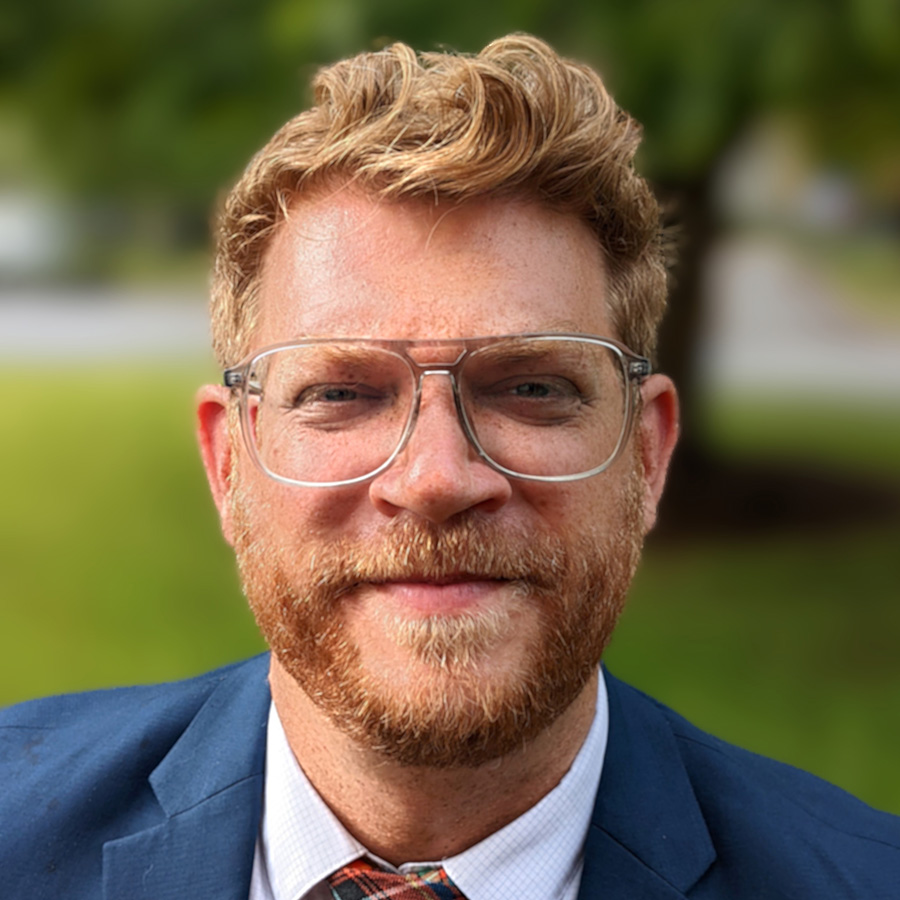
Matthew D. Taylor
Matthew D. Taylor is a visiting scholar at the Center on Faith and Justice at Georgetown University. He is the author of Scripture People, The Violent Take It by Force, and the forthcoming book Defying Tyrants, which will be published in October. His work has appeared or been featured in the New York Times, Weekend Edition, On the Media, Rolling Stone, The Bulwark, Politico, Sojourners, and Religion News Service. A theologian and religious studies scholar who specializes in American Islam, Christian nationalism, and Christian extremism, he is also the creator of two limited podcast series–American Unexceptionalism and Charismatic Revival Fury. Taylor holds a PhD from Georgetown University and an MA from Fuller Theological Seminary.




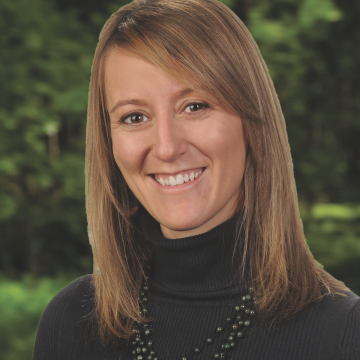
Rev. Susan Hayward
Rev. Susan Hayward: was until recently the lead on the US Institute of Peace's efforts to understand religious dimensions of conflict and advance efforts engaging religious actors and organizations in peacebuilding. She has conducted political asylum and refugee work with the United Nations High Commissioner for Refugees and Advocates for Human Rights. Rev. Hayward studied Buddhism in Nepal and is an ordained minister in the United Church of Christ.
Transcript
Brad Onishi: Welcome to Straight White American Jesus. I'm Brad Onishi, author of American Caesar: How Theocrats and Tech Lords Are Turning America into a Monarchy, and founder of Axis Mundi Media. Today I bring you a special episode from Matt Taylor and the Reverend Susie Hayward about how faith leaders are putting their bodies on the line in the Twin Cities.
I think you've heard a lot of reports about ICE. We've all digested the harrowing images and the tragic events taking place in Minnesota, but Susie brings a unique perspective. She is a clergy person who has been one of the first people on the scene of many of the events that have made national headlines.
Some of you know that Matt Taylor and Susie Hayward created American Unexceptionalism, which is a series we put out from Axis Mundi Media about how we as Americans can learn from those in other countries who have fought religious nationalisms and authoritarian regimes. In those episodes of American Unexceptionalism, they examine examples from India, Brazil, Ukraine, and many other locales across the globe. What they explain here is that those lessons are more important than ever as we face an authoritarian regime that is overrunning civil liberties in the United States.
Susie speaks directly from her experience on the ground in Minnesota. You may have seen news clips, you may have seen reports — you're not going to hear from another person who has such a close, intimate, unmediated understanding of what is actually happening there and how people of faith, humanists, agnostics, atheists, people from all walks of life are contributing to the network that is resisting it. Matt Taylor, as always, provides incredible commentary on Christian nationalism and the religious elements of what is happening here. So this conversation, to me, is of the utmost importance, and I wanted to make sure we got it on our feed.
Without further ado, here is Matt and Susie.
Matt Taylor: When we think back in American civil rights history, there are names of places that attach to protest movements — Harper's Ferry, Stonewall, Selma. I think that when the history of this period is written, Minneapolis will be such a name. We are living through monumental historical events at this moment, and we are coming together on this podcast to have a conversation about what we are learning on the front lines from protests in Minneapolis, what role religious leaders have to play in the resistance. And for those who might be familiar with the work that Susie and I have done, this is, in many ways, a postlude to our podcast series called American Unexceptionalism that aired in the fall of 2025. But here we are gathering in February of 2026, because everything that we talked about in American Unexceptionalism — where we were interviewing experts and activists and scholars who look at religious nationalism and protest movements around the world and have them speak into our American moment and our American situation — all of that has come to fruition much faster, I think, than even we were necessarily anticipating it. Because what we've watched play out in Minneapolis and St. Paul and really in greater Minnesota over the last couple months has been, in many ways, the full activation of Trump's authoritarian impulses, but also the full mobilization, I think, of the American resistance movement. And I really do want to take inspiration from that.
Welcome to American Unexceptionalism. I'm Matthew Taylor.
Susie Hayward: And I'm Susie Hayward. This is the show where we ask what Americans can learn from those who have resisted religious nationalism and authoritarianism around the globe.
Matt: We interview scholars and activists about the strategies they used, lessons they learned in their fight against oppressive religious regimes.
Susie: The United States is facing a very serious Christian nationalist threat to democracy. But we aren't alone in this fight. It's time to put our American exceptionalism behind us, to learn how to create a future for all of us.
Matt: Hi, my name is Matt Taylor. I'm a visiting scholar at the Center on Faith and Justice at Georgetown University, and we're speaking today with Susie Hayward, my co-host for American Unexceptionalism, and somebody who has been on the front lines — a clergy person who's been on the front lines in Minneapolis and who has deep knowledge about how to stand up to authoritarianism. So Susie, thank you so much for doing this and making time today for this conversation.
Susie: Yeah, absolutely. It's great to be back with you, Matt, on this platform, and to be drawing the lessons from Minneapolis. There are a lot of them already. When we finished recording American Unexceptionalism, I think we were on about day 14 or so of Operation Metro Surge. We're now on about day 63. A lot has happened since we ended that podcast series, and I was even, at the time, beginning to share some of what I was seeing on the ground in Minneapolis. But there's a lot more to speak about — what has happened in terms of the assault against democracy and the Constitution and human rights, and about the pushback from the community here, which has been really inspiring to be a part of.
So people who listened to American Unexceptionalism may remember we drew a bit from the framework of the Freedom Trainers in talking about authoritarian breakthrough. Authoritarian breakthrough across the world looks similar. You see retaliation against critics, you see the subversion of checks and balances within governmental systems, you see authorities give license to law-breaking, or deploying the military domestically, or seeking to control information in the media, or refusing to leave by messing with elections. A would-be king tries, through various tactics, to overwhelm the people, to divide them, to provoke them to violence, and to exhaust them.
And I can tell you that all of this is happening in Minneapolis. The license to law-breaking by federal agents as well as by civilian agitators, the deployment of essentially a paramilitary force with ICE, the control of information in the media, the propaganda that we're seeing, the misinformation that we're seeing from the highest levels about what's taking place here, the refusal to leave — just yesterday, there was a press conference where they announced that 700 agents are leaving, but that, of course, leaves 2,300 agents who are still here, still terrorizing our communities in Minneapolis. So it's symbolic more than anything, and that's how we're experiencing it. I just came from the ICE headquarters — what's called the Whipple Building — this morning, and it was, as usual, just a stream of unmarked cars with ICE agents in them, coming in and out of the building.
So that refusal to leave is not just about elections, but right now it also feels very literal with respect to the refusal to leave the streets of Minneapolis, despite our demand for ICE out. These moments of authoritarian breakthrough, wherever they occur, are so critical for organizing for democracy. And the reason we're coming back to you is because we've learned a lot here in Minneapolis that we want to broadcast and share across the country. Because honestly, what's happening here in Minneapolis is coming for you, America. We do feel like we are the tip of the spear here in Minneapolis, and we want you all to be prepared and start doing the work now to create some of these antidotes — the relationships, the infrastructure — that will allow you to resist and to protect democracy and to protect one another.
This is how we spread knowledge and modes of protest. Our podcast series American Unexceptionalism sought to draw lessons from resistance movements worldwide. We highlighted what worked in Sri Lanka, or South Korea and Brazil, in order to defeat would-be kings. And we want to do similarly now, but pulling from Minneapolis, because there are already many lessons — some of which build on and affirm the lessons that we highlighted from those global contexts, and others that I think are particular to the U.S. context.
Matt: So for listeners, whether you've listened to American Unexceptionalism or not, you can come into this conversation that we're having right now. We'll be referencing things that were part of that series, but a lot of this learning will be drawing directly from what has happened in the last couple months in the Twin Cities.
I actually think — Susie, I'd be curious for your take on this — but I was there in the Twin Cities in November, and I got to hang out with you and a bunch of other clergy and leaders, speaking at churches and secularist groups and interfaith groups, and I was just blown away by the level of organizing that was already in place. I mean, this was before all of this major ICE operation started. But I think there was this deep miscalculation by the Trump administration in targeting the Twin Cities, because I think in their mind, they were thinking, "Oh, this is this lefty, progressive city or region, and we'll come in there and we'll intimidate people, we'll scare people, we'll provoke violent reactions," and that will be an excuse for further deployment — that will be an excuse for maybe invoking the Insurrection Act. It's always kind of been this option on the table, lurking in the background.
And I think that if they had tried those tactics in Portland or in Seattle, where you tend to have a little more secular, avant-garde, lefty protest culture, that might have worked. But I think what you're actually seeing in the Twin Cities is one of those strange places in the United States where lefty religion thrives, and I think there's this mix of progressive politics, but also that Midwestern sensibility — many of the places in the country that I have been, that I've lived, mainline Protestant culture, mainline Protestant sensibilities, and kind of protection of democracy, kind of more center-left politics, that's all been on the decline. But when I was in the Twin Cities, I was just very, very impressed by the presence of mainline Protestants, the presence of liberal Catholics, the presence of these interfaith networks. And it just felt like if there was any place in the country that was ready to stand up to the Trump administration, I think it was the Twin Cities.
And I think a lot of that got activated from the experience around the murder of George Floyd and the protest movement around that. But I think there's been a lot of building since then of this kind of pluralistic, inter-religious activist networking culture in the Twin Cities. So I don't think it's a coincidence that in all the places that ICE has been deployed, it's been Minneapolis that's been the flash point.
And we've seen a lot of courage from a lot of protesters and communities around the country — in Los Angeles and Chicago and New Orleans and New York and all these places where ICE has had their operations — but it's been Minneapolis that's been the flash point. And I think the Twin Cities, in many ways, are putting the rest of the country to shame, or maybe teaching us how to do this kind of work.
You know, I think in many ways Trump and Stephen Miller and the whole DHS machinery of war ran smack-dab into Midwestern nice and probably the most mobilized per-capita city in the country. And Minneapolis is just outright proving the lie of all of their propaganda — that people actually don't care for their immigrant neighbors. Well, they do. They're standing up for their immigrant neighbors. Or that protest is only about young people and college students — well, here we're seeing septuagenarians, octogenarians in the streets, standing up for their neighbors. Or this idea that you can't have a diverse community because it can't hold together — here we see diverse communities holding together, standing up for each other in solidarity and love, in concern.
So I just feel like, in some ways, if you're familiar with the old story of Br'er Rabbit, I feel like the Twin Cities was the briar patch that they fell into, thinking that this was going to be their moment of victory. And in reality, it's become a morass for them, it's become a PR nightmare for them, and I think it's, in many ways, sparked the resistance that we were hoping all throughout 2025 we would see.
Susie: Yeah, I think that's right. One slight correction I might make is that I don't think Minneapolis is putting the rest of the country to shame, because I just want to give a shout-out to the activists in L.A. and Chicago, in D.C. and elsewhere, who learned lessons from the early deployments of ICE in their cities. Again, those deployments were not at the same level of what we're seeing in Minneapolis. I read somewhere that Operation Metro Surge is 25 times what Operation Midway Blitz in Chicago was, when you look at the number of ICE agents versus the size of the population.
Matt: Because Minneapolis is not nearly as large of a city as Chicago or Los Angeles, so the overwhelming force of ICE there is so much more felt because it's just distributed in a much smaller area.
Susie: I had a friend ask me, when I was in D.C. last week, how long can you go without experiencing this occupation? And I said, maybe at most half a day, because they're just everywhere. They're all over our streets. There's no avoiding it.
But we learned from the activists in those other cities. Even early on in Chicago, we had activists from Chicago who were doing webinars with us and downloading: here's what we learned about the particular systems. We do have an incredible infrastructure and foundation of organizing here in Minnesota, but this is also a particular kind of threat that's different, and there's new tactics that were needed in order to meet this threat. And so I want to give credit where credit is due to the activists in other cities who participated in a kind of bucket brigade and shared their lessons to us, that we were then able to build on.
But I mean — to what you were saying, Matt, more broadly — I'm a Midwest supremacist, so it doesn't surprise me that this resistance and this renewal movement, and the role of religion and faith in it, is coming out of the Midwest at all. I was telling folks for the past year that it kind of makes sense to me that this democratic renewal movement — the one of our lifetime — might come out of the Midwest. And we were seeing it already a little bit in Chicago, under Operation Midway Blitz. It's the heartland. It's part of the Bible Belt. There's a church and a mosque on every corner here in Minneapolis. You can't argue that the Midwest is not the quote-unquote "real America." And I think you can make those arguments with the East and West Coast, or at least that's what some of the propaganda or narrative has been from the right for a long time. It's much harder to make that argument about the Midwest.
We are the salt of the earth, Midwesterners — Lutherans, a lot of us who come from European context — and it's hard to demonize or portray as radical your sort of 70-year-old Lutheran woman who's out there right now on the streets in her car, chasing ICE around in order to protect our neighbors.
I also think — I don't know if it was a power miscalculation from the administration with Minnesota — I do think Minnesota is being targeted for a number of reasons, one of them being the retribution for the George Floyd reckoning that rocked the country and the world and actually succeeded in achieving accountability. Derek Chauvin remains behind bars. I think there's some retribution with respect to Tim Walz here, or some of the progressive policies that we have in Minnesota. But I think there was also a power calculation on behalf of the administration that if you can subjugate Minnesota, you can subjugate anywhere. They knew the kind of power of organizing that exists here, because they saw the uprising that happened after George Floyd's death.
And I think Minnesota is showing precisely why they had that power calculation. This is not just George Floyd — even before George Floyd's murder, there's a long legacy and history of organizing in Minnesota. This is the home of the American Indian Movement. This is the home of the Democratic Farmer-Labor Party — the Democratic Party and the Farmers Labor movement merged in the 1940s, and the Farmers Labor movement still is sort of a progressive stream of farmers and workers that informs how the Democratic Party operates and what it looks like here. So we have this long history of being a sort of populist but more center-to-center-left organizing hub, and so they're trying very hard to subjugate us and that history. But they haven't succeeded. To the contrary, I think they have sort of awakened the beast of this long legacy and relationship.
And as one of my favorite activists here, Marcia Howard, says: they also hate what we represent. That Lutheran influence that I was speaking to, which comes out of the Scandinavian, European immigrant community here — it is a huge part of the reason why Minnesota has been welcoming to so many immigrant communities for decades. In so doing, and bringing in the waves of Hmong from Southeast Asia, bringing in the waves of Somali people from Somalia, not forcing them to assimilate when they did arrive — we have this celebration of diverse foods and languages and religions and cultures.
I live four blocks north of a place called Karmel Mall, which is a Somali shopping center. You go in there, and you feel like you are in northeast Africa — the language being spoken, the food being offered. And I find this deep irony: if you might remember when Trump said we only want immigrants from places like Norway — well, I am surrounded by Norwegian immigrants here and their descendants, and that's what we've got in Minnesota. They are those Lutherans who are doing the massive mutual aid networks and food systems in their church basements right now, and they are the ones who welcomed in those immigrant communities and offered safe sanctuary and celebrated the diversity that they brought. And of course, the Scandinavian culture also is very grounded in that sense of neighborliness and caring for each other, including collectively.
Minnesota has also been a refuge state for queer and trans folks, and you might remember that's why Renée Good and her family came here to Minnesota. Minnesota offers safe sanctuary for people who are looking for it, and what it means to be Minnesotan has expanded over time to encompass the cultures and identities of all of these communities who have come here alongside the indigenous communities who still live here.
So I think who we are as a state — and those aspects of who we are — is also a threat. Just one quick anecdote: I recall being home during seminary, and this was maybe five or six years after 9/11. I remember so distinctly the entire front page of the Minnesota Star Tribune was celebrating a Minnesotan kid — a kid of Somali descent — who had won first place in a nationwide Quran recitation contest. So that gives you just a flavor of how we celebrate our Somali community here, and our Hmong community, which — they are amazing farmers in the sort of central part of Minnesota, and our farmers markets now overflow with bok choy and Thai basil.
But we're also in Minnesota — we're not Pollyanna. We know state violence all too well. We have the greatest mass execution in U.S. history, which happened in Mankato — 38 Dakota men who were killed during the U.S.-Dakota War. We've had a spate of police killings, especially of Black men, over the last decade. We had the assassination of Melissa and Mark Hortman. We had the Annunciation school shooting. So you'll hear this refrain here a lot: "We protect us." And that sense that we can't depend ultimately on any other institution to save the day, much less to protect us — that comes out of this lived experience of being a state that has also held a great deal of tragedy and violence, and learning how to depend on each other and support each other in order to resist and to heal and to overcome.
Matt: So for the format for the rest of this conversation — we're going to try to join the bucket brigade, as you use that image — we're going to try to share some of this knowledge, this learning, these ideas; what has worked on the front lines in Minnesota, especially around resisting Christian nationalism and the religious dimension of the propaganda and the authoritarian crackdown. And for most of this, because you have been right there in the thick of it, Susie, I'll take the role of asking questions and just kind of reacting to the things that you're saying. So let's take the lessons from the experience that you've had.
We left off with American Unexceptionalism in mid-December of 2025, as this stuff was ramping up. As we said, what has happened since then for you? Can you just narrate for us how this has progressed from your perspective — how you describe the experience of being a clergy person on the front lines of this protest movement there, and what's the day-to-day experience like of these people who are mobilizing and organizing and standing up for their neighbors?
Susie: Yeah. I mean, to put it succinctly, life over the past 62 days has been like getting tear-gassed in the morning and then writing the church newsletter in the afternoon.
My neighborhood that I live in is one that has been particularly hard hit. We have a large Somali Minnesotan presence here, and so ICE has been very visible and very aggressive in my neighborhood. So I have been witness to that. I have been tear-gassed several times when responding to ICE abducting my neighbors — including when I'm in my clergy collar, which I'm wearing this morning, because I just came from the Whipple Building, ICE headquarters, this morning with some of the singing resistance folks. We'll get to them.
So I have been very involved — like so many of my clergy colleagues across religions — in doing both the pastoral and the prophetic work in this time. It has shifted what it means for me, as a minister, to be doing the work of ministry — far less about the sort of church bureaucracy stuff, and far more about the living out of Jesus's message and call on the streets with the wider community, and then also tending to souls. And that includes the folks within my church, but it also includes the wider community, particularly the immigrant community and Black and brown community that has been so vulnerable. But also the broader community of folks who've been responding in many ways and who are feeling that exhaustion and that overwhelm — so providing that kind of pastoral care, and then also the prophetic work, which has been about being a visible clergy presence on the streets, standing up to this state violence and state power, being with the community, surrounded by and amidst the community, and sort of planting my stake there with the community. And last week, doing some advocacy in D.C.
I'll say — just to all the preachers out there — preaching the Gospel right now is so easy, because it's all just so obvious and evident. And over the past seven, eight weeks, it's like the lectionary itself has kept aligning with the reality around us. December 27, the lectionary assigned the scripture passages of Jesus as a refugee in Egypt, having to escape an authoritarian, violent king and his policies — Herod. Or this past Sunday, the lectionary assigned Micah 6: "What does your God ask from you but to do justice and love kindness and walk humbly with your God?" Or Matthew 5 — the Sermon on the Mount with its Beatitudes. Psalm 46 hits particularly hard right now: "God is a very present help in times of trouble" — even that "there is a river that runs through the city of God," and of course we have the Mississippi River here that runs through the Twin Cities.
So scripture and the Gospel has never felt more real and present and intimate in my life. It's almost like the scales have fallen from my eyes, and I'm realizing I never fully understood the Scripture until now. And the fact that — truly, I always understood this intellectually — but to really understand in a visceral way that the scriptures were intended always for oppressed people. And then also just to see the ways in which the Gospel is present and embodied in this city right now. The greatest command of all — to love God and love neighbor — literally, it's about loving your neighbor, not just in a metaphorical sense, but the folks next door who are vulnerable. Or "whatever you do for the least of these, you do unto me" from Matthew 25. Whether or not the folks on the street identify as Christians — some do, some don't — but seeing the ways in which they are embodying that greatest command of all and those teachings of Jesus has been incredibly inspiring to me.
There's been this term of like, Minnesota is reflecting neighborliness, and I think that's true. But I also think that neighborliness, for me as a Christian preacher, is a reflection of the Gospel ethic. It's just so clear what the Gospel calls us to do in this moment, morally. And for me, it's also very clear that God is with us in our movement of love.
Matt: You know, in the world that I track — of Christian nationalism, far-right Christianity, extremist movements, politics and religion on the right — there's a lot of talk these days of revival, and people talking about revival among the youth. Some churches are growing, and we need to pay attention to that, because this is a sign of what's changing in our culture. And I think a lot of times that rubric of revival is really more talking about radicalization — people becoming more radicalized in their faith. But I think there's something in there for people on the center and the left, because when I speak in churches and different places around the country and present to different faith groups around the country, there's often this sense of malaise, or kind of frustratedness in people's faith. They feel like they want to do something and they don't know what to do.
And what I love about what you're saying is, in many ways, a key — or the key — to revitalization of your own faith life, your own practice, is to get into the battle. It's when you're in the thick of it, when you're in the midst of actually living out the Gospel, that you live the Gospel and feel the Gospel and recognize all these connections. Yes, the New Testament is written in a context of oppression, and much of the Old Testament is written in the context of oppression and authoritarianism. And these texts are meant to be resources for that. They're not meant to be resources for middle-class bourgeoisie, "Hey, everything's nice and easy, so let's just kind of plug Jesus into our happy-go-lucky lives." They're meant to be resources for people who are resisting. And I think as you get into that resistance, you have more insight into the text, you have more hermeneutical and exegetical insight, deeper connections to the tradition, because you're living in parallel with what the people who created the tradition were living.
So one of the things we talked about quite a bit in American Unexceptionalism was the importance of clergy and religious leaders and theologians in helping to resist religious nationalism. We weren't just talking about Christianity — we were talking about Buddhist nationalism, Islamic nationalism, Hindu nationalism. But the importance of religious leaders and the use of religious symbols in the protest movement, as in many ways a way of claiming that religious space and pushing back in public on the nationalist claims of religion by using other claims of religion.
And I think one of the things that's most marked these Minneapolis protests has been the phenomenon of these large groups of clergy being gathered in united front — not only Christian clergy. These are big, diverse groups of clergy. But as you were saying, we've seen this in past iterations — in Chicago and in Los Angeles, we've seen clergy on the front lines — but it tends to have been kind of a person-by-person thing, in my perception of those. Whereas here, there's this unity and these large numbers of clergy. You had around 100 clergy arrested at the Minneapolis-St. Paul airport on the day of protests. There were dozens of clergy who occupied Target headquarters, demanding some changes in the way that Target was collaborating with ICE.
I feel like that's been a huge force multiplier in the effectiveness of the protest, because, as we talked about in American Unexceptionalism, clergy carry this kind of moral authority. They carry a gravity to the way that they operate in public, and people respect that. Can you talk to us and help us understand the organizing behind that? Were those networks of clergy that we're seeing on the front lines already in place before ICE ever deployed, or has that been organized in real time in the last two months?
Susie: It's a little bit of both, honestly. We do have long-standing multi-faith networks here. There are some, like Multi-Faith Minnesota, that are more sort of dialogical and relationship-building in nature. And then we have some, like Isaiah and MARCH, that are more about people-power organizing and advocacy in order to push for policies that reflect neighborliness and care for one another.
The action that was at Minneapolis-St. Paul Airport on January 23 was one that was organized, for example, by Isaiah. They're part of the Faith in Action Network, and they have this long history of mobilizing faith communities — particularly Christian and Muslim — in order to advocate for certain policies at the state level. And they've shifted in recent months in order to focus on engaging in more of this sort of non-cooperation, in partnership with immigrant rights organizations and labor unions, noting this particular moment that we're in right now. And their focus needs to maybe shift from prioritizing the state legislature to prioritizing the federal government as a target.
And then you also have MARCH — I work with both organizations. I'm on the steering committee of MARCH, which is Multi-faith Anti-Racism Change and Healing, which is a clergy collective — Buddhist, Christian, Jewish, Muslim, and Indigenous — that has long done relational movement-building work, particularly during George Floyd and the uprising: being on the streets, being with the communities, ensuring that churches and other places of worship were open for folks for safe sanctuary or for respite. But also during the Line 3 movement, to try to resist the oil pipeline through indigenous lands here, or Standing Rock and so on.
So there's this long history of both relationship-building that creates levels of trust and deep relationship — which then allow for, in moments of crisis, folks already having the relationships in place to be able to respond — but also this long history of clergy organizing for power, organizing people, taking the moral authority of religious leaders but also the kind of infrastructure that places of worship and religions provide, that make it such a potent role in organizing to resist violent state policies.
One thing I'll note about the January 23 day of action here — the one that began with those really powerful images from Minneapolis-St. Paul Airport: you might have noticed there were 100 clergy who were arrested, but there was a lot of clergy who were also around them. And throughout the day, some of us were at Target singing, there were some folks who were at U.S. Bank headquarters — clergy who were occupying it. So there were just actions taking place all day long.
That wasn't all Minnesota clergy. We are numerous, but that was a number that reflected well beyond our ranks, and that was in part because MARCH issued a clergy call on January 16. We were echoing Selma. We had the blessing of Dr. Bernice King to issue that call to clergy around the country, to say: you need to come here and you need to see what is happening here. You need to witness to the repression that is happening here and to the resistance that is happening here, and then bring those lessons back into your communities.
So we issued that call on January 16, and within 48 hours, we had — we thought maybe 200 people would be able to come to a really cold tundra at a moment's notice — and within two days, we had to close down the registration because we were getting so many people registering saying they wanted to come. We could only absorb 650 registrants. That's the point at which we closed down the registration. But if we hadn't, we could have ended up with thousands of clergy. There is a level of thirst and readiness that we experienced from clergy of different faiths across the nation to meet this moment and to bring — as you described it in one of our podcast episodes, Matt — their clergy doodads to do so, and to be a visible presence on the street. Which they were, on those two days in Minneapolis. They were out on street corners in their stoles or in their tallits, watching out for ICE and protecting neighbors and documenting what ICE was doing, or they were participating in those direct actions. So it was a really powerful two days of visible clergy presence that amplified the sort of consistent clergy presence of Minnesota clergy on the streets.
Matt: Yeah, I was at a gathering with a bunch of faith leaders in the D.C. suburbs just a couple of days before the big days of protests there, and many people were gearing up and packing their long johns to go to the Twin Cities to join in for that. So yeah, there really was this kind of national effort. And I think that does speak to — there is a pent-up energy for a lot of clergy who've been watching this, who've lived through the last decade, who have seen their churches eviscerated, who have felt the pressure — often from more denominational bodies — not to get involved. And I think there's this kind of awakening, a recognition of the moment that we're in collectively, and we're seeing that. And I think we need to keep fueling that. There are moments where it is important that it's not only locals, that other people travel. And we have the Freedom Riders, and we have the people who are kind of joining and traveling to be a part of this. So that's phenomenal.
Susie: And I think the term "awakening" is a perfect one, Matt, because I think we are witnessing an awakening of religion — another Great Awakening in U.S. history right now in that respect. And also a great awakening of democracy, in how we're seeing folks on the ground in Minneapolis and elsewhere threading together some civic ties that have been weakened or destroyed, especially during the pandemic but over the past couple of decades. There is a reawakening of civic life and connections at the grassroots that is inspiring and potentially transformative — and renewing for the larger democratic system in the U.S., if we keep organizing.
Matt: Yeah, there's a quote — I think it's from Winston Churchill — about how the Americans can always be trusted to do the right thing once all other possibilities have been exhausted. And I feel like we've been seeing that throughout 2025, where I think it's taken a while for the American populace, the American public, to recognize this authoritarian moment and to kind of break out of the slumber of complacency that we've had. But I think that is happening. I think there is an awakening of the center and of the left, and even of many of the people who in the past would have identified as Republican or conservative, but who had these deeply principled connections to their religious traditions and were wanting to stand up for that.
And right now is the moment to stand up. And I'm so glad that you all have really led the way and helped to organize and be the tip of the spear in gathering the rest of us.
I'm curious — on the tactical level, it's not easy to put together diverse coalitions of clergy. People can get really prickly about, "Hey, this is my prayer, and we need to say the prayer this way," or "What if we use my songs? I want to sing songs I'm familiar with," or "How do we include people? Should we pray in the name of Jesus, or not pray in the name of Jesus?" All these things that might feel kind of mundane in day-to-day interfaith organizing become much more pointed on the front lines. How do you all do this? How do you decide what songs to sing, what prayers to pray? Where should clergy be present? Where should we be targeting those resources? How does this all work on a practical level?
Susie: I mean, sometimes — in response to that question, Matt — I think it's in planning the larger dialogical things at moments that are not urgent that maybe some of those tensions are most felt. Things are so urgent right now in the metro area that there is a lot of grace that is being offered as we bring together diverse coalitions, even as those tensions still remain.
But there's also — we build on the long history and tradition and trust. So there's a sort of muscle memory about how to make space for diversity within these kinds of coalitions here in Minnesota, and a trust that even if one speaker is lifting up a prayer that might feel exclusive to others, or that something is being held on a Saturday that Jewish folks can't participate in — because that's another tension, what day do you gather folks? — there's something of a grace that's being offered right now, recognizing that we're needing to move with urgency to meet the moment, and that that can be messy.
I'll say a couple of things. One, this is still a Christian-majority city, and there is a lot of Christian expression that you see in protest signs, or at the memorials for Alex Pretti or Renée Good or other spaces — lots of quotes from Scripture, protest signs, Jesus is everywhere, lots of references to Jesus, Jesus's words, Jesus's teachings about the stranger. There was a protest sign this morning at Whipple that said, "Who would Jesus detain?" You see lots of Mary images from the Catholic community. And these Christian symbols are held by clergy and lay alike. And they're powerful because they do refute the Christian nationalist, exclusionary, supremacist narrative.
And there's a lot of diverse religious expression as well. So the indigenous presence — ceremony, prayer, dance, sage — has been so central and present in so many of the marches, at the memorials, at the protests. Alex Pretti was murdered three blocks from where I live, so I am at that memorial on an almost daily basis, and have watched it grow with flowers and signs and religious messages. I was there last night, and I was noting the diversity of religious expressions there that reflect the religious diversity of the city. So there was something from a Hmong shaman there, and some prayer ties that you could take from the Hmong shaman that had been left. There was the Catholic and the Christian. There was a lot of Native ceremonial colors and sage and other things. And there were Muslim representations as well.
So what you'll see, sort of tactically, is that there's some events that are multi-religious, where that diversity of religious expression is represented, and then there's different actions or events where one religion takes the lead and the others are in a followership mode. For example, this Sunday there's going to be a Buddhist walk that Buddhist monastics — actually from around the country, again coming here — are going to be leading, and they've invited other religious traditions and clergy to be there in followership of them. They're taking the lead. It's going to be a Buddhist event. We are going to be there in solidarity and support, following them.
I have seen Muslims on Friday afternoon going to the Renée Good site and doing their Jumu'ah prayers there, and other clergy forming a sort of protective presence around them, recognizing the particular vulnerability — even more so than maybe any other religious community right now — of the Muslim community. Or indigenous dance that has been happening several times now at the Pretti Memorial near my house. So again, sometimes it's events where one religion leads and the others follow; sometimes it's a diversity of religious expression in a multi-faith action, where we try as much as possible to equalize.
Matt: So thinking about this — we spent 10 episodes in American Unexceptionalism really trying to learn lessons from people on the front lines around the world who've been doing this work. And the last episode, we tried to boil it down: here's a playbook to follow. And then immediately you had the opportunity to follow that playbook. So what has proven true for you from all these things — the lessons, the conversations that we had, the experts and friends that we brought into that conversation — what has proven true for you in the last couple of months from the lessons that we kind of gathered and learned doing the podcast?
Susie: A lot of the lessons that we lifted up have proven true. One is the need for sustained forms of resistance that include but go beyond protests. A lot of people were quoting that 3.5% from Chenoweth and Stephan's book — when you have 3.5% of the population involved in resistance, history has shown that can be successful, which is a hope-inspiring number, because it's not actually that much. But the really important caveat of that is it's not just participants in protest — like in the No Kings protests, I think we've already surpassed 3.5% of the population. It's other forms of sustained resistance, and in particular, non-cooperation, which has been so critical.
And so we have seen that in multiple ways here in the Twin Cities. We have seen postal service workers who have been striking and who have held rallies because ICE has been using the parking lots at post offices in order to stage — so these are federal workers who are protesting against fellow federal workers using federal property in order to stage. We have had a lot of actions at the city level and at the state level that have been taken in order to show non-compliance or non-cooperation with the federal government. So the city park board, for example, passed a separation ordinance that disallows ICE from staging or using its parking lots or its parks to operationalize Operation Metro Surge — not that they're necessarily abiding by that. There was just a few days ago they were staging at beloved Powderhorn Park here, where kids are often present and playing, and they deployed tear gas and flash bangs against the community there.
You've had a spate of federal prosecutors who have been resigning, especially in the aftermath of Renée Good and Alex Pretti's death, and the way that the federal government responded to that. And you might remember there was a branch of a Hilton hotel that showed non-compliance — not allowing ICE agents to stay there and canceling contracts with them. They came under a lot of pressure on security. Yes, they did, and they stood strong. And that's non-cooperation. That is non-compliance.
Another thing that I would note is that the youth were at the front lines. In Sri Lanka, in South Korea and elsewhere, that has been the same here. It was really in early December, it was people in their 20s and 30s — especially 20s — who were mobilizing the rapid response networks and the neighborhood networks here, getting things on Signal and getting things organized, and who have continued to be sort of the front lines of responding to ICE and of mobilizing the communities. And so the call that we made to follow the lead of youth — that has been true here, and that is something I have been telling my fellow clergy people too: to be humble and to watch what the youth are doing and see how we can be in followership of the youth, instead of assuming that the clergy should be the ones taking the lead and the young people should be following us.
So very early on, I was asking the young people who were creating all of these networks and who are out on the streets: what do you want from the clergy? How do you want us to be supporting you? How do you want us present? And they said to me: "We need a nightly space, because we are out there all day long with our cortisol flushing through our systems. We are witnessing trauma. Sometimes we can stop abductions, sometimes we can't. We are being intimidated and harassed and assaulted and tear-gassed and stalked and boxed in, and we need a space at the end of the night to center down into our systems and to connect and to be cared for, if we're going to be able to sustain that." So I organized with some of my fellow clergy people a nightly spiritual space — 30 minutes at the end of every day — that we've been doing now for seven weeks.
They have encouraged us to be present at the Whipple Building, the ICE headquarters — recognizing the power of the visible clergy presence in Broadview in Chicago, but also recognizing that having clergy presence there perhaps allows for a level of protection and support, whether or not that's actually true, but a feeling of protection and support when confronted with the heavily armed presence of ICE at the headquarters.
The reflection of the movement as being multiracial, multi-class, multi-religious — including deep connections and collaborations and trust between explicit faith communities and non-faith-aligned folks and communities, including some who have experienced religious trauma. We have a large queer population here in Minnesota and in Minneapolis. And so some of those folks come from experiences where they're wary of religion, understandably so. And yet you see in this movement here a great deal of trust and care between even those divides.
And then the multi-generational divides. What has made this movement successful here reflects that great diversity and those connections across traditional lines of polarization or divides in our community. And just like we saw in Sri Lanka and elsewhere, the creativity — the singing resistance folks, you've probably seen some of those videos that have gone viral — the folks just in the thousands in the streets singing together. We had a big one on Sunday afternoon downtown — 2,000 folks who are singing outside of the hotels where ICE agents are staying, inviting them to defect, to leave their jobs behind and to join us. Or the forms of art.
And then finally I would say the ways in which people are aligning their priorities. So traditionally they might have focused on other kinds of issue areas — we talked about this a little bit in one of our episodes with the Sunrise Movement, for example, which had traditionally and historically focused on climate justice. And they have shifted to focus on anti-authoritarianism right now. And so you're seeing that with a lot of different groups and communities who are shifting from their traditional target and focus to come together for this shared goal of defeating authoritarianism.
Matt: One of the things I really learned through all of our conversations in American Unexceptionalism is just how dynamic these things are. I think if you know just a simple history of the civil rights movement, or know kind of a broad conceptual framework of protest, it might be easy to think, "Oh, well, ICE has their tactics, ICE and the DHS, they've got their plan, and it's just kind of about creating a plan to respond to that." But these things are iterative, and the tactics of ICE and CBP and DHS, they change as the tactics of the activists on the ground have to change. And I think what we've seen is folks in Chicago sharing their wisdom with you all, and other people sharing their wisdom with the people in Chicago. We are learning how to do this as we do it. It's not as though the playbook is already fixed. It emerges in the reaction, the counter-action — all these things are constantly moving and changing.
So I think what we've seen in the Twin Cities is the preview. It's the opening salvo of what's coming to a city near you. This is not just a particular kind of focus on Minneapolis. ICE, CBP, and DHS just all got huge funding surges through the legislation that was passed in 2025, and so they are recruiting rapidly right now. They are ramping up their efforts. So for people of faith who are not in the Twin Cities, how should they be preparing now? How should clergy in other cities be organizing and gathering right now? How should activists be getting ready? What lessons should they be taking and what preparation should they be making, so that when this comes to their city — when they see these mass deployments, because I really think it's going to happen in a lot of places at once when all that budget kind of lands in the coffers — these folks are going to have a lot to work with. What can we do now to prepare for when this comes knocking at our door?
Susie: You need to start preparing now. That's the message that we are saying to everybody as we pass the bucket on to everybody else around the country right now from the Twin Cities.
And there's a lot of things that you can begin doing right now. One of them is the relationship-building piece. Begin to develop the relationships that you'll need with your neighbors — and I mean literally your people, their neighbors, your next-door neighbors, your block. We have organized from block to block here in Minneapolis so that we can track who's vulnerable, what their needs are, where is ICE — are they on our block right now, how can we respond to protect one another — knowing all of those things, knowing where the resources are for your neighbors. But also building relationships with labor unions. You might recall from one of our episodes — I shared some of the statistics from Chenoweth and Stephan — that a non-violent resistance movement to protect democracy is 52% likely to succeed against an attempted authoritarian grab. But if labor unions are involved, it jumps up to 83% likely. So the involvement of labor unions is key, especially for creating that sort of economic incentive and cost to would-be authoritarians.
So begin to build the relationships with the labor unions if you don't have them yet, as clergy or as people of faith. And likely, within your own congregations, you have people who are connected to various different unions. So some of this kind of relationship-building and mapping you can do within your very own congregations — to know who's connected to the unions, who's connected to different neighborhoods that might be vulnerable, and we need to be thinking about the infrastructure of support in those neighborhoods in particular.
Or with immigrant rights organizations who have the relationships and have the knowledge. That's so critical right now, because the immigrant community is the one that's being the most targeted — or the immigration cause is the framework of the legitimation for this form of repression that's taking place, which is not really about immigration at the end of the day. That's part of it, but the fact that so many of our indigenous Minnesotans here have been detained and are still being held by the Department of Homeland Security should be the most clear and obvious example of how this isn't really about immigration, but it's about repression. And with legal rights organizations like the ACLU and Onward.
Tactically and pragmatically: if you don't yet have Signal on your phone — the encrypted messaging service — download it now and begin to learn how to use it, because a lot of the mobilization is happening on Signal across different contexts.
Start doing the Know Your Rights trainings right now, the legal observer trainings. We started doing them at my church in Minneapolis over the summer, and it was because so many of those legal observer trainings were happening that we were prepared in December when Operation Metro Surge came, because we knew it was coming. So we knew what our rights were. Rights aren't magic — our rights are being violated left and right here in Minneapolis — but knowing your rights is important when it comes to observing what's happening, and the violation of your rights and the Constitution that's happening, recording that on video, and then sending it to the ACLU and other legal networks for litigation that's moving forward. So I would encourage places of faith to be holding one or two legal observer trainings for the community per week, even. You just need to start having these regularly offered. And if you yourself as a clergy person haven't yet gone to a legal observer or Know Your Rights training, go now. You need to understand what your rights are as a faith community, what the rights of your community members are within your congregation and beyond.
And then I encourage you to think about what your lane is going to be within this movement. There is a role for everybody, and not everyone needs to be on the streets chasing ICE. We need the folks who are the movement chaplains — who are there at the protest marches or at the vigils and other spaces — who are providing the community care to folks. We need the soul-tenders. We need the mutual aid coordinators. We need the folks who are accompanying vulnerable neighbors as they go to work, or as they go to church or to mosque or to other places.
And then even as you organize in a very localized, even hyper-local way — block to block within your communities — also make sure to keep a finger on the pulse of the national movements that are happening, because we need to be working from the hyper-local more broadly as well, to have a mass resistance movement. So look for the General Strike that's being planned for May Day 2026. Listen for the Palm Sunday Path that is being launched — in part by the group Isaiah here in Minnesota but nationwide — that will be launched on March 29, and begin to prepare for how you're going to feed into those national movements as well. We're moving from the hyper-local to the national. And again, thinking back to American Unexceptionalism, this is also part of a global movement, so also thinking about how we're learning from and building solidarity with the global movement of democracy protectors right now.
Matt: Yeah, you know, you started out by talking about how we're in this moment of what political scientists would call authoritarian breakthrough, or autocratic breakthrough — where some of us are still experiencing and living in kind of a reality of liberal democracy, and folks in Minneapolis and St. Paul, and many other cities around the country, are experiencing that breakthrough of authoritarianism. And I think the challenge of living in that kind of a moment — and I think 2026 is that kind of a season — is that we are still having to kind of live by the logic of democracy in certain ways. It's an election year. It's important to mobilize people for the election, to get people out to vote, to have good candidates — all the kind of tactical, ticky-tacky stuff that you do as part of a democracy, assuming that there's going to be an effect of those elections. But then we also have to keep an eye on the way that this authoritarian, tyrannical movement has taken over the levers of power. And so it's not that the election doesn't matter this year — it matters a great deal — but we also have to protest, we also have to stand up, we also have to challenge these things, because the election itself will not be enough to arrest this slide.
And so I think I'm so appreciative of the way that you, Susie, and the other leaders and activists and protesters in the Twin Cities have really helped. They've gathered this great wisdom from the past, they've iterated it themselves and created some new paradigms, and they're passing it forward to the rest of us in the country. And I would just say: let's take the lesson. Let's go back and listen to American Unexceptionalism. Use Minneapolis now as another case study in how to do this, how to stand up in this moment against this rising authoritarianism, especially in the ways that it is connected to religion — is using and abusing religious texts and references and symbols in order to justify this stuff. Let's use our religious power to stand up and push back. And thank you so much for the work that you're doing. Thank you for being on the front lines and giving us so much wisdom today, and hopefully we can all kind of join the movement as we go along.
Susie: Absolutely. And I just want to inspire you all by the movement, by participation in the movement itself. Because I can tell you, as awful as things are here on a daily basis — what we're witnessing, the kinds of violence that we're experiencing, the trauma of our community here on a day-to-day basis, hour-to-hour basis even, the violation of the Constitution and our rights — there is also so much beautiful happening in the way that the community is responding, that I think reflects the best of the American spirit as well. That kind of care and rising up and courage, even in the face of the brutality, is inspiring. The celebration of diverse religious expression and racial expression, generations coming together — it reflects beloved community, to use Martin Luther King's term. Or it reflects, in a Christian sense, a slice of heaven — the way we could organize our societies and be together in a way that supports mutual flourishing.
So prepare to be inspired as well by your participation in building this new world together. And a reminder that, again from Chenoweth and Stephan, they say that in those moments when democratic movements succeed in stopping an authoritarian capture, the democracy on the other side of it is better. It's deeper, it's more sustainable, and it's more inclusive. And I am seeing the possibility of that as well right now in Minneapolis, and I hope that for all of us in this country in the future.
Matt: And we're grateful for our Midwestern supremacist neighbors. There's a bumper sticker that Susie shared that says, "Make Minnesota Bigger," and that is the slogan for our time. So keep rocking on, Minnesota. Thank you so much.
Susie: Thank you. That's it for this episode of American Unexceptionalism. Thanks for joining us.
Matt: Please hit subscribe and give us a rating and review on Apple Podcasts. You can keep up with this show and all the other great series from Axis Mundi Media at www.axismundi.us. This show is produced by Andrew Gill and engineered by Scott Okamoto. Funding provided by the Institute for Islamic, Christian and Jewish Studies, Princeton Theological Seminary, and the International Center on Religion and Diplomacy. Until next time, remember: the struggle for democracy is global, and we aren't alone.